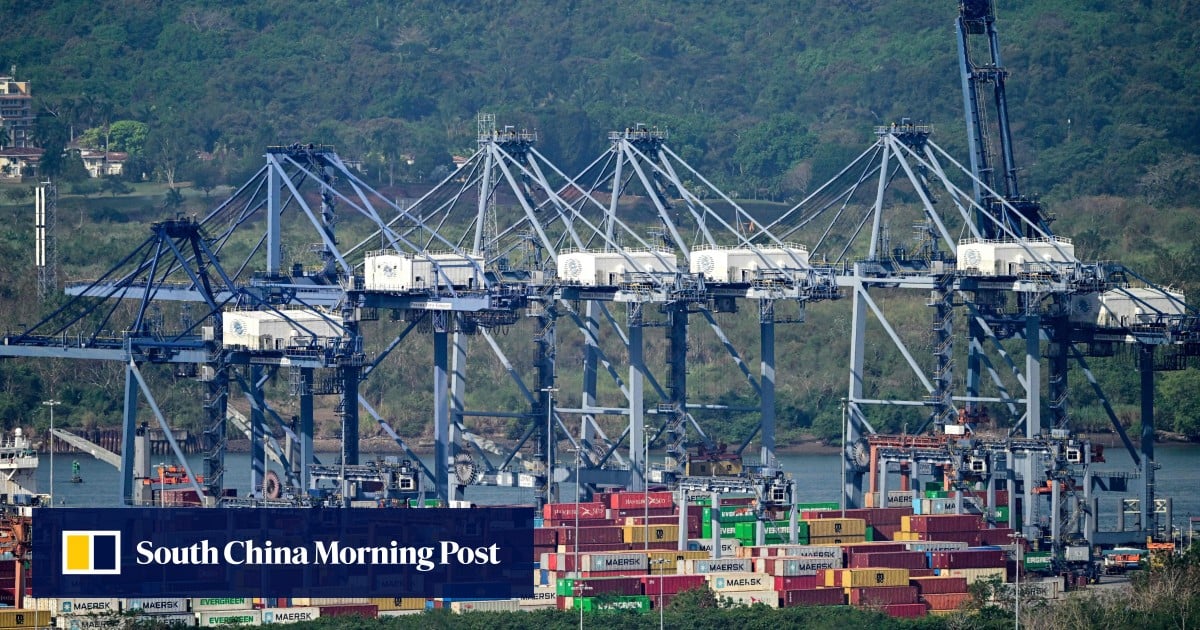
Hong Kong Chief Executive John Lee has cautioned that a bitter dispute over port operations in Panama is prompting local investors to reevaluate their stakes in the Central American nation, signaling broader ripples from geopolitical tensions. Speaking at a press conference, Lee highlighted how political pressures surrounding the Panama Canal's strategic ports are eroding confidence among Hong Kong businesses with overseas exposure.
The controversy centers on CK Hutchison Holdings, a Hong Kong-based conglomerate that has controlled significant shares in Panama's Balboa and Cristobal ports—key gateways flanking the Panama Canal—for decades. Last year, amid mounting U.S. concerns over Chinese influence near this vital trade artery, CK Hutchison announced a $22.8 billion deal to sell its global ports portfolio, including the Panama assets, to a consortium led by U.S. investment giant BlackRock. Washington hailed the transaction as a win for national security, but Beijing and Hong Kong officials decried it as coercive interference in commercial matters.
Lee's remarks come as the deal faces regulatory scrutiny in multiple jurisdictions, with Panama's government expressing reservations about foreign ownership shifts. "Hong Kong investors are watching closely," Lee said, noting that the "ports row" exemplifies how extraterritorial pressures can upend long-term investments. Data from the Hong Kong Trade Development Council shows that Panama ranks among the top 20 destinations for direct investments from the city, totaling over $1.5 billion in port and logistics sectors alone.
Analysts interpret Lee's statement as a subtle rebuke to U.S. policy, amid escalating trade frictions between Washington and Beijing. The dispute underscores Panama's delicate balancing act: the canal handles 5% of global maritime trade, making its ports indispensable, yet vulnerable to superpower rivalries. For Hong Kong firms, already navigating U.S. sanctions and export controls, the episode amplifies risks of doing business in geopolitically sensitive zones.
Industry leaders in Hong Kong echoed Lee's concerns, with the Federation of Hong Kong Industries warning that such uncertainties could deter future outbound investments. As Panama mulls its options—potentially renegotiating terms or seeking local buyers—the saga illustrates how economic arteries like the canal are becoming battlegrounds in the U.S.-China contest, with Hong Kong caught in the crossfire.
