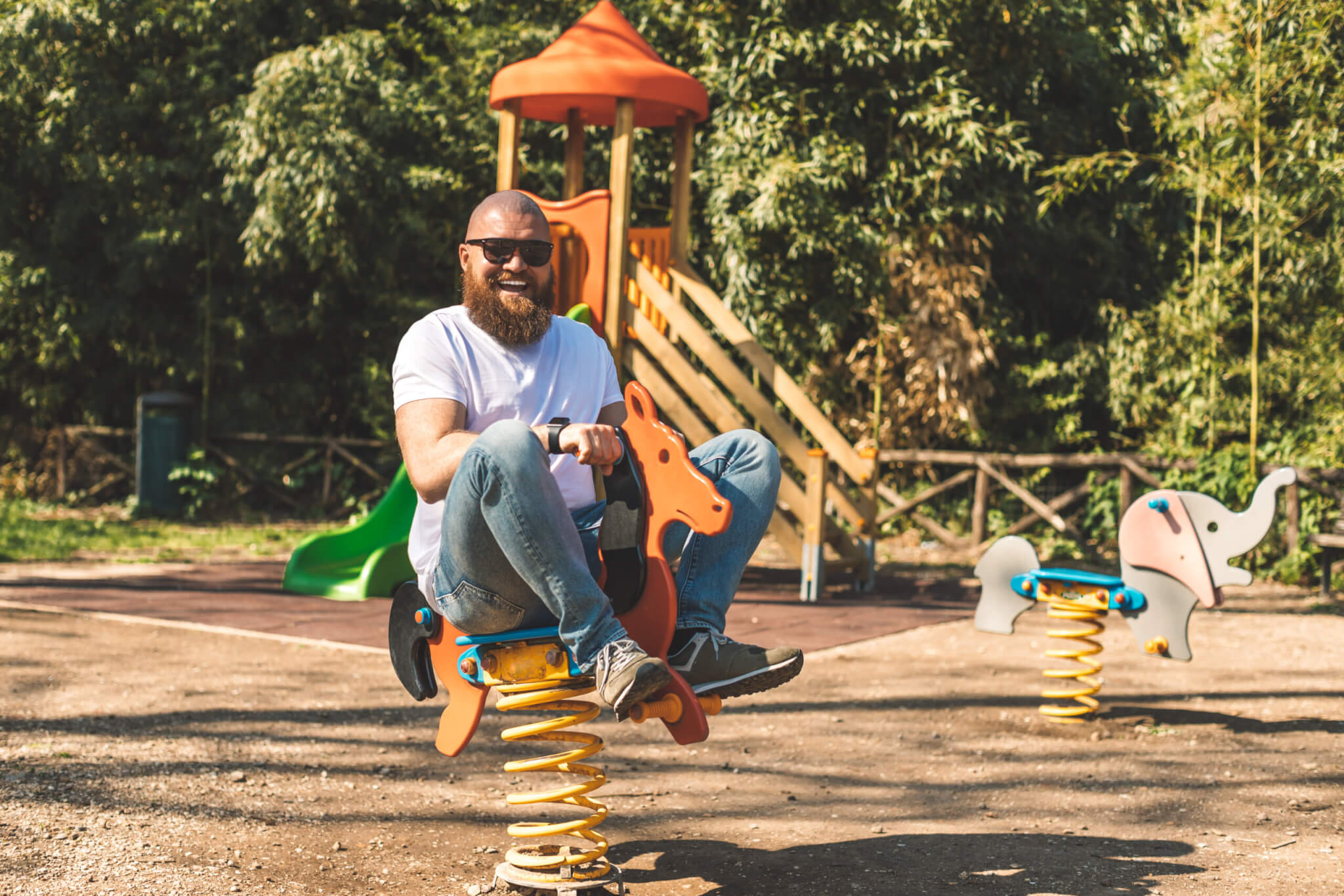
(Photo by Alina Rosanova on Shutterstock)
Play isn’t just for kids: Playful adults cope better with stress, feel more positive emotions, and report higher life satisfaction.
Design matters: Cities and social norms often discourage adult play, but embedding playful spaces into everyday life could boost community well-being.
It’s a mindset, not a toy box: Adult play is about curiosity and spontaneity, whether through humor, movement, creativity, or social interaction.
Play strengthens relationships: It builds empathy, emotional intelligence, and even bridges generational divides.
Somewhere along the way to adulthood, time to play fades away. We tend to trade silliness and imagination for seriousness and busyness. Yet there is clear evidence thatadults benefit from playfulnessjustas children do.
Research shows that adults who engage in playful activities tend tocope better with stress,experience more positive emotions, showgreater resilience when facing challenges, and reporthigher levels of life satisfaction.
Our researchwith New Zealand families highlights how supporting unstructured play can help adults feel less stressed and more connected, while also normalising playfulness in everyday family life.
In a world that demands constant busyness, playoffers essential qualitieswe are at risk of losing: spontaneity, togetherness and the freedom to have fun.
Play in adulthood can look different from play in childhood. It is less about toys or games and more about how we approach everyday experiences.
Source: Drudge Report