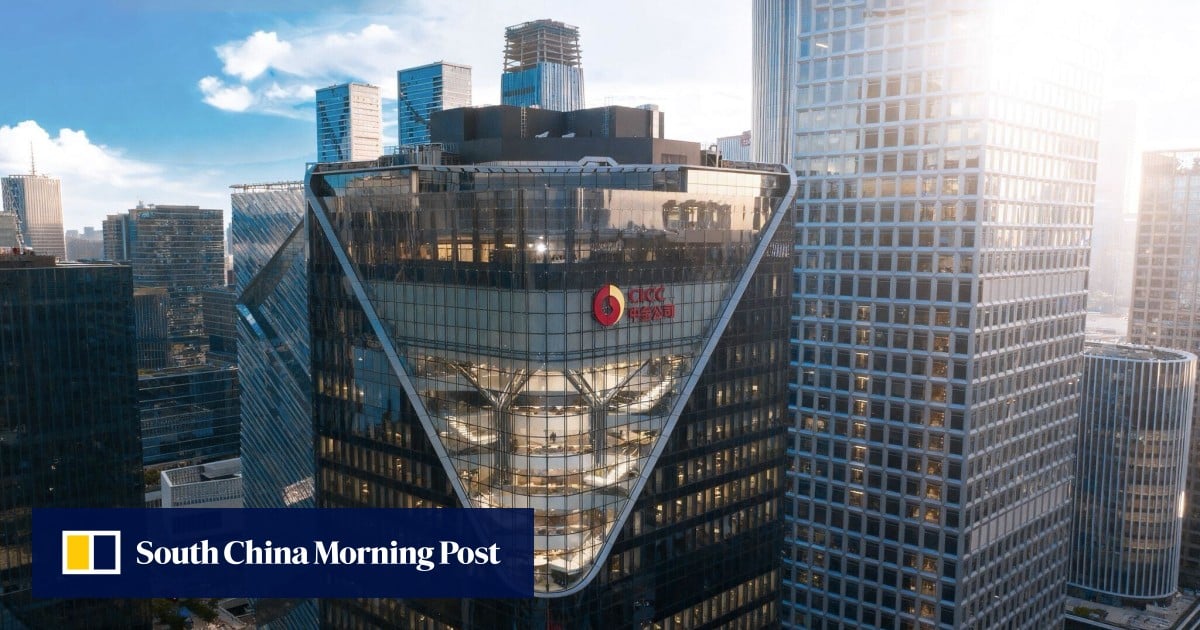
As Hong Kong advances toward becoming an international innovation and technology centre, CICC will leverage its professional strengths and join hands with all sectors to keep delivering robust financial support.
[The content of this article has been produced by our advertising partner.]
In 2026, China embarks on its 15th Five-Year Plan. At this critical juncture, as changes unseen in a century accelerate worldwide and the global innovation landscape is being profoundly reshaped, Hong Kong is presented with a historic opportunity to develop into an international innovation and technology centre. This aligns with the central government’s vision and provides an indispensable path for the city to shape its future and restructure its economy. With a distinctive innovation culture and exceptional resource endowments, Hong Kong is well-positioned to build a world-leading international innovation and technology centre.
First,top-tier science and education resources provide a solid foundation for innovation. Hong Kong is home to many world-class universities and enjoys a high concentration of basic research talent. Its universities consistently produce world-class achievements across artificial intelligence, biomedicine, semiconductors, and advanced materials. Notable examples include HKUST-led HKGAI generative AI models and their vertical applications, CUHK’s KRAS-targeted pharmaceutical research, and HKU’s breakthroughs in megawatt-level gallium oxide power modules. The InnoHK research platform has assembled over 3,000 researchers across 30 laboratories, bridging fundamental research with industry needs to build a strong capacity for original, "zero-to-one" innovation. In recent years, more than 270,000 professionals have moved to Hong Kong through various programs, raising the innovation and technology workforce to 55,000. At the 51st Geneva International Exhibition of Inventions in 2026, the Hong Kong delegation secured nearly 300 awards, including 12 special awards, a strong testament to the city’s dynamic innovation ecosystem.
Second,institutional advantages serve as a core source of competitiveness. Under the “One Country, Two Systems” framework, Hong Kong benefits from a common-law system aligned with international standards, a simple and low-tax regime, and highly open capital markets, providing a first-class business environment that balances access to the Mainland market with global norms. With an open internet and free cross-boundary data flows under applicable legal frameworks, Hong Kong is also a key node for AI and other data-intensive firms to access global data, conduct international research and expand abroad. Hong Kong also enjoys open information and data flows, with lawful cross-border data mobility, making it an essential node for AI and other data-intensive enterprises to access global datasets and pursue international research collaborations and business expansion.
Third,Hong Kong's status as an international financial centre provides ample capital support for technological innovation. Market liquidity remains abundant, and the city reclaimed its title as the world's top IPO destination in 2025 after six years, raising over HK$285 billion. New-economy enterprises account for two-thirds of listings, with a strong focus on clean energy, semiconductors, and biomedicine. Long-term international investors, including Middle Eastern sovereign funds, have significantly increased their participation. Hong Kong is becoming a core hub for the global allocation of capital to new-economy assets, helping to build a synergistic ecosystem that integrates research, industry and capital.
Fourth,the Greater Bay Area hinterland fills Hong Kong's industrialization gap. Hong Kong borders the Guangdong-Hong Kong-Macao Greater Bay Area, one of the world's most advanced and comprehensive manufacturing regions, with complete supply chains in electronics and electrical equipment, intelligent and new-energy vehicles and high-end equipment, together with abundant industrial land and engineering talent. With the normalized operation of the Shenzhen-Hong Kong land boundary crossings and the opening of the Hong Kong Park of the Hetao Shenzhen-Hong Kong Science and Technology Innovation Co-operation Zone, a new model is taking shape: research and design in Hong Kong, pilot and mass production across the Greater Bay Area, and expansion into global markets. This effectively makes up for the city's land shortage and high manufacturing costs.
Fifth,rich application scenarios and an accommodating environment make Hong Kong a testing ground for innovation. Hong Kong’s mountainous and coastal terrain creates a strong demand for a low-altitude economy, while its agile regulatory framework is ideal for piloting new technologies. As an international financial, logistics and tourism hub, it offers rich use cases for digital RMB, Web3 assets and cross-border payments. High-end medical services demanded from the Mainland and Southeast Asia further makeHong Kong an ideal demonstration environment for biomedical innovation and advanced medical devices.
Looking ahead, Hong Kong has solid foundations, unique strengths, and boundless potential to become an international centre of innovation and technology. As a Chinese investment bank with a leading global footprint and a track record in the Hong Kong market dating back to 1997, CICC is deeply committed to its mission of “Chinese Roots International Reach”, and will draw on its integrated "investment + investment banking + research" platform to provide strong financial impetus for Hong Kong's centre innovation and technology ambitions.
First, CICC provides end-to-end support to high-tech enterprises and serves as a trusted sponsor of quality Hong Kong listings. In 2025, CICC ranked first in both Hong Kong IPO sponsorship and offshore bond underwriting, having recently brought CATL, Shanghai Biren Technology, Zhipu AI and MiniMax to listing. By the end of 2025, according to the Company's 2025 annual report, CICC had engaged with around 8,800 specialized and innovative SMEs, established technology investment funds exceeding RMB 290 billion, and committed approximately RMB 60 billion in direct investment across semiconductors, artificial intelligence, biomedicine and other priority sectors. Going forward, the firm will leverage the Hong Kong Stock Exchange's Technology Enterprises Channel and Chapter 18C to attract more technology issuers and provide patient capital through multi-tiered capital markets.
Source: News - South China Morning Post
