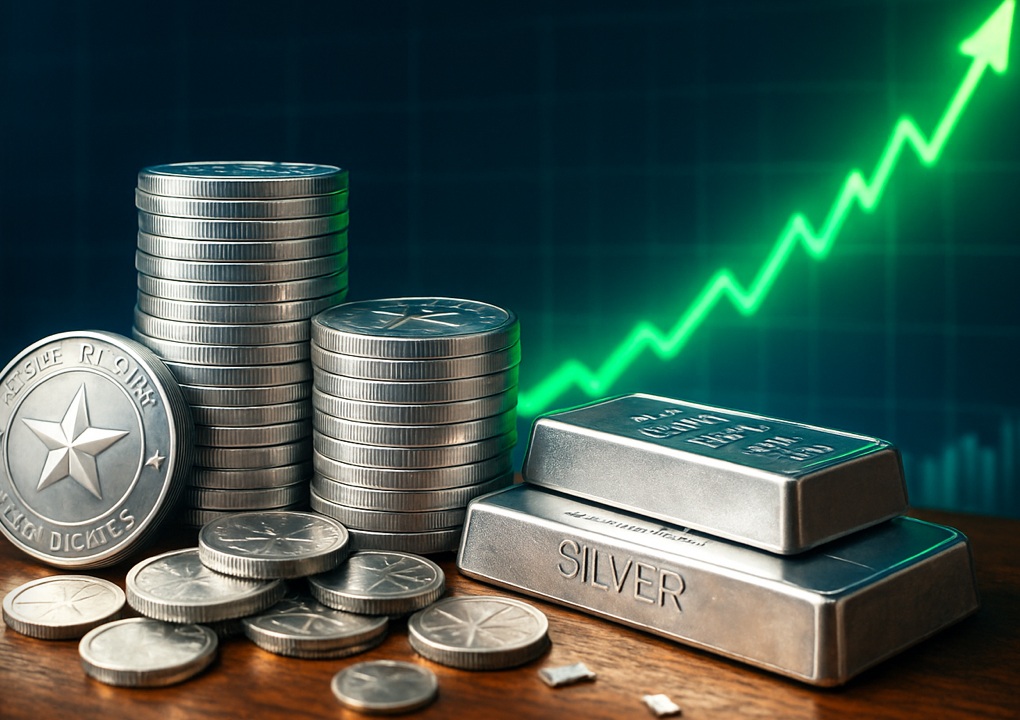
Silver prices plunged to a three-month low before rebounding sharply within hours, leaving traders reeling as the metal's notorious volatility showed no signs of abating. Spot silver dipped below $28 per ounce mid-session on major exchanges, triggering stop-loss orders and margin calls that amplified the downside momentum. By day's end, it clawed back to $29.50, but the intraday swing of over 5% underscored the market's inability to find a stable floor amid conflicting economic signals and speculative fervor.
The turbulence stems from a perfect storm of macroeconomic pressures. Federal Reserve signals of prolonged higher interest rates to combat sticky inflation have bolstered the dollar, traditionally pressuring precious metals like silver. Yet, industrial demand remains robust, with solar panel production and electronics manufacturing gobbling up supply—global silver mine output hit record highs in 2025 but still fell short of consumption needs, per the Silver Institute's latest report. Speculators, sensing opportunity in the chaos, piled into futures contracts, pushing open interest to levels not seen since the 2021 squeeze.
Market participants point to algorithmic trading and leveraged positions as key culprits behind the whipsaw action. "Silver's dual role as both an industrial commodity and a monetary hedge makes it hypersensitive to shifts in sentiment," said analyst Maria Voss of Voss Commodity Research. High-frequency bots exacerbated the moves, buying the dip aggressively while short sellers covered in panic. Comex data revealed a spike in physical delivery notices, hinting at potential supply tightness that could propel prices higher if sustained.
Broader context reveals silver's wild ride mirroring fractures in the global financial system. As central banks hoard gold amid de-dollarization talks, silver—often dismissed as the "poor man's gold"—languishes in the shadows, vulnerable to retail investor whims and ETF outflows. Recent U.S. debt ceiling brinkmanship and China's property sector woes have investors hedging with metals, yet profit-taking dominates. Analysts forecast a trading range of $26-$32 through Q1 2026, but warn that any surprise in upcoming CPI data or geopolitical flare-ups could shatter this fragile equilibrium.
For investors, the lesson is clear: silver's volatility demands disciplined risk management over chasing momentum. While bulls eye a breakout above $32 as a bullish signal, bears argue persistent real yields will cap upside. As markets grapple for direction, silver's saga continues to captivate—and punish—those betting on its next twist.