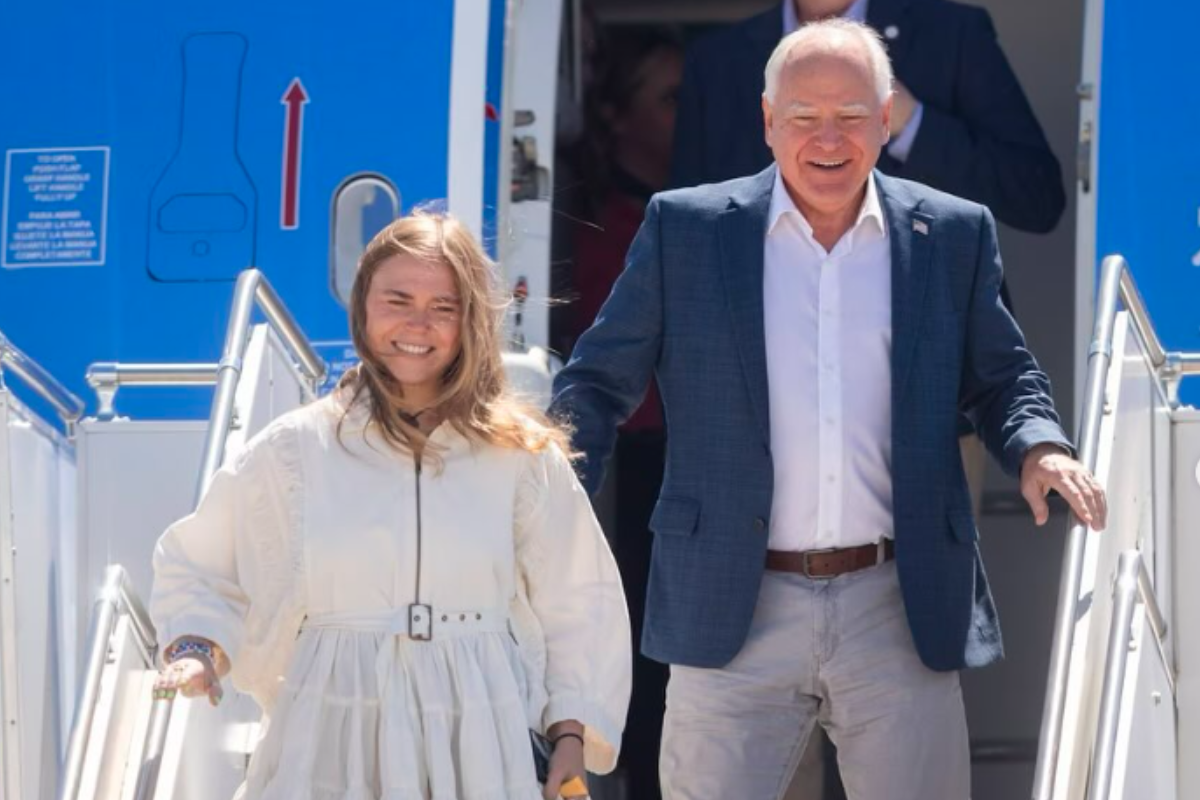
Democratic Minnesota Governor Tim Walz has stepped aside from a re-election bid amid a storm of controversy, and his daughter Hope has offered a deeply personal explanation of why he chose to walk away. Speaking publicly after weeks of mounting pressure, she framed the decision as a protective act rooted in principle rather than political fear.
Hope Walz, a 25-year-old social worker, addressed the issue during an appearance on theOne Hour Detourspodcast, where she reflected on how allegations linked to a major child nutrition fraud case were weaponised against her father. While the claims did not accuse the governor personally, the renewed scrutiny proved enough to tip the balance.
Hope explained that her fathersuspended his campaignin order to remove what had become a national target from the state. She suggested that his profile and past popularity made him an easy figure to single out, particularly as right wing voices reignited attention on a pandemic era fraud scandal.
She said the decision was taken to get the spotlight off Minnesota itself, arguing that the state was being dragged into a broader political fight that had little to do with genuine accountability and far more to do with partisan gain.
'Part of the decision my dad decided to step away from the race is to take that target off Minnesota,' she told host John O'Sullivan. 'I think he believes that if he's not in the race they have nothing else.'
In one of her most striking remarks, Hope suggested thatDonald Trump's hostility towards her father was deeply personal. She argued that the President resented Walz because he embodied qualities Trump lacked, including empathy, decency and a focus on community.
According to Hope, her father absorbed much of the blame precisely because he had a national profile and was willing to confront attacks directly. She added that the scandal became a convenient tool for critics who wanted to stir fear and anger, particularly around immigrant communities.
'It (the fraud claims) is being dealt with, they were just able to frame it in a way that benefitted them,' she said.
The controversy traces back to what the Justice Department has described as the 'largest pandemic relief fraud scheme in US history.' During the COVID-19 crisis, several dozen individuals were convicted of exploiting a federally funded child nutrition programme, falsely claiming to have served millions of meals and siphoning off nearly $250 million (£185 million).
Hope admitted that there was enough truth in the underlying fraud for political actors to twist and amplify the story. She said the fact that the case was real allowed critics to frame it in ways that suited their agenda, even as authorities continued to deal with the actual perpetrators.
Source: International Business Times UK
