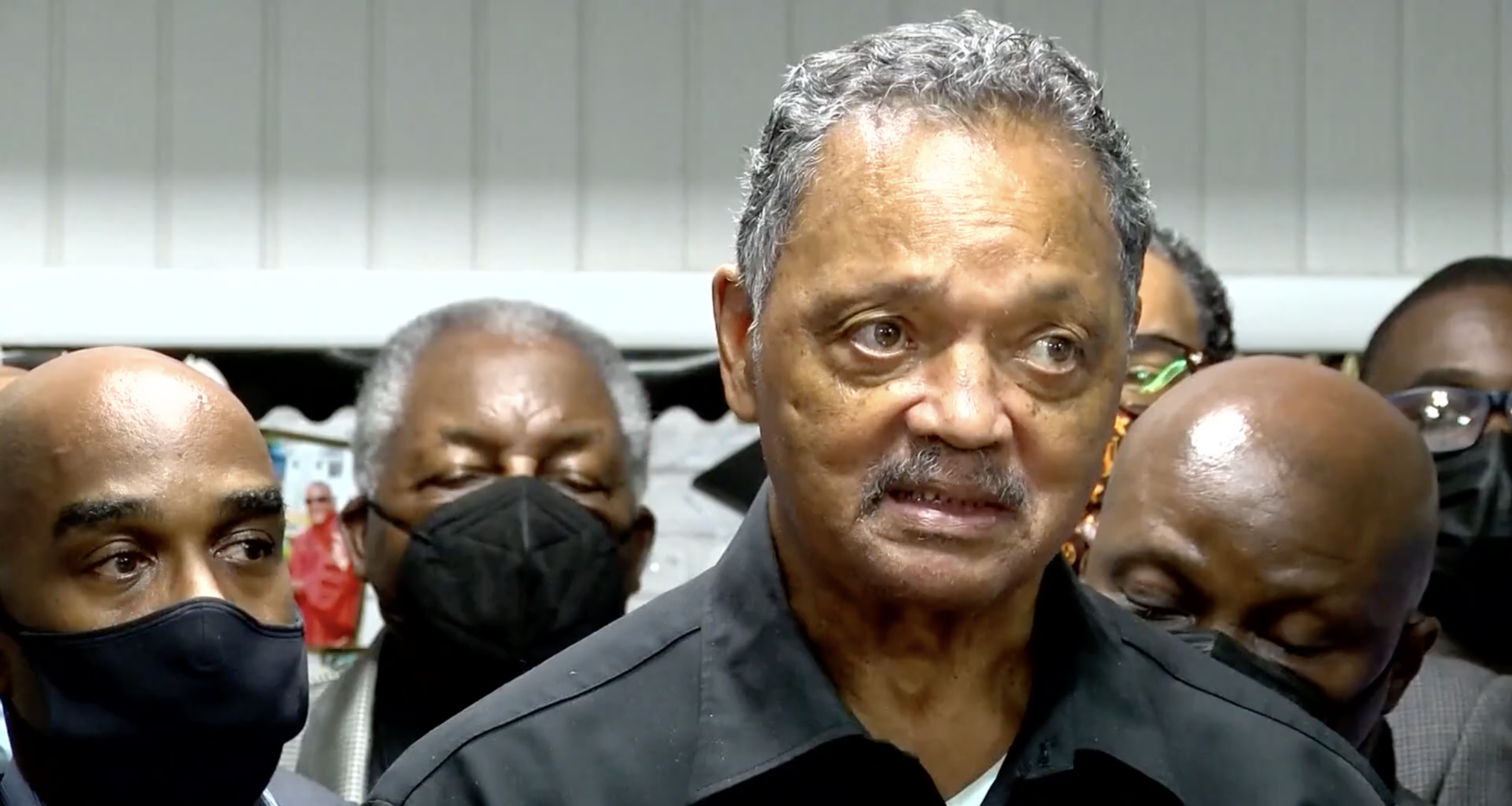
The last public images of the Rev Jesse Jackson show him moving slowly, his once-booming voice softened by illness but still unmistakably his own. Even in a wheelchair, even as Parkinson's and a rare neurological disease gnawed at his balance and speech, he kept turning up — at protests, at pulpits, at anniversaries of struggles he had helped shape.
Now that voice has gone silent.
Jackson, the civil rights firebrand who went from the segregated streets of Greenville, South Carolina, to the heart of American politics, died on Tuesday at the age of 84, his family confirmed. A cause of death has not yet been given, but he died peacefully, surrounded by loved ones.
Officially, there is no listed cause of death for Jesse Jackson. Unofficially, his body had been waging war with time for years.
He had lived for more than a decade with progressive supranuclear palsy (PSP), a degenerative brain disorder that steadily robs people of the ability to walk, swallow and control basic movement. Before that, in 2017, he publicly revealed he had Parkinson's disease, describing it, with grim determination, as a 'new chapter' in a lifelong quest for perseverance and purpose. He had also endured two hospital stays with Covid.
In November he was admitted to hospital again. The Rainbow/PUSH Coalition — the organisation born from his twin vehicles for Black economic and political power — confirmed the seriousness of his condition. From there, the story follows a sadly familiar pattern: fewer public appearances, more whispers about his health, the slow dawning that one of the last living bridges to Martin Luther King Jr was running out of time.
His family's statement tried to do justice to that scale.
'Our father was a servant leader — not only to our family, but to the oppressed, the voiceless, and the overlooked around the world,' they wrote. 'We shared him with the world, and in return, the world became part of our extended family. His unwavering belief in justice, equality, and love uplifted millions, and we ask you to honour his memory by continuing the fight for the values he lived by.'
It was not just relatives marking the loss. The Rev Al Sharpton, his sometime rival and frequent ally, called Jackson 'one of [the nation's] greatest moral voices' — a man who 'carried history in his footsteps and hope in his voice'.
For once, the eulogies don't feel overwrought. If anything, they struggle to keep up.
Source: International Business Times UK
