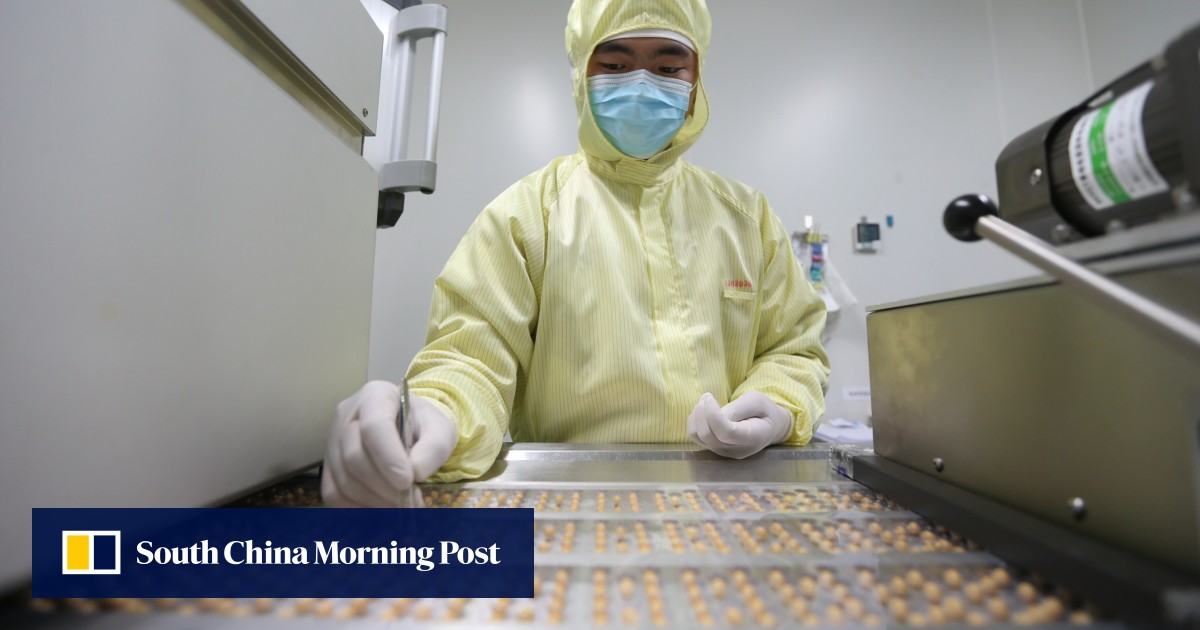
Mainland Chinese investors are flooding Hong Kong-listed pharmaceutical stocks with billions in capital, capitalizing on a surge of lucrative licensing deals that have ignited a biotech boom in the city. Southbound trading through the Stock Connect program has spiked dramatically over the past month, with drugmakers like Hansoh Pharmaceutical Group and Honour Pharma seeing net inflows exceeding HK$2 billion ($256 million) each, according to data from the Hong Kong Exchanges and Clearing. This frenzy reflects growing confidence in Hong Kong's biotech sector as a bridge between China's innovation powerhouse and global markets.
The catalyst for this investment wave is an unprecedented flurry of licensing agreements, where Chinese biotechs out-license novel therapies to multinational giants. In recent weeks, Honour Pharma inked a landmark $1.2 billion deal with AstraZeneca for its next-generation oncology drug, granting exclusive rights in Europe and North America. Similarly, Belgravia Hartford, another HK-listed firm, secured a $800 million pact with Eli Lilly for a breakthrough antibody targeting autoimmune diseases. These deals not only validate the scientific prowess of Chinese developers but also inject immediate cash infusions, propelling share prices skyward—Honour's stock has surged 45% since the announcement.
Behind the momentum lies China's aggressive push into biologics and innovative medicines, spurred by government incentives under the 14th Five-Year Plan. Beijing's relaxation of clinical trial approvals and cross-border data rules has accelerated partnerships, allowing firms to bypass domestic pricing pressures while tapping Western premiums. Hong Kong's listing regime, with its Chapter 18A for pre-revenue biotechs, has become a magnet, drawing over 200 such companies and positioning the exchange as Asia's biotech hub rivaling Nasdaq.
Analysts attribute the retail investor surge to mainland platforms like Futu and Snowball, where forums buzz with tips on "licensing plays." "This is retail FOMO meeting institutional validation," said Kevin Wang, biotech strategist at Jefferies. Yet risks loom: valuation bubbles, regulatory hurdles in partner markets, and geopolitical tensions could temper the rally. Despite U.S.-China frictions, deal flow persists, underscoring biotech's resilience as a decoupling outlier.
Looking ahead, the licensing wave shows no signs of abating, with pipelines brimming—over 50 assets in late-stage talks per industry trackers. As mainland capital pours in, Hong Kong's biotech index has outperformed the Hang Seng by 30% year-to-date, signaling a structural shift. For investors, it's a high-stakes bet on China's pharma ascent, blending innovation hype with tangible milestones.
