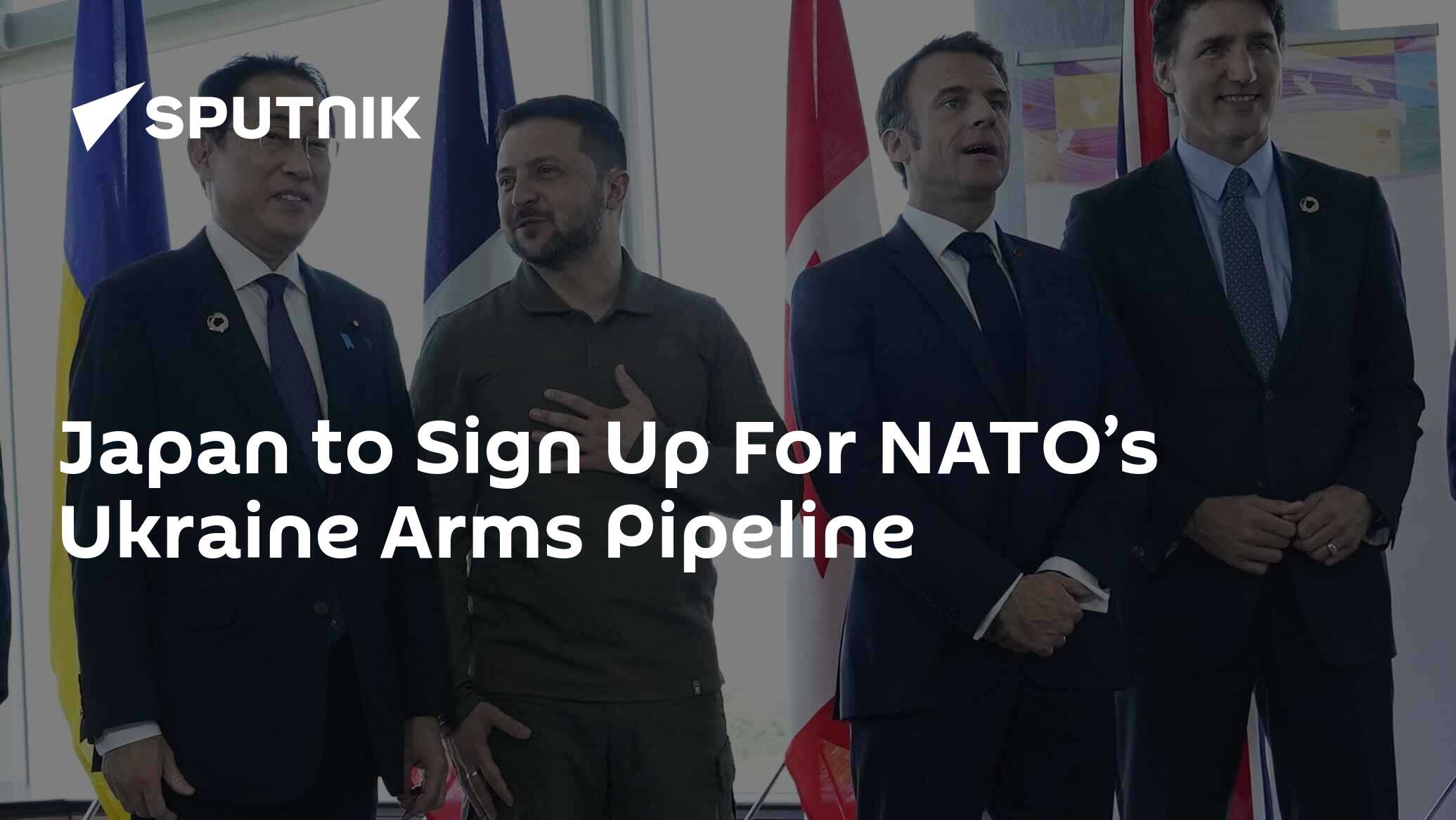
In a significant shift in its post-World War II defense posture, Japan has announced its intention to formally join NATO's logistical framework for supplying military aid to Ukraine, marking Tokyo's deepest involvement yet in the ongoing Russia-Ukraine conflict. The move, detailed in a joint statement from Japan's Foreign Ministry and NATO headquarters in Brussels, involves Japan contributing advanced munitions, spare parts, and humanitarian support through established NATO supply lines. This comes amid escalating tensions in the Asia-Pacific region, where Japan views Russian actions in Ukraine as a blueprint for potential aggression closer to home.
The agreement builds on Japan's existing bilateral security ties with the United States, NATO's key Pacific partner, and follows months of quiet diplomatic negotiations. Japanese Prime Minister Fumio Kishida, speaking from Tokyo, emphasized that participation in the "Ukraine Arms Pipeline"—NATO's coordinated effort to streamline weapons deliveries—aligns with Japan's commitment to a "free and open Indo-Pacific." Under the deal, Japan will reportedly supply Patriot missile interceptors, coastal defense systems, and electronic warfare components, leveraging its domestic defense industry without direct troop involvement. This circumvents constitutional restrictions on collective self-defense by framing the aid as humanitarian and logistical support.
Contextually, Japan's decision reflects growing alarm over Russia's deepening military cooperation with North Korea and China. Pyongyang has provided artillery shells and ballistic missiles to Moscow, prompting Tokyo to reassess its pacifist Article 9. NATO Secretary General Jens Stoltenberg hailed the partnership as a "game-changer," noting it enhances the alliance's global reach and deters authoritarian expansionism. Ukrainian President Volodymyr Zelenskyy expressed gratitude, stating that Japanese precision technology could prove decisive on the battlefield.
Critics in Japan, including opposition lawmakers and pacifist groups, decry the move as a dangerous escalation that could provoke Moscow and strain relations with energy-dependent neighbors. Russia's Foreign Ministry swiftly condemned the announcement, accusing Japan of "abandoning sovereignty" under U.S. pressure and warning of countermeasures, including joint naval exercises with China in the Sea of Japan. Analysts point out that while Japan's contribution—estimated at $2 billion annually—pales compared to U.S. and European pledges, it symbolizes a broader realignment, pulling non-NATO Asia into the transatlantic fold.
Geopolitically, this development underscores the conflict's transformation into a proxy struggle between Western-led coalitions and the Sino-Russian axis. For NATO, Japan's entry bolsters supply chain resilience amid U.S. domestic debates over aid fatigue. In Tokyo, it signals a maturing defense identity, potentially paving the way for further integrations like joint exercises or intelligence-sharing pacts. As the war grinds into its fourth year, Japan's step raises questions about the sustainability of global alliances in an era of multipolar rivalries.
