Home-USC Researchers Print MRI Coils for a Fraction of the Cost
MRI coils, the specialised antennas that sit close to the body and capture the radiofrequency signals that become diagnostic images, have long been a bottleneck in clinical imaging. They are rigid, expensive, and built to a one-size-fits-all standard that works reasonably well for adults but poorly for children, infants, and anyone requiring imaging of moving anatomy like the heart or wrist.
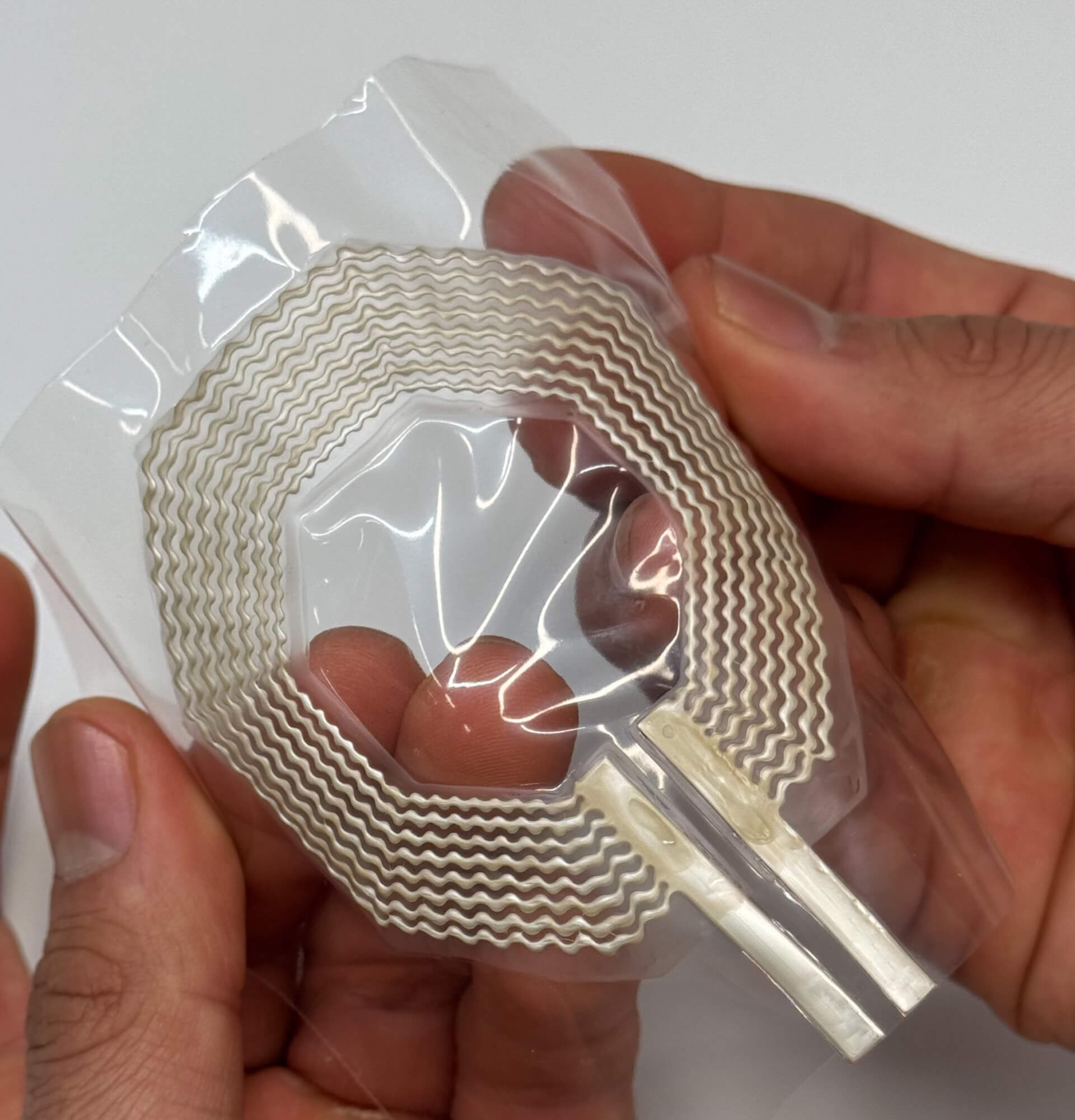
Researchers atUSC Viterbi School of EngineeringandUSC Mark and Mary Stevens School of Computinghave now challenged that standard directly. Yasser Khan and Krishna Nayak, together with student researcher Félix Muñoz and research assistant professor Ye Tian, have developed a silver-ink MRI coil that costs around $30 in consumable materials and can be printed in under ten minutes. By comparison, conventional coils carry price tags of $10,000 to $50,000 each.
Published inNature Communications, the study demonstrates that the new coils deliver up to four times higher image resolution than their commercial counterparts.
The core engineering challenge was finding a material that could be both highly conductive and flexible enough to conform to the body, two properties that have historically worked against each other. Copper, the industry standard, is rigid. Most flexible alternatives sacrifice too much conductivity, reducing the signal-to-noise ratio that determines image clarity.
Khan’s team identified silver ink as the answer. Printed onto a soft, rubber-like thermoplastic polyurethane substrate, it achieves around 95% of the signal efficiency of solid copper while remaining stretchable, closely matching the natural elasticity of human skin. The result is a coil that wraps tightly around complex anatomical structures and maintains consistent contact throughout a scan, which is precisely what dynamic imaging of the wrist or heart demands.
The coils are designed using standard Gerber files, the same digital format used in circuit board manufacturing, and produced with an automated direct-ink-write printer, eliminating the manual assembly steps that drive up cost and production time in conventional coil manufacturing.
From Lab Bench to the Smallest Patients
The clinical implications of the work extend well beyond cost savings. John Wood, a collaborator from theKeck School of Medicineof USC andChildren’s Hospital Los Angeles, highlighted the particular significance for paediatric care, where existing coils, originally designed for adults and scaled down, routinely fail to accommodate the rapidly changing anatomy of growing infants. A newborn’s heart can be the size of a walnut, requiring a coil that is both very small and precisely fitted. The new platform makes that level of customisation not only possible but fast and affordable.
The team has identified paediatric lung imaging as a likely first clinical application, with additional targets including wrist injuries, bronchopulmonary dysplasia monitoring, swallowing function assessment, and gastrointestinal evaluation in newborns. Because the coils are inexpensive and compatible with low-cost portable tools, the technology also opens a path to expanding quality MRI access in rural and resource-limited settings globally.
Source: 3D Printing Industry
