Authored by Lawrence Franklin via The Gatestone Institute,
The widened scope and quickened pace of the Islamic State's military operations in the Sahel region -- just below North Africa, roughly from Senegal to Sudan -- threatens to alter the strategic orientation of the African continent.Efforts at countering terrorist operations in the Sahel, such as they were, have evidently failed. As all roads to Mali's capital of Bamoko are nowblocked, that country might be the first state to "go under."
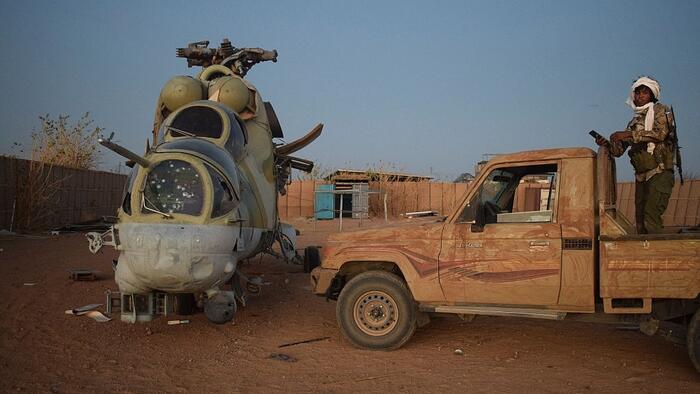
On April 25, during a coordinated attack on several Malian cities, Muslim terroristskilledthe country's Minister of Defense. The terrorists then drove the Malian Army and its alliedRussian mercenariesout of the country's north.
The militaryjuntasruling Mali, Burkina Faso and Niger have proven themselves as ineffective at combatting Islamic terrorist operations as the democracies that they overthrew. The increasing terrorist assaults across the Sahel and the jihadists's determinedefforts to take over Mali, Burkina Faso, and Niger have eroded the sovereignty of these states.
The combat successes of the jihadists in the Sahel in March 2022 precipitated their elevation to the status of "Islamic State Sahel Province" within the hierarchy of the IS, and several other factors have facilitated the growth of the jihadist advance in the Sahel.
The cooling of the once global counterterroristcrusade— following an apparent shift in focus by the world's great power rivalries, as well as fewer resources directed against the terrorist problem — left a vacuum that was adroitly filled by jihadist groups, which has reduced the pressure on Islamic State and Al Qaeda regional affiliates.
Another situation that might have impacted negatively upon the Sahel's overall security is themonumentalmigratory flowof Africans from sub-Saharan countries who pass through the Sahel to the Mediterranean, and the consequent stress this puts on the Sahel economies.
A third force eroding state sovereignty of Sahel countries is warfare waged by Al Qaeda terrorist affiliates that are rivals of the Islamic State, such as the Jama'at Nusrat al-Islam wal Muslimin (JNIM). JNIM also coordinates attacks with the Malian anti-government militia known as the Azawad Liberation Front.
Jihadist violence has becomeubiquitousin the Sahel, and recently expanded to include fighting between Islamic State and Al Qaeda. On April 2, a notable clash between these two rival terrorist networksoccurredin western Niger.
The Sahel now appears to be theepicenterof global terrorist violence.Sahel's terrorist groups might also be acquiring confidence that they can achieve permanent and more ambitious goals in the near future.
Source: ZeroHedge News
