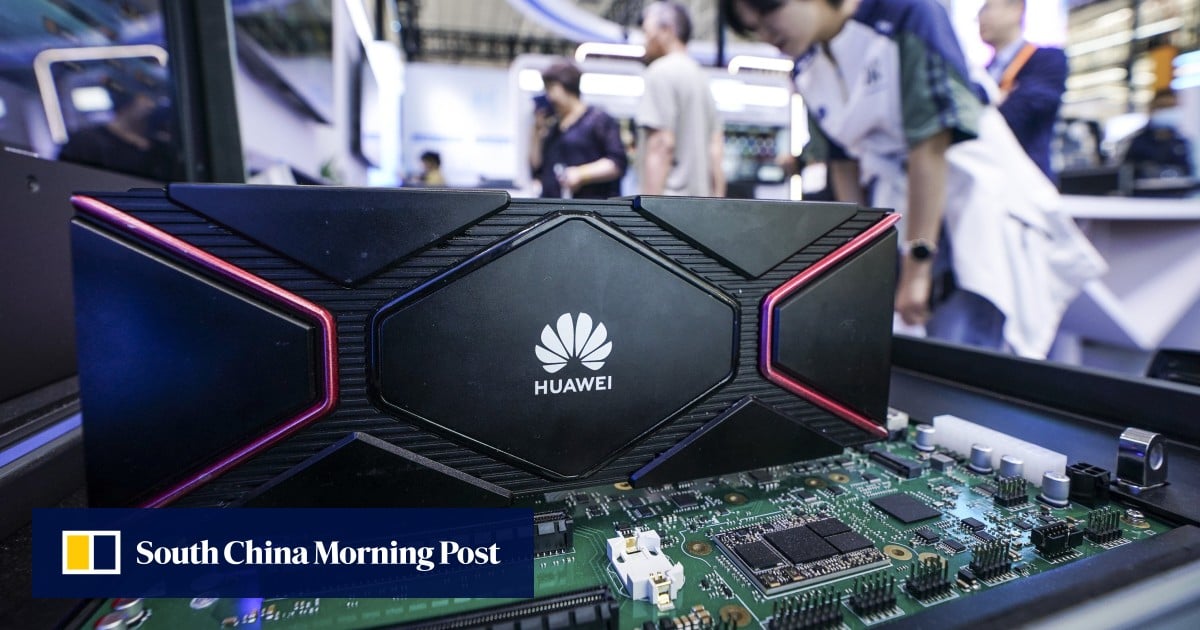
Chip advance marks big step accelerating China’s semiconductor self-reliance push and promises leaps in AI computing power
The Chinese tech giant captured global attention on Monday by introducing the new Tau (τ) Scaling Law, which it said lay the groundwork for Huawei to achieve transistor density equivalent to a 1.4-nanometre process in high-end chips by 2031. If proven, the advancement would significantly narrow the gap with global semiconductor leaders at the cutting edge of chip development.
“The US will have less leverage over export control as China becomes more self-sufficient,” said Gary Ng, senior economist at Natixis Corporate and Investment Bank, although he cautioned that the law still needed to be “tested in practice”.
Huawei’s new trajectory promises to bypass this critical bottleneck. He Tingbo, chairwoman of the Huawei Scientist Committee and president of its semiconductor business department, said cutting-edge EUV tools would no longer be necessary to achieve these advanced nodes.
Source: News - South China Morning Post
