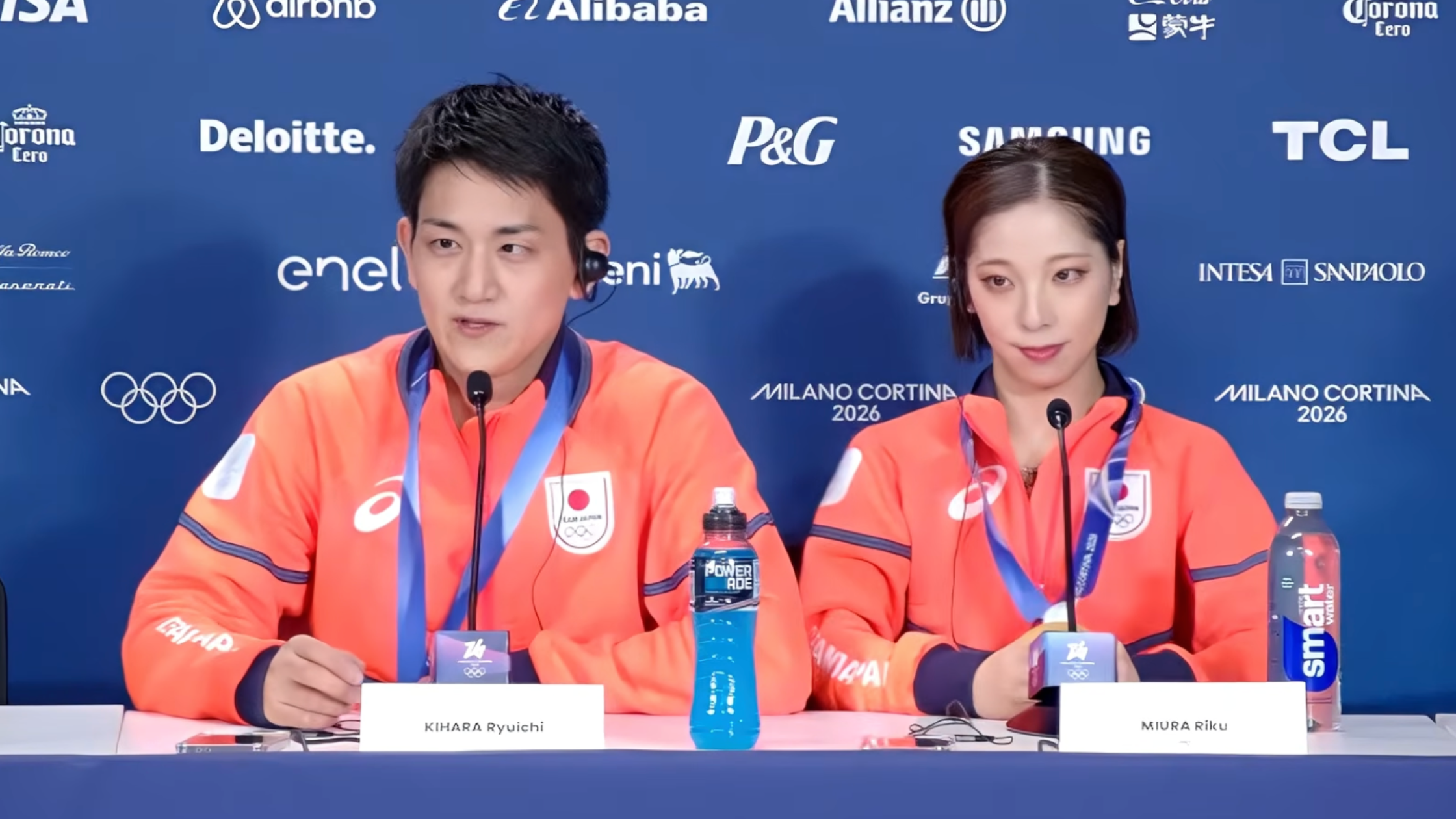
The reigning world champions delivered a career-best free skate in Milan, earning Japan its first-ever Olympic title in pairs figure skating.
Riku Miura and Ryuichi Kihara produced one of the most memorable moments of the Milano Cortina 2026 Winter Olympics after winning Japan's first Olympic gold medal in pairs figure skating. Their victory came after a difficult short program left them in fifth place and facing a steep climb in the standings.
On Monday night, the reigning world champions responded with a flawless free skate that earned a career-best score of 158.13 and a total of 231.24. The result sparked an emotional celebration inside the Milano Ice Skating Arena, with the duo collapsing into tears as the crowd rose to its feet.
The win marked a historic breakthrough for Japanese figure skating, adding a new discipline to the country's Olympic legacy beyond its long tradition of singles success.
Miura and Kihara entered the pairs competition as favourites, yet their short program nearly derailed their Olympic dream. A mistake on a lift cost them valuable points and left them outside medal position heading into the final skate.
Instead of unraveling, the pair returned to the ice with renewed focus and determination. Skating to music from 'Gladiator', they opened with a massive triple twist and followed with clean throws, strong side-by-side jumps, and lifts executed with confidence.
Miura later said she was proud of their ability to recover quickly, while Kihara admitted he felt broken after the error but found strength through the support of his partner and coaching team.
The gold medal was the first Olympic title for Japan in any figure skating discipline sinceYuzuru Hanyu's second straight singles triumph in 2018. More importantly, it represented Japan's first-ever Olympic championship in pairs skating, a discipline where the country historically had little presence.
Miura and Kihara's rise has already reshaped expectations. They placed seventh at Beijing 2022, then went on to become world champions in 2023 and again in 2025, proving Japan could compete with the sport's traditional powers.
Their Olympic success now sends a clear message that Japanese skating is expanding beyond singles, with pairs emerging as a serious medal force on the global stage.
Source: International Business Times UK
