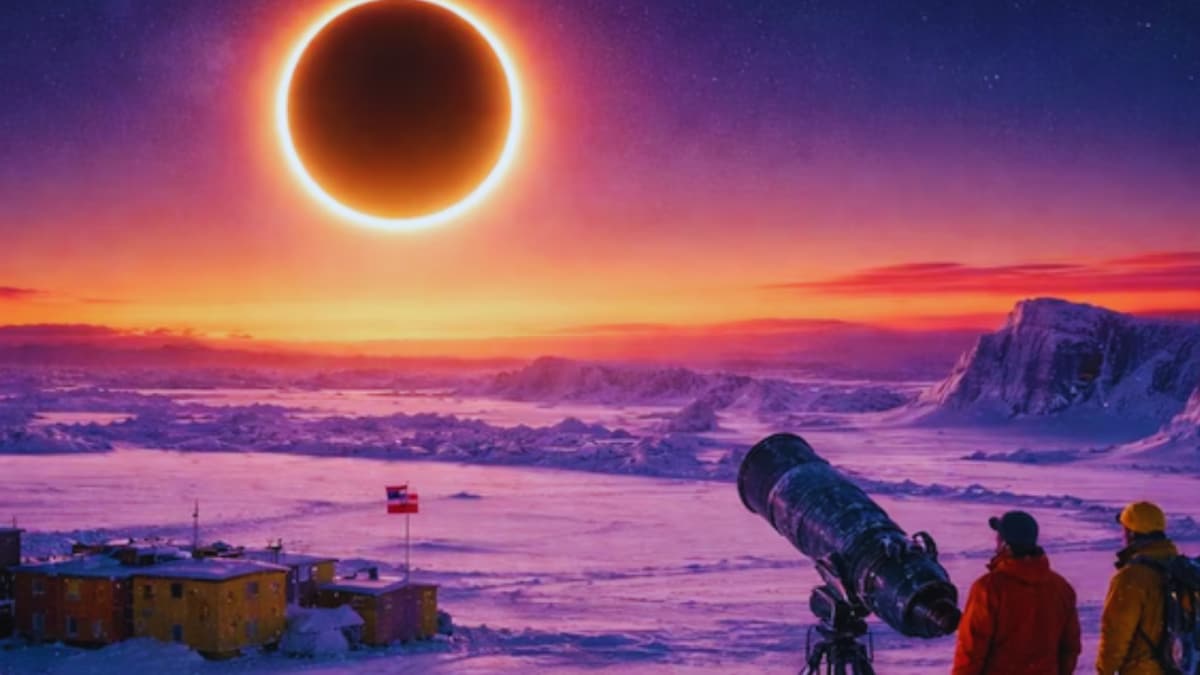
In the icy emptiness of Antarctica, a dramatic contest between science and nature is unfolding. On the world’s coldest and most isolated continent, researchers are braving life-threatening conditions to document a rare ‘ring of fire’ solar eclipse.
They believe the data gathered here could unlock crucial secrets about solar flares and space weather.
At Concordia Station and Mirny Station, scientists are working in temperatures plunging below minus 30°C to capture the eclipse. The mission has turned into a high-stakes struggle between cutting-edge technology and one of the harshest environments on Earth.
While most regions of the world experience relatively stable weather, Antarctica’s extreme cold is relentless. Concordia Station is often nicknamed ‘White Mars’ because of its isolation, thin air, and exceptionally dry atmosphere.
Though Antarctica seems like the last place to witness a ‘ring of fire’ eclipse, it offers a unique scientific advantage. The air above the Antarctic plateau is extremely dry, with very little water vapour.
Since atmospheric moisture can distort solar observations, these dry conditions provide an unusually clear and stable window to the sky.
When the Moon partially covers the Sun, researchers must ensure that their highly sensitive solar telescopes do not fail in the extreme cold. Operating machinery here is extraordinarily difficult.
Ordinary lubricants used in gears thicken and turn glue-like at such low temperatures. Engineers rely on special dry lubricants and heating systems to keep tracking mounts functioning smoothly. Sensors are also vulnerable; a single malfunction during the brief minutes of totality could wipe out years of preparation and millions in funding.
At the Russian-led Mirny Station, powerful coastal winds create additional challenges. These gusts can shake delicate instruments, potentially blurring images and compromising valuable data.
The primary objective of the expedition is to observe the Sun’s outer atmosphere, the solar corona, normally concealed by the Sun’s intense glare. Understanding solar flares is vital, as these powerful eruptions can disrupt satellite communications, GPS navigation, and even power grids on Earth.
Source: World News in news18.com, World Latest News, World News
