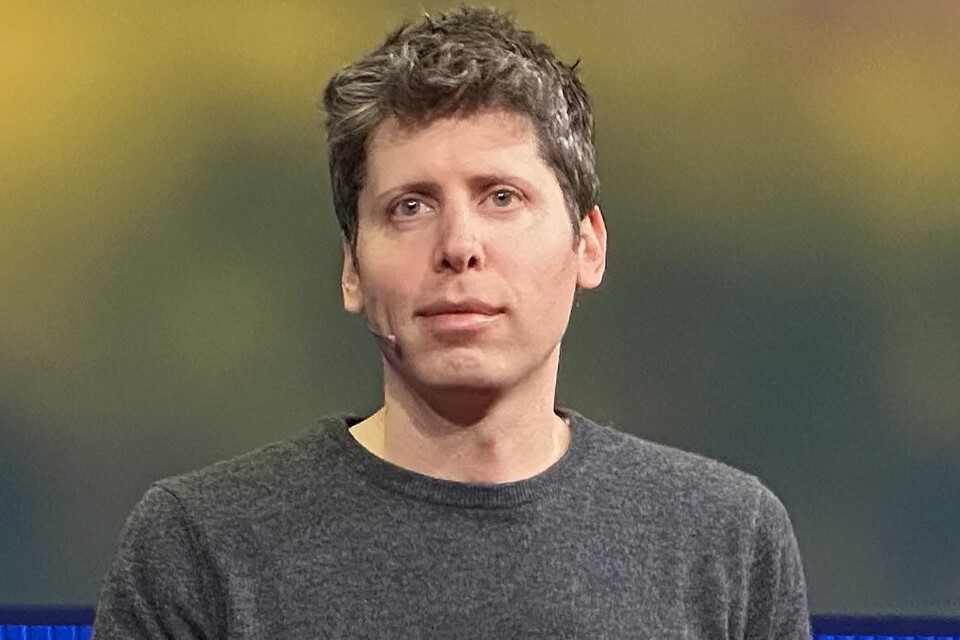
OpenAI CEO Sam Altman has publicly admitted he was wrong about AI's impact on jobs. The Silicon Valley executive made the announcement during a virtual appearance at the Commonwealth Bank of Australia's technology conference in Sydney on Tuesday.
Altman told conference attendees that the anticipated AI 'jobs apocalypse' has not materialised in the way many industry leaders, including himself, once feared. He admitted that entry-level white-collar positions have proved more resilient to automation than his earlier intuition suggested.
The OpenAI chief executive said he was'delighted to be wrong'about the speed at which AI would displace human workers across professional sectors. He acknowledged that while OpenAI's technological forecasts around the launch of ChatGPT were 'roughly right', he and his team were 'pretty wrong' about the social and economic consequences.
Altman said he had expected a bigger impact on entry-level office roles by now, telling Commonwealth Bank of Australia CEO Matt Comyn that he thought 'there would have been more impact on entry-level white-collar jobs being eliminated by now than has actually happened'. 'I now think I understand more about why it hasn't, and I'm obviously grateful, but that is an area where my intuitions were just off,' he added.
Altman explained that human interaction remains an irreplaceable component of many jobs, preventing widespread automation despite rapid advances in AI systems. He said that even as AI tools handle more routine tasks, there is still a 'human part' of employment that cannot be substituted.
He gave the example of his own working day, noting that while he has experimented with using AI to respond to Slack messages and emails, he ultimately returned to writing many of them himself because 'we really do care about our interactions with people'. That experience, he said, reinforced his view that some parts of professional work remain difficult to automate completely.
Altman's updated stance marks a sharp contrast with his earlier warnings about AI-driven job losses. In past interviews, he suggested AI couldreplace'30 to 40%' of work tasks 'in the not too distant future', contributing to fears of mass white-collar disruption. He also previously argued that AI would likely take customer support roles first and could compress decades of gradual job turnover into a much shorter period.
Those comments helped fuel a wave of concern about whether rapid AI deployment might trigger large-scale layoffs across sectors such as finance, law and professional services. Altman now says that, so far, the pace of change has been less dramatic than he and other tech leaders anticipated.
agree with lots of what jensen has been saying about ai and jobs; there is a ton of stuff to do in the world.people will1) do a lot more than they could do before; ability and expectation will both go up2) still care very much about other people and what they do3) still be…
Altman's comments come as businesses increasingly integrate AI tools into everyday workflows without eliminating entire job categories. In many cases, companies are using AI to draft emails, summarise documents and support customer service staff, while keeping humans in the loop for final decisions and direct client contact.
Source: International Business Times UK
