The USDepartment of Justicesaid it couldn't be done. Two guys in San Francisco did it anyway, in five hours.
When theDOJ released millions of pages of Jeffrey Epstein documents, officials claimed that making the files searchable was impractical due to 'technical limitations.'
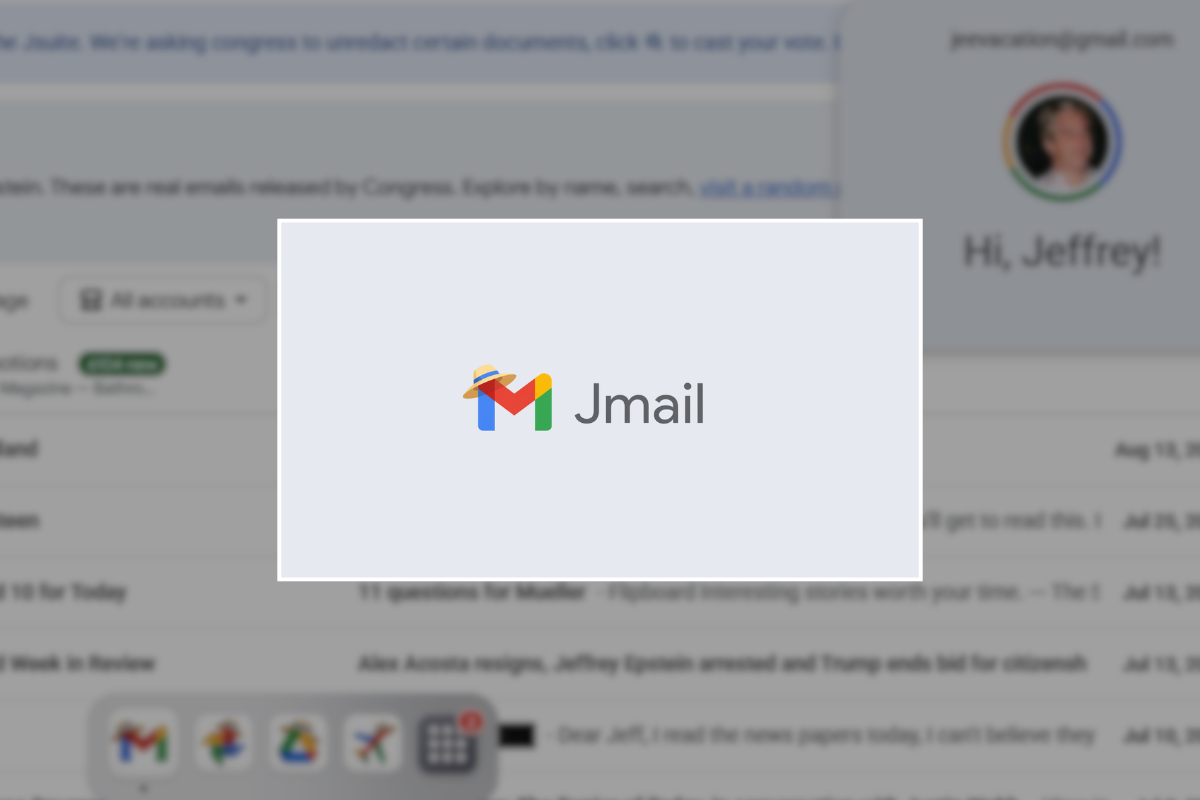
Riley Walz, an internet artist the New York Times once called a 'tech jester', and Luke Igel, co-founder of AI editing firmKino AI, saw that excuse and builtJmailin 2025, a website that turns 20,000 pages of poorly scanned PDFs into a Gmail-like interface anyone can browse. The project has since expanded to include the massive 3.5 million-page repository that includes the entire DOJ 2026 document dump.
'We cloned Gmail, except you're logged in as Epstein.' Walz announced on X when the site launched in November 2025.
We cloned Gmail, except you're logged in as Epstein and can see his emailspic.twitter.com/6KsBY8kh3p
His real email address? [email protected]. A convicted child sex trafficker named his email account 'je-vacation.' That detail alone tells you something.
The interface copies Gmail's layout exactly.
Users can sort by inbox, starred, or sent messages. A crowdsourcing feature lets visitors flag emails they find important, pushing the most-starred exchanges to the top.
'I think the craziest, most meta part is that you'rereading his private emails of him trying to clean up his own reputation,' Igel told Columbia Journalism Review.
Jmail directly challenges the DOJ's claim that searchability was technically unfeasible. The site runs 'Jemini,' anartificial intelligencesystem that searches through document releases, including handwritten notes the government said were impossible to index.
Source: International Business Times UK
