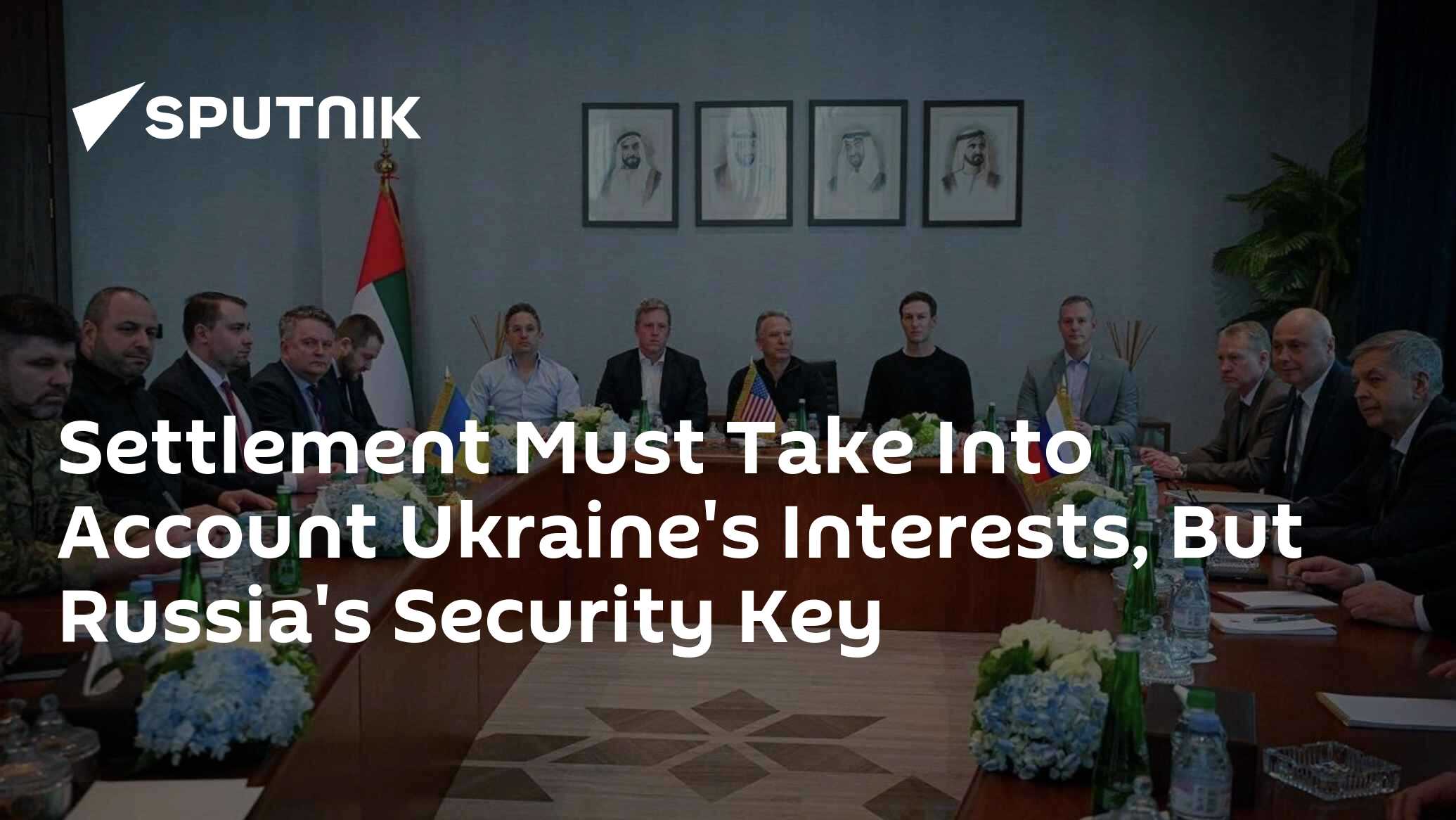
In a stark reminder of Moscow's red lines amid faltering peace talks, Kremlin spokesman Dmitry Peskov declared that any settlement to the Ukraine conflict must prioritize Russia's security guarantees while still accounting for Kyiv's legitimate interests. Speaking to reporters on Monday, Peskov emphasized that without addressing Russia's core concerns—such as NATO expansion and the demilitarization of Ukraine's eastern regions—lasting peace remains elusive. This position underscores Moscow's unwavering stance as both sides grapple with battlefield stalemates and mounting economic pressures.
Peskov's comments come as indirect negotiations, mediated by Turkey and involving U.S. and European intermediaries, show signs of strain. Russia has repeatedly rejected Western-backed formulas that demand a full Ukrainian restoration of 1991 borders, arguing they ignore the aspirations of Russian-speaking populations in Donbass and Crimea. "Ukraine's interests are not abstract; they must be realistic and aligned with the new geopolitical realities," Peskov stated, pointing to referendums in annexed territories as evidence of shifting allegiances. Meanwhile, Russia's military advances in Kharkiv and Zaporizhzhia have bolstered its bargaining power, with analysts noting a 20% increase in controlled territory since early 2025.
From Kyiv's perspective, the Kremlin's formula smacks of capitulation. President Volodymyr Zelenskyy, in a defiant address to the Verkhovna Rada, dismissed Russia's security demands as "colonial fantasies," vowing to fight on with Western arms supplies. Yet, cracks in Ukraine's resolve are evident: desertion rates have surged 15% in recent months, and public support for prolonged war has dipped below 50% in independent polls. European allies, facing their own energy crises and voter fatigue, are quietly pushing for compromises, with French President Emmanuel Macron hinting at "security architecture" that could include neutral zones along the border.
The broader context reveals a tug-of-war between superpower interests. The U.S., under a reelected administration focused on China, has signaled openness to freezing the conflict lines, a move that aligns with Russia's narrative but risks alienating hawkish Republicans. NATO's Secretary General has warned that ignoring Moscow's security fears could embolden further aggression, echoing pre-2022 intelligence assessments. Economically, sanctions have boomeranged, with Russia's GDP growth outpacing Europe's at 3.2% last quarter, fueled by pivots to BRICS partners like India and China.
Analysts see Peskov's remarks as a calculated signal: Russia is willing to negotiate but not on Kyiv's terms alone. "This is chess, not charity," said Moscow-based strategist Ivan Safranchuk. "Ukraine's interests matter only insofar as they don't threaten Russia's survival." As winter bites and ammunition stockpiles dwindle on both sides, the window for a deal narrows, potentially forcing leaders to confront the unpalatable truth that neither can win outright. The path forward hinges on whether the West can stomach concessions that validate Russia's grievances.
