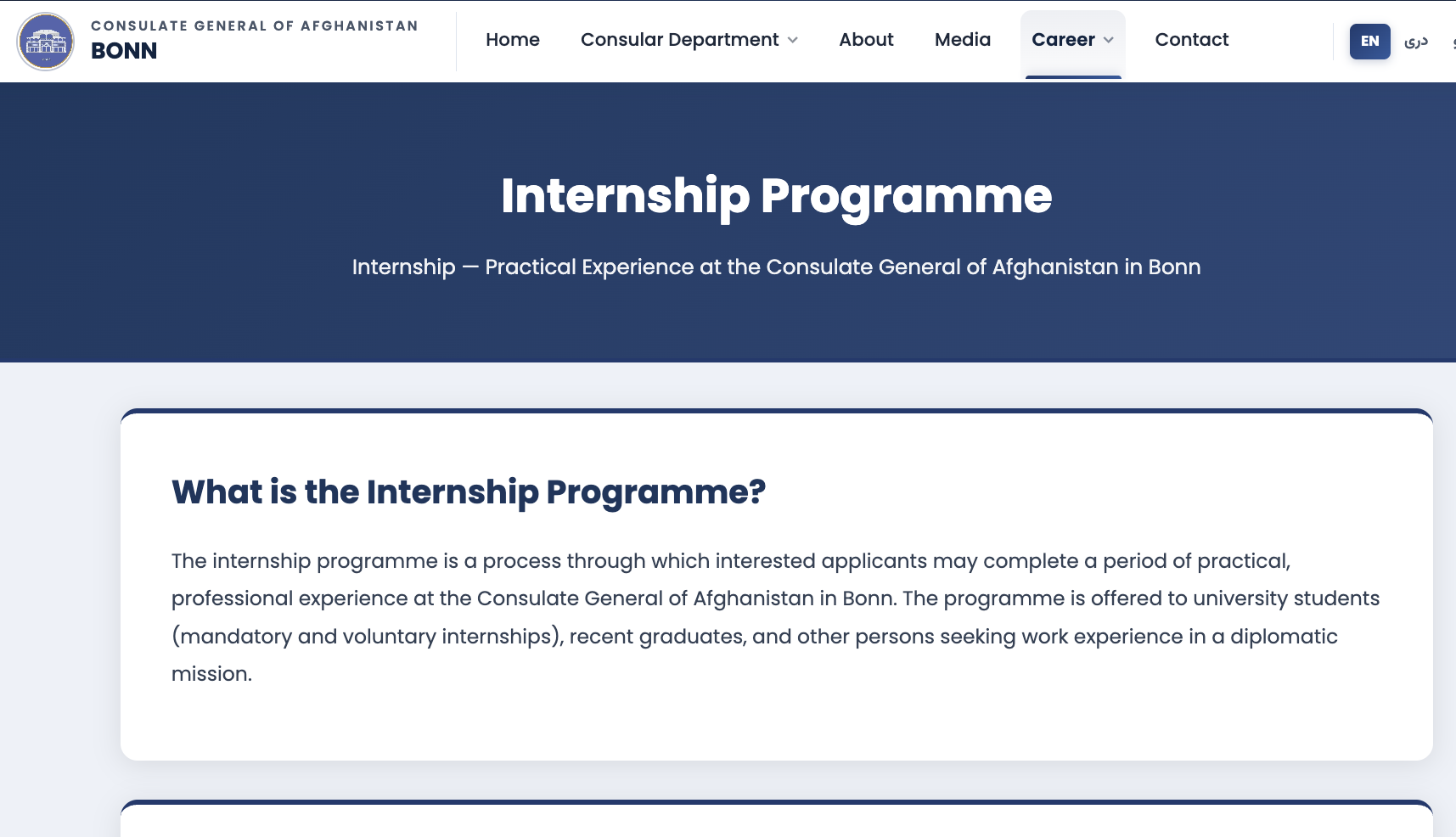
The internship notice, published on the consulate's official website, invites students, graduates and 'interested applicants' to work in areas including consular affairs, administration and public relations. The posting promises exposure to 'multilingual and intercultural' work environments and experience in diplomatic operations.
But the recruitment drive is drawing attention far beyond the usual internship circuit because of who now controls the mission.
As perReuters, the Bonn consulate became a flashpoint last year after Germany accepted Taliban-appointed diplomats to take over operations at Afghan diplomatic missions in Bonn and Berlin. The move triggered the collective resignation of the consulate's previous staff, who had continued operating independently after the Taliban seized Kabul in 2021.
Former acting consul Hamid Nangialay Kabiri accused Berlin of legitimising Taliban representatives and warned that sensitive information belonging to Afghans living in Germany could be exposed under the new administration. In a public statement, he said the outgoing staff had refused to hand over citizen records to what they called an 'illegitimate' regime.
Germany has not formally recognised the Taliban government. However, officials defended the accreditation of Taliban-linked diplomats as part of broader talks tied to migration and deportation arrangements involving Afghan nationals convicted of crimes in Germany.
The Taliban, meanwhile, have steadily expanded control over Afghan embassies and consulates abroad.Reutersreported in 2024 that Taliban authorities had gained influence over 39 Afghan diplomatic missions globally despite lacking formal international recognition.
Yet critics say the optics are extraordinary: young professionals in Germany are effectively being asked to add experience working under Taliban-appointed officials to their résumés.
Some online reactions mocked the recruitment effort, with social meia users joking about whether 'working with Taliban officials' would now count as diplomatic experience. Others questioned how Germany could continue refusing formal recognition of the Taliban while simultaneously allowing its representatives to run consular operations.
Berlin's engagement with Taliban-linked officials reflects a broader dilemma facing Western governments since the collapse of Afghanistan's Western-backed administration in August 2021.
According to theWashington Post, while most countries still refuse formal recognition, several governments have quietly expanded technical and diplomatic engagement with Taliban authorities over migration, security and consular matters.
Source: International Business Times UK
