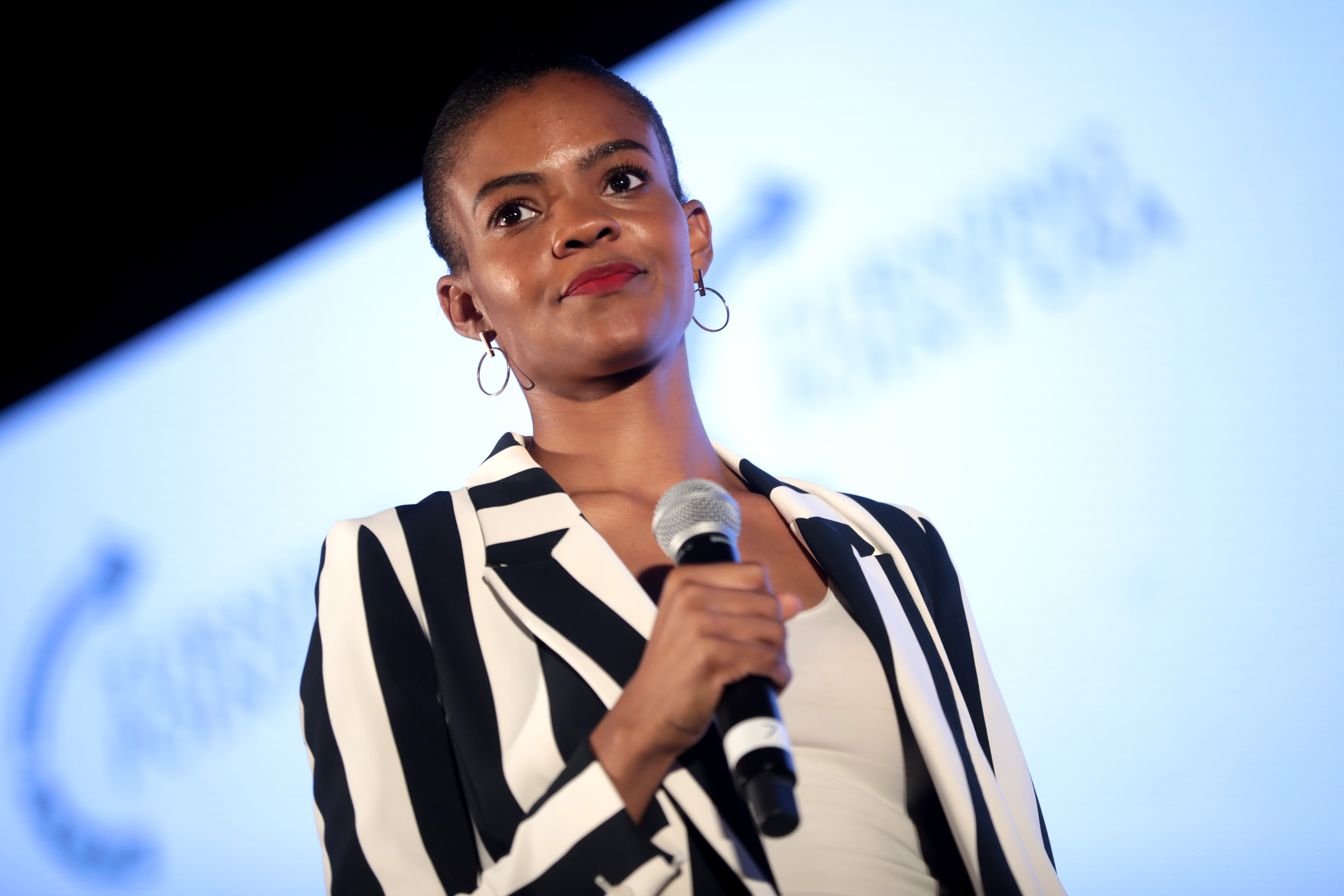
Candace Owens is emerging as an unexpected favourite among MAGA voters for the 2028 presidential race, according to Republican pollster Sarah Longwell, who says her focus groups across the United States have repeatedly named the conservative commentator over established figures such asJD Vanceand Marco Rubio.
Longwell has spent years conducting detailed focus groups with Donald Trump voters, often tracking how their political loyalties shift after elections. Her latest findings, published inThe Bulwark, suggest that while conventional Republican contenders are widely discussed in Washington, they are not dominating grassroots conversations in quite the same way.
Longwell's research points to a consistent pattern. When participants are asked who they would support as a future president, Owens, a media personality rather than an elected official, comes up unprompted and with surprising frequency.
'I think Candace Owens is great. I would vote for her in a minute,' said Mycal, identified as a Biden to Trump voter from North Carolina, during a February 2025 session conductedforTheBulwark.
Another participant from the same group, Daniela, framed her support in more strategic terms. 'If we would've swapped out Candace forKamala, they would've had this in the bag,' she said, referring to the 2024 Democratic ticket.
Longwell, a prominent Republican strategist who has been openly critical of Trump, notes that Owens's appeal is not confined to one demographic slice of the party. According to her observations, the interest cuts across age groups and, at times, even reaches beyond traditional partisan lines.
That breadth is what makes the trend difficult to dismiss. Owens has never held public office, yet her name surfaces alongside, and often ahead of, sitting senators and governors widely assumed to be future contenders.
Part of Owens's rise appears tied to her growing media presence. She has built a large and loyal following through digital platforms, where political identity is shaped as much by personality and cultural positioning as by policy.
Longwell points to a recent moment that captured this shift. Hunter Biden's appearance on Owens's podcast drew attention across the political spectrum, not only because of the unlikely pairing but because it underscored Owens's reach. Longwell described it as 'the melding of two of the internet's main characters,' a phrase that reflects how political influence is increasingly mediated through online visibility rather than institutional roles.
There is, however, a more complicated side to Owens's profile. She has faced sustained criticism for promoting antisemitic conspiracy theories and for her public disputes with other conservative figures, including Charlie Kirk. These controversies have not diminished her standing within certain segments of the right. If anything, they appear to reinforce her outsider appeal.
Source: International Business Times UK
