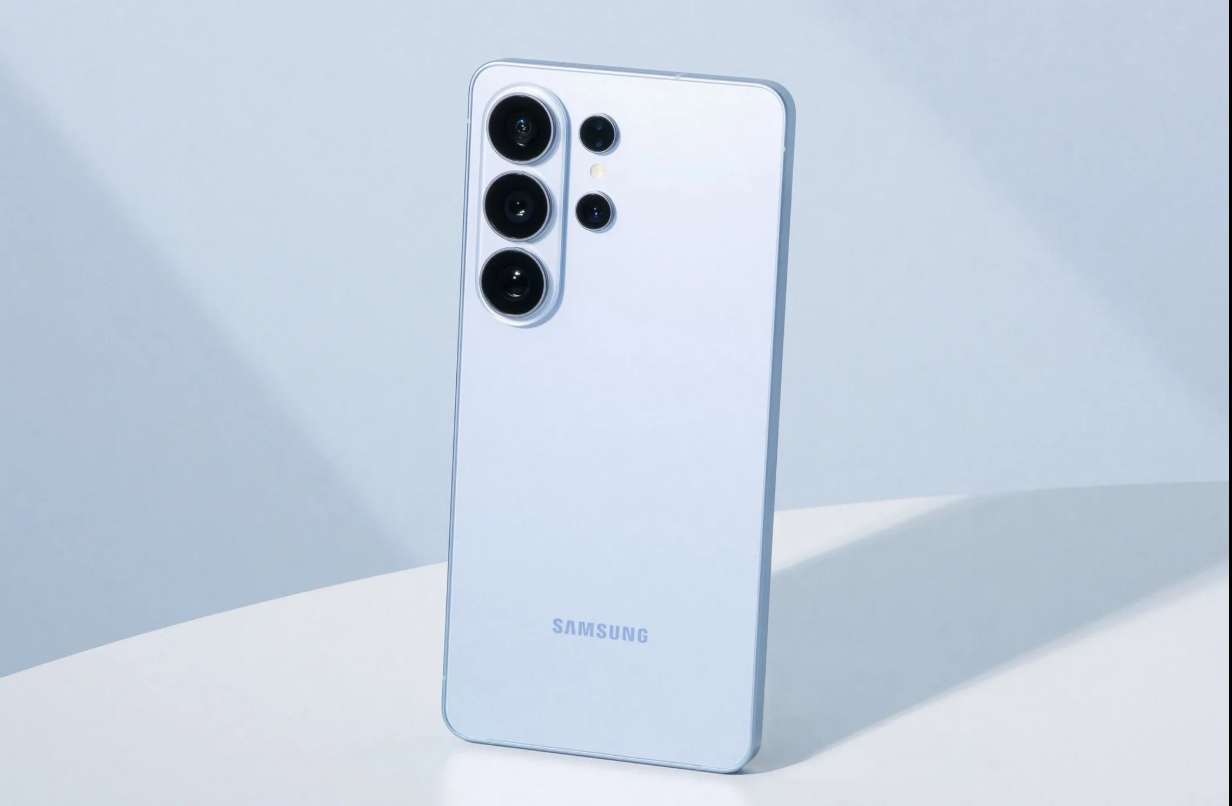
The Samsung S27 Pro is a compact handset boasting 'entirely new' camera sensors, according to insider sources.
The Samsung S27 Pro is shaping up as one of the most anticipated Galaxy releases, with rumours claiming it's going to be a 'mini-Ultra' and secret flagship. Nothing official has been confirmed, but there's already a steady stream of insider claims about the device's display size, design, performance, and imaging specs.
Samsung's Galaxy S27 Pro will supposedly share the S27 Ultra's primary and ultra‑wide camera sensors, according to anindustry insider tip. The source also claimed the units will feature 'entirely new sensors' for the lenses.
The S27 Ultra isalso rumouredto have only three rear cameras, unlike its predecessors. This would allegedly affect both devices' telephoto configurations differently.
The S27 Pro has been anticipated following last month's reports that Samsung would be adding a fourth member to theGalaxy S27 family. Last week,one sourceclaimed the device would feature a 6.47-inch OLED screen, to be confirmed. If true, that would place it in line with the Galaxy S27 and S27+ in terms of dimensions. The S27 Pro was described as a mini-Ultra without an S Pen.
The claims largely revolved around the S27 Pro's cameras, display size, and design, with specs like battery capacity, RAM, processor, and storage still a total mystery. Both the S27 Pro and Ultra are heavily rumoured to launch in February next year, as part of Samsung's Galaxy S27 Unpacked event.
The Samsung Galaxy S series has made serious strides since the original's 2010 release, establishing Samsung's flagship formula and setting the pace for its fairly predictable annual upgrade cycle. In the years that followed, Samsung released the S2 in 2011, the S3 in 2012, the S4 in 2013, and the S5 in 2014, with each generation expanding the lineup's reach and visibility.
Samsung pushed the series further with the S6 and S6 Edge in 2015, the S7 and S7 Edge in 2016, the S8 and S8 Plus in 2017, and the S9 and S9 Plus in 2018, before marking the line's tenth anniversary with the S10 family in 2019.
The modern era continued with the S20 series in 2020, the S21 series in 2021, the S22 series in 2022, the S23 series in 2023, the S24 series in 2024, and the S25 series in 2025, showing a steady evolution from one flagship generation to the next.
The Galaxy S series directly challenged the iPhone upon the original's launch, offering an Android alternative with a larger display, more hardware variety, and a broad range of competitive features.
Source: International Business Times UK
