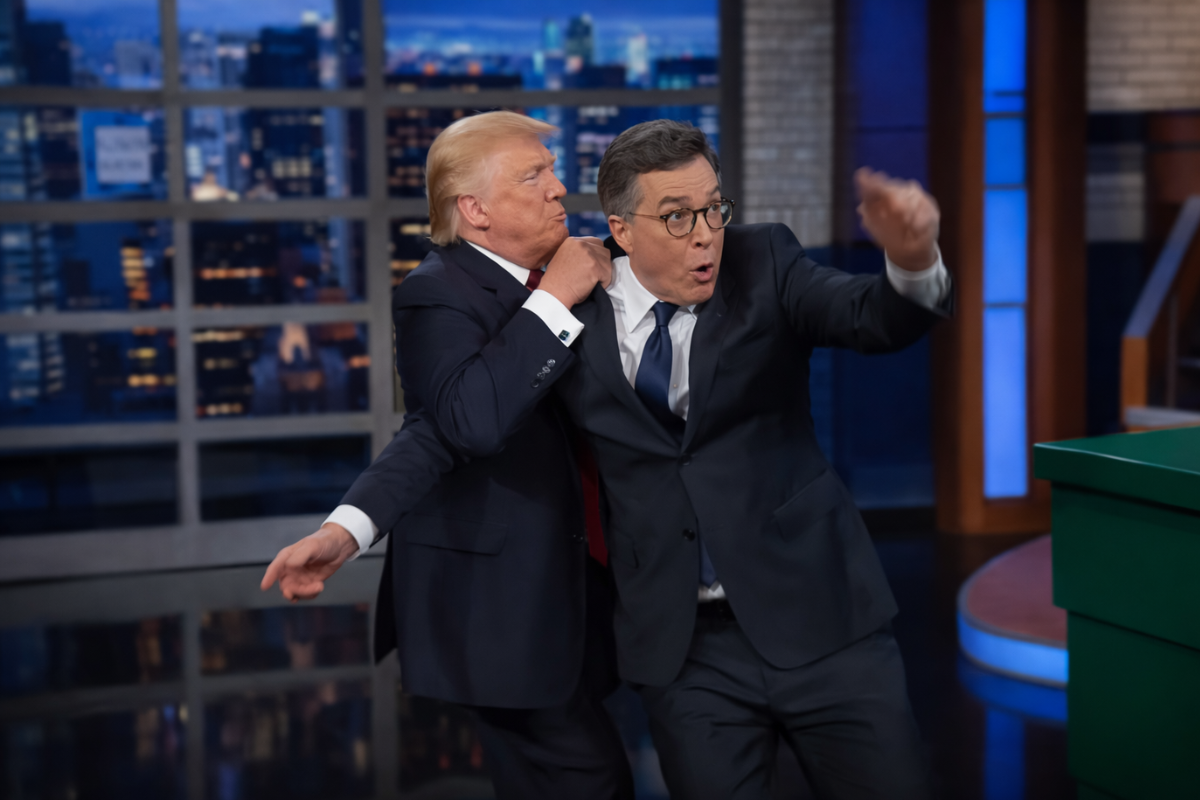
Donald Trump was reportedly 'personally involved' in the cancellation of Stephen Colbert's late-night show after veteran television journalist Bill Carter suggested the former president's public reaction to Colbert's final episode may point to deeper political pressure behind the scenes.
The analysis comes afterThe Late Show with Stephen Colbertaired its final episode on 21 May, bringing an end to a long-running programme that had become one of the most prominent late-night platforms for political satire in American television.
CBS had already announced the cancellation months earlier, citing financial pressures, although that explanation has been repeatedly challenged in public discussion.
Not long after Colbert's final show, anAI-generated video posted on Donald Trump's official X account, appeared. The video depicted Trump grabbing Colbert and throwing him into a dumpster while dancing toY.M.C.A.by the Village People.
FOX Newsreported that Bill Carter, a longtime television reporter known for his bookThe Late Shift, which chronicled the feud between Jay Leno and David Letterman, pointed to the video during an appearance on MS Now'sThe Weekend. He argued that it suggested more than casual provocation.
'It's not a good development for the country, obviously,' Carter said. 'Certainly the idea that he throws a man in the dumpster at the end of it indicates that he was personally involved.'
CBS said Colbert's show was losing about £31.7m ($40m) a year before it was cancelled, with the network maintaining that financial pressure was the main reason behind the decision.
Carter, however, has questioned that explanation, suggesting some observers believe broader pressures may have played a role, although these claims remain disputed and unproven.
He argued that the cancellation has raised concerns among critics about whether broadcasting decisions can ever be fully separated from outside influence. 'The government was pushing to get rid of this man because he was a critic. We don't do that. We don't shut people up because they criticise us.'
He went on to suggest that CBS's handling of the situation signalled a retreat from editorial independence, a claim the network has not publicly addressed in detail. CBS has consistently pointed to declining revenues as the driver of its decision, and no official findings have supported the idea of external interference.
Source: International Business Times UK
