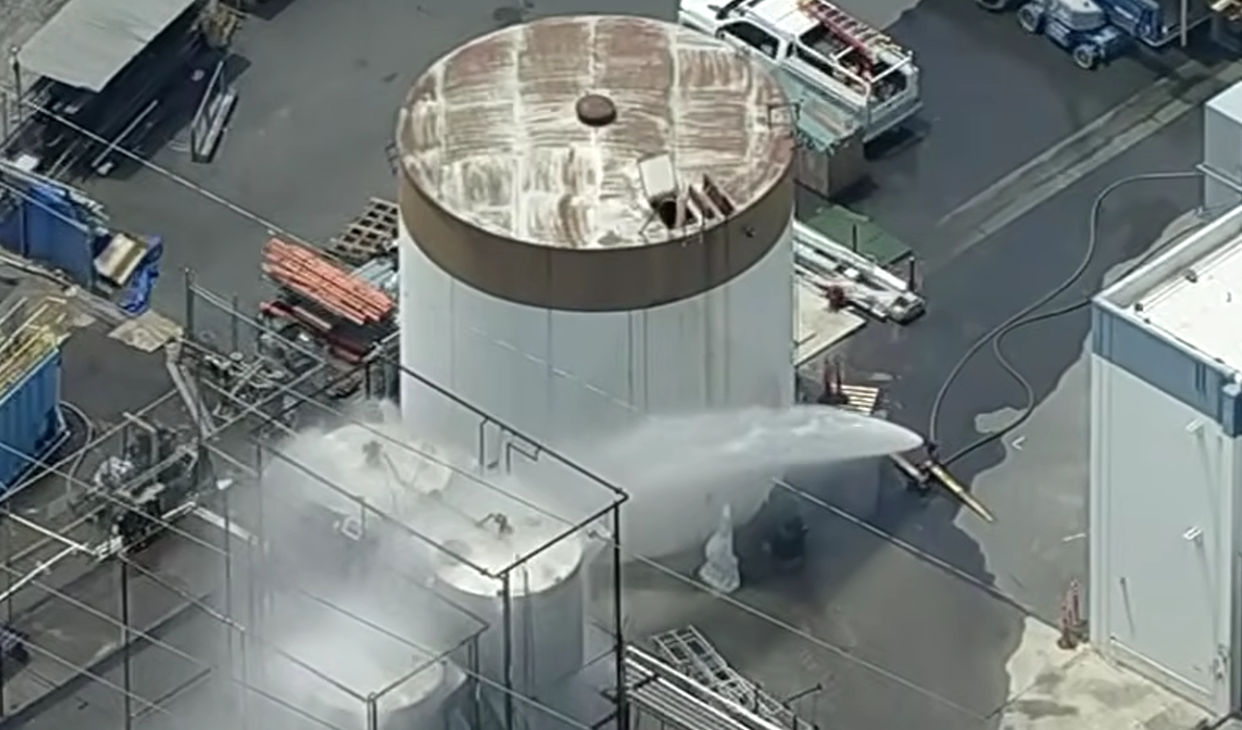
A dangerous chemical tank at a Southern California aerospace plant is no longer at risk of a catastrophic explosion,officials say,after days of emergency operations forced around 50,000 residents from their homes.
Authorities have now scaled back evacuation orders across much of Orange County, although crews continue monitoring the site for possible fire or smaller chemical incidents.
The emergency unfolded at a GKN Aerospace facility in Garden Grove, where a storage tank containing between 6,000 and 7,000 gallons of methyl methacrylate began overheating last week. The chemical, widely used in plastics and aircraft manufacturing, is highly flammable and can become dangerous if pressure builds inside sealed containers.
Officials feared the tank could explode if temperatures continued rising.
Firefighters spent several days spraying water onto the tank in an effort to cool it and stabilise internal pressure. By Sunday, authorities revealed that a crack had formed in the structure, allowing pressure to escape.
Orange County Fire Authority division chief Craig Covey said overnight inspections confirmed that temperatures inside the tank had started falling. Internal temperatures reportedly dropped from around 100 degrees Fahrenheit on Sunday to 93 degrees by Monday. Covey described the findings as 'incredibly positive news'.
Officials later announced that evacuation zones had been significantly reduced, allowing many residents to return home after days in temporary shelters during the Memorial Day weekend.
Even so, emergency crews warned that some risk remains. Authorities said the site could still face a smaller explosion, chemical spill, or fire while crews continue working to stabilise the damaged tank.
Methyl methacrylate is a colourless industrial chemical used in resins, plastics and acrylic products.Federal regulators classify itas hazardous because exposure to high concentrations can irritate the lungs, eyes and skin, while prolonged exposure may lead to breathing problems, dizziness or unconsciousness.
Officials warned that if temperatures continued climbing, the liquid chemical could convert into gas inside the sealed tank, sharply increasing pressure and raising the possibility of a major explosion. Authorities feared such a blast could ignite nearby tanks and spread hazardous vapours across surrounding communities.
Source: International Business Times UK
