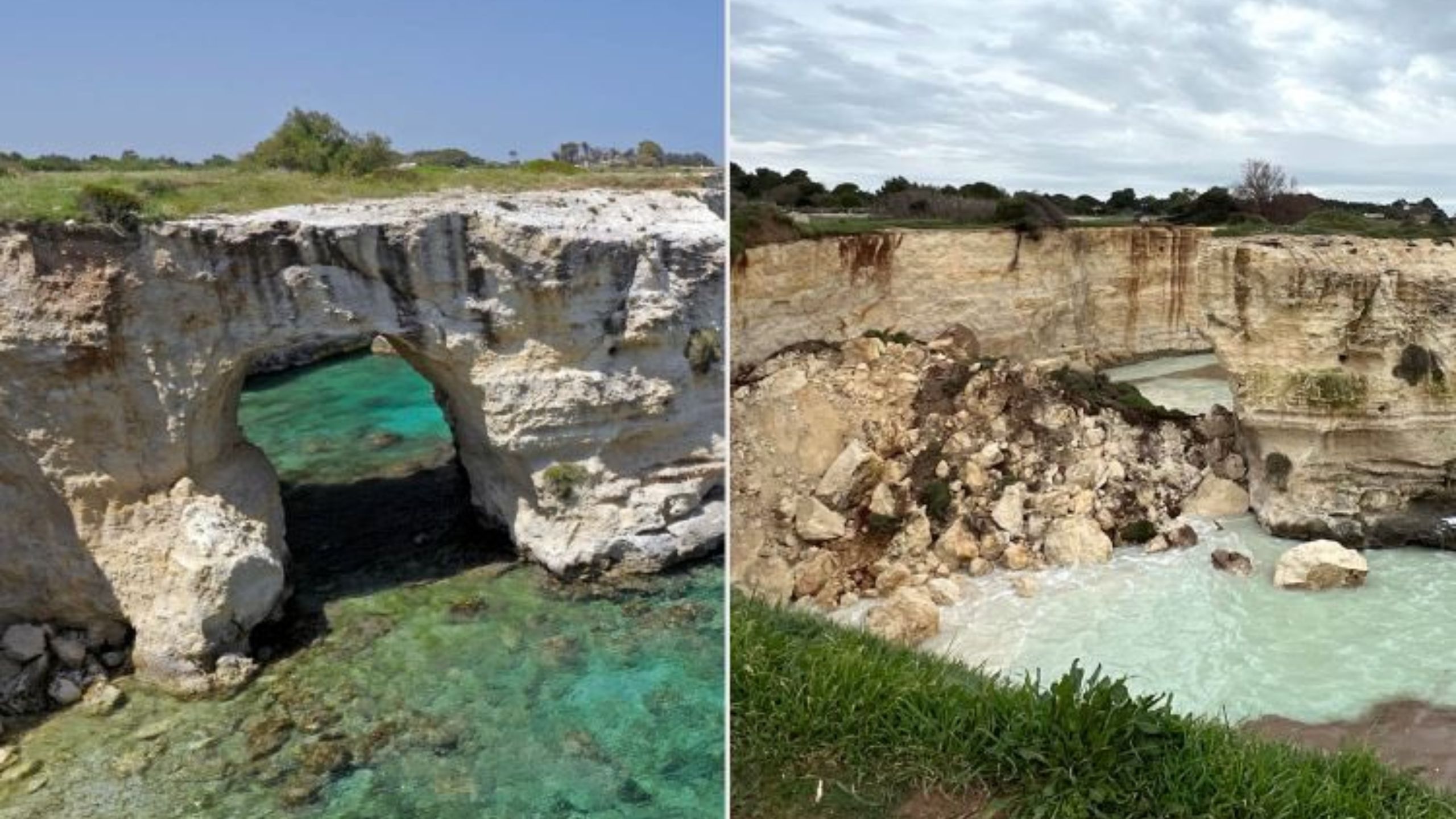
A natural rock formation known as the 'Lovers' Arch'collapsedon Valentine's Day along Italy's Adriatic coastline. The limestone arch, which had been a recognisable feature of thecoastal landscape, gave way on 14 February, marking the end of a geological structure that had stood for an extended period.
The collapse occurred along the Italian Adriatic coast after weeks of inclement weather. The formation had been accessible to visitors and had become associated with the coastal tourism industry in the region.
The 'Lovers' Arch' had functioned as a tourist attraction along the Adriatic coast. The formation's name and coastal location had made it a point of interest for visitors to the area.
Tourism operators in the region had incorporated the arch into their offerings, and the site had been photographed by tourists over the years.
The loss of the formation represents a change to the coastal landscape and may affect tourism patterns in the immediate area. The arch had been one of several natural features along Italy's extensive coastline that attract visitors annually.
Natural rock arches are temporary geological features formed through erosion processes. Limestone formations along coastlines are subject to continuous weathering from wave action, salt water exposure and other environmental factors that gradually weaken rock structures over time.
Coastal limestone is particularly vulnerable to erosion due to its composition and exposure to marine conditions. Wave action creates mechanical stress on rock formations, whilst seawater can cause chemical dissolution of limestone.
These combined forces lead to the eventual structural failure of such formations.
The Adriatic coast features limestone geology that is characteristic of the broader Mediterranean region. Rock formations in these areas undergo constant modification through natural erosion processes.
Severe storms and pounding waves brought down Italy’s famous “lovers’ arch” over Valentine’s Day.Powerful weather eroded the iconic rock formation along the Salento coast in Puglia, sending it crashing into the sea.https://t.co/fpvP7m4HeHpic.twitter.com/J2YdHRmNFh
Source: International Business Times UK
