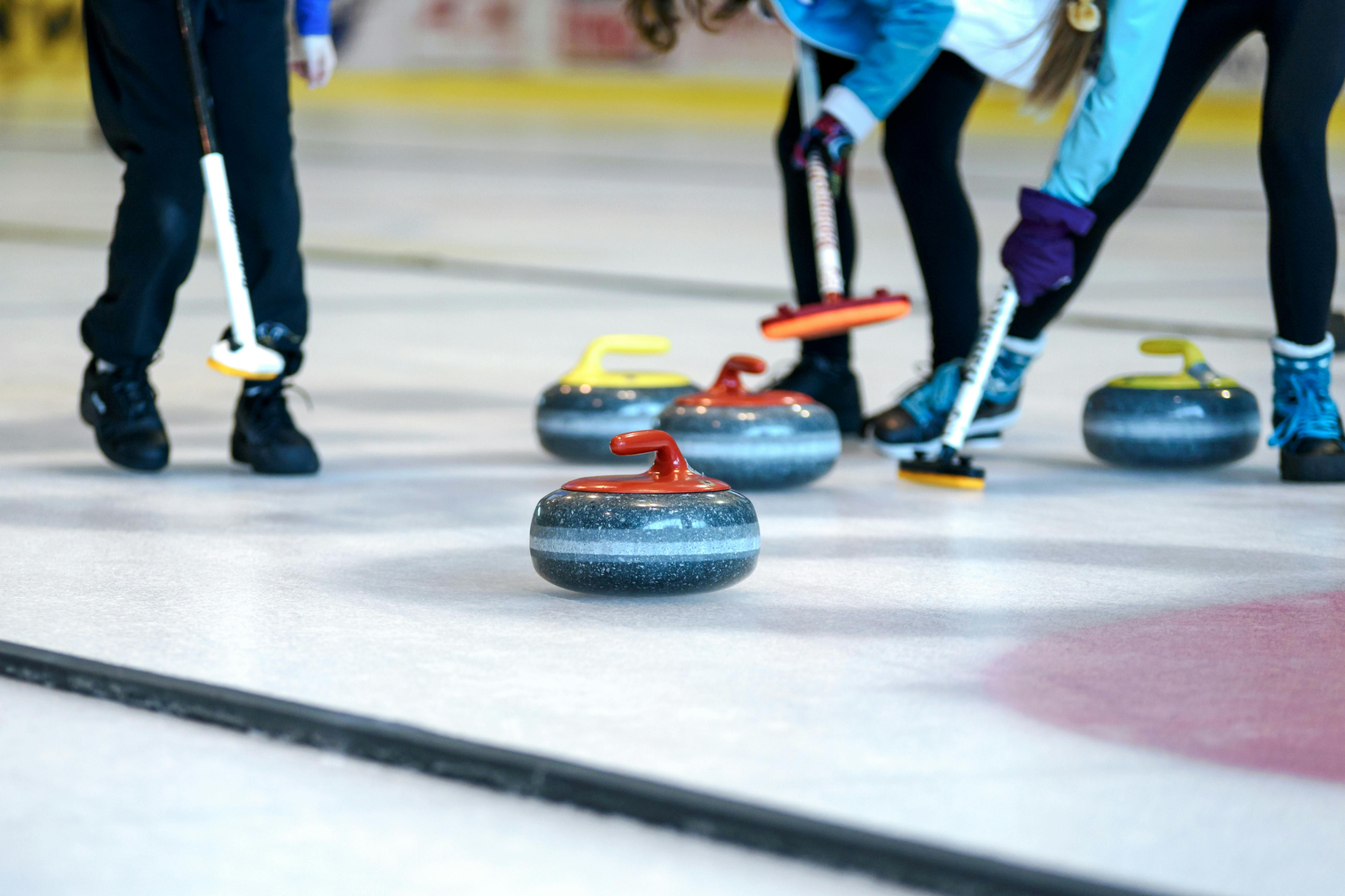
Curling, a sport often described as strategy on ice, has become one of the biggest stories of the Winter Olympics 2026 after a series ofcheating allegations against the Canadian teams. What began as routine competition in the men's and women's curling events at the Cortina d'Ampezzo venue has since erupted into of the Games' most contentious controversies.
The dispute has sparked global conversation about officiating, rules enforcement and the integrity of the sport. At the heart of the scandal lies instances of illegal stone contact, known as a double‑touch violation.
Curling is a team sport in which players slide heavy granite stones across a sheet of ice toward a circular target called the house. Two teams of four take alternate turns, using sweeping brooms to influence the stone's direction and distance. The sport emphasises precision, teamwork and strategy.
A key rule concerns how a stone is delivered. The thrower must release it before crossing the 'hog line', a painted boundary on the ice, and may not touch the granite after release. Any contact beyond this point, known as a double-touch violation, results in the stone being removed from play according toWorld Curling regulations.
The controversy ignited on Friday whenSweden's men's team accused Canadian curler Marc Kennedyof touching the stone after release during a preliminary match at the 2026 Winter Olympics, a breach of the double‑touch rule. Video of the delivery circulated on social media and was cited by opponents as evidence. Canadian players fiercely denied any intentional violation.
The match ended 8‑6 in Canada's favour, but tensions rose on the ice following the accusation. Kennedy responded with strong language during an on‑court exchange with Sweden's Oskar Eriksson, prompting a warning from officials for inappropriate conduct. World Curling clarified that umpires had watched subsequent deliveries but did not penalise the play because violations must be seen in real time and video replay cannot be used to overturn decisions.
Less than 24 hours later, similar drama unfolded in the women's Round Robin match between Canada and Switzerland. An umpire judged that Canadian skip Rachel Homan had double‑touched her stone, and it was removed from play, a rare mid‑game intervention that startled onlookers.
NEW: Canada's women's curling team accused of cheating, just like their men's team, after being called for the same infraction.Just one day after Canada's men's team was called out for a "double touch," the women's team was caught doing the same thing.Rachel Homan was heard...pic.twitter.com/RGz11PA0ur
Homan denied the allegation, saying she did not understand the call. Video clips also circulated showing the contested delivery. Canada went on to lose the match 8‑7.
The sequence of incidents did not end there. Officials also called a double touch against Britain's Bobby Lammie in another match, indicating that the issue had spread beyond the Canada‑Sweden contest.
Source: International Business Times UK
