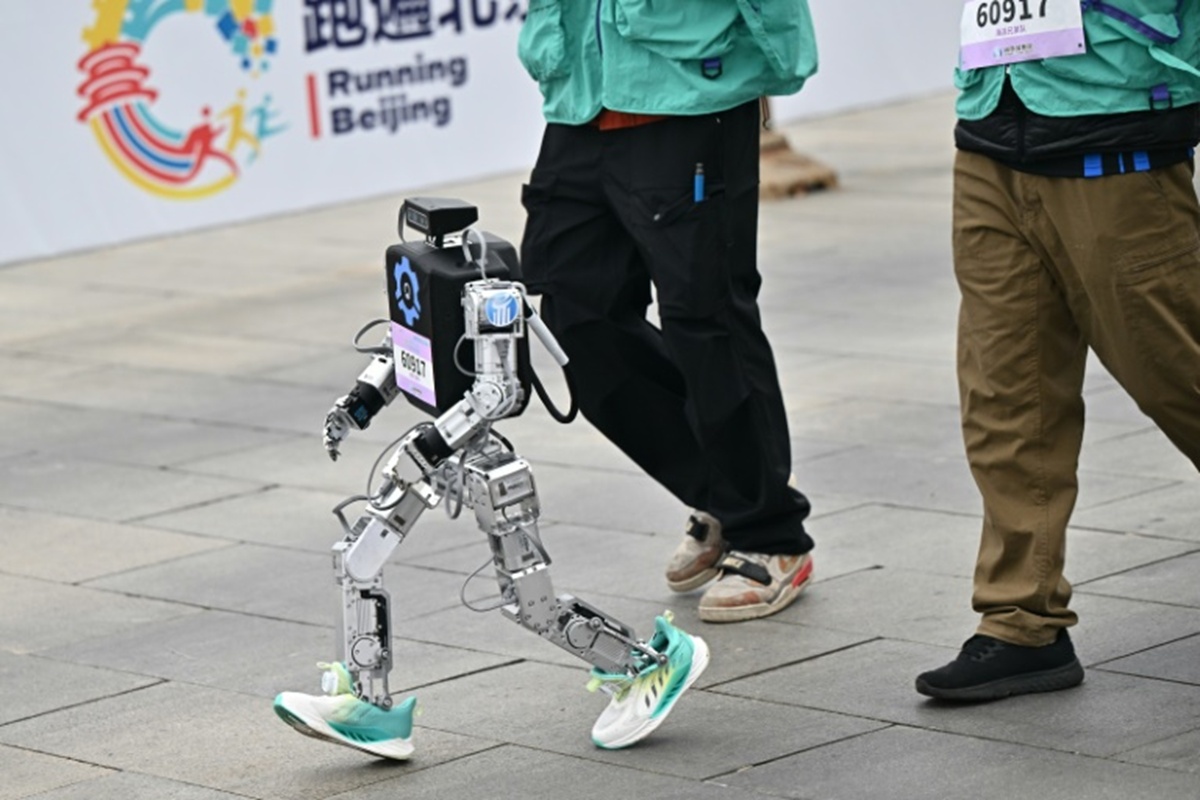
China's advances in humanoid robotics have attracted global attention following high-profile public demonstrations and industry data highlighting the country's growing presence in the sector.
Recent showcases, including televised performances and robotics competitions, have featured machines capable of dynamic movement, coordination and increasingly complex physical tasks. The displays have prompted comparisons with projects under development in the United States, most notablyTesla's Optimus robot. Elon Musk has positioned the system as a central component of the company's long-term strategy.
Investment in humanoid robotics is accelerating worldwide. The contrasting approaches adopted by Chinese manufacturers and Tesla illustrate how the technology is developing and the challenges that remain.
Chinese robotics firms have placed humanoid machines at the centre of both public and industrial narratives. Demonstrations broadcast on national television, including performances at events such as the CCTV Spring Festival Gala, have shownrobots executing acrobatic and choreographed movements. These displays highlight advances in balance, mobility and mechanical control.
Industry data cited byBusinessWorldindicates that China accounted for approximately 90% of global humanoid robot shipments last year.Analystsattribute this dominance to the country's manufacturing scale, hardware supply chains and state-backed industrial strategies aimed at accelerating robotics development.
Several Chinese companies have introduced humanoid platforms targeting industrial and logistics applications. Firms such asAgiBotandXPenghave developed robots designed for repetitive physical tasks. Some units are already deployed in controlled factory environments.
Tesla's Optimus robot remains a prominent project within the global humanoid robotics landscape. Musk has repeatedlydescribed the systemas a general-purpose machine intended to perform tasks ranging from industrial labour to domestic assistance.
Since its initial unveiling in 2021,Optimus has progressed through multiple prototype iterations. Demonstrations released by Tesla have shown improvements in walking stability, balance and basic manipulation tasks.Recent reportinghas suggested the company is preparing for expanded production phases, supported by increased procurement of specialised components.
Tesla's public demonstrations have been more limited in scope. The company's strategy emphasises integration with its broader AI and sensor systems, areas Musk has identified as critical to long-term functionality.
Comparisons between Chinese humanoid robots and Optimus often reflect differing priorities in presentation and development. Public showcases typically highlight dynamic movement and coordination, which are visually striking but conducted in controlled conditions.
Source: International Business Times UK
