Home-Open Bionics Expands Hero FLEX to Above-Elbow Amputees with First Clinical Fitting in New York
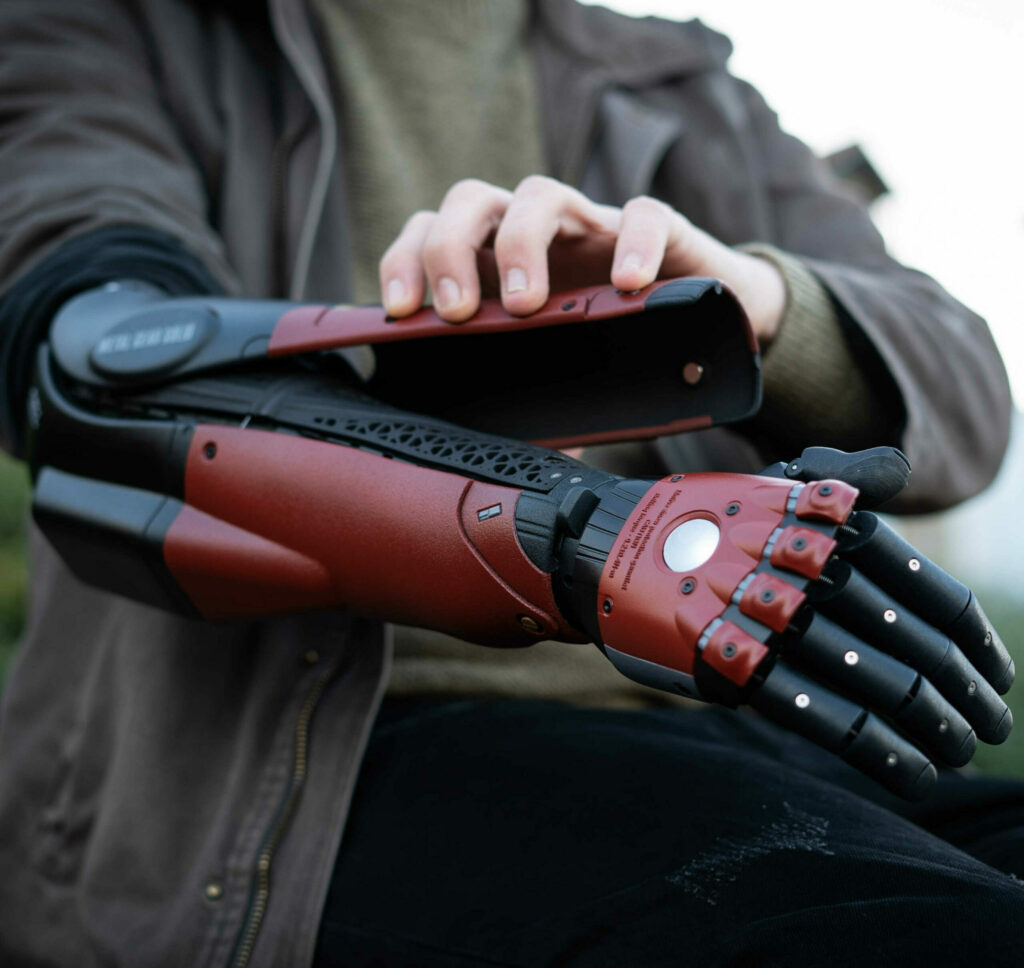
A New York-based physicist has made history as the world’s first above-elbow amputee to be fitted with a full-length, 3D printed bionic arm. Born with an amputation following a circulatory complication eight days after birth, Gowtham spent most of his life without a functional prosthetic. The fitting was carried out by UK-based prosthetics companyOpen Bionicsat its New York clinic, using the Hero FLEX, a lightweight, modular, 3D printed above-elbow prosthetic system now available across more than 800 clinical locations in the USA, UK, Europe, Australia, and New Zealand.
Gowtham had contacted Open Bionics after observing that prosthetic technology had begun to mature, only to find that the Hero FLEX had not yet been adapted for above-elbow users. He waited a year. The results upon fitting were immediate: he held his dog’s leash with both hands, gripped tools at his workbench, and opened a soft drink can unassisted, all for the first time. He reported no perceptible delay between shoulder muscle flexes and the arm’s response.
“I’m so excited to use this daily. Even giving my dog a treat is easier, and because the whole solution is lightweight, I don’t feel the strain on my shoulder,” said Gowtham. “It’s the small day-to-day things. Being able to lift a box off a shelf, open a door without having to put everything down on the floor first, or just be able to open a can of soda.”
Modular by Design, Personal by Default
The Hero FLEX is built around a modular architecture that allows users to alternate between activity-specific attachments and a bionic hand depending on the task. Each system begins with a 3D scan of the user’s limb, which is used to manufacture a bespoke socket in Nylon 12, breathable, adjustable, compressible, and removable, eliminating the geometric constraints of conventional prosthetic fabrication entirely.
Control is handled through myoelectric sensors that detect muscle movements, translating them into precise, life-like hand movements with no perceptible delay. Proportional control allows users to determine the speed of finger movements, enabling tasks as delicate as picking up an egg. The posable thumb and wrist support 180 degrees of wrist rotation, and six selectable grip modes, including a freeze mode for static holding, give users command over a full range of everyday interactions.
Gowtham described the Hero FLEX as the lightest prosthetic he had ever worn. “You can attach an activity-specific attachment for hobbies or chores like gardening, then clip in a bionic hand for two-handed activities, like walking the dog and carrying a coffee cup,” he said.
3D Printing and the Prosthetics Access Gap
Open Bionics’ strategy has always been built around a single premise: that the cost and complexity of advanced prosthetics should not determine who can access them. By combining 3D scanning with additive manufacturing, the company produces fully bespoke devices, sockets, hands, and now full above-elbow systems, without the tooling costs or fabrication timelines that make conventional prosthetics prohibitive. The Hero FLEX extends that model to above-elbow amputees, the population historically least served by the prosthetics industry, where the combination of anatomical variability and mechanical complexity has kept device options narrow and prices high.
Source: 3D Printing Industry
