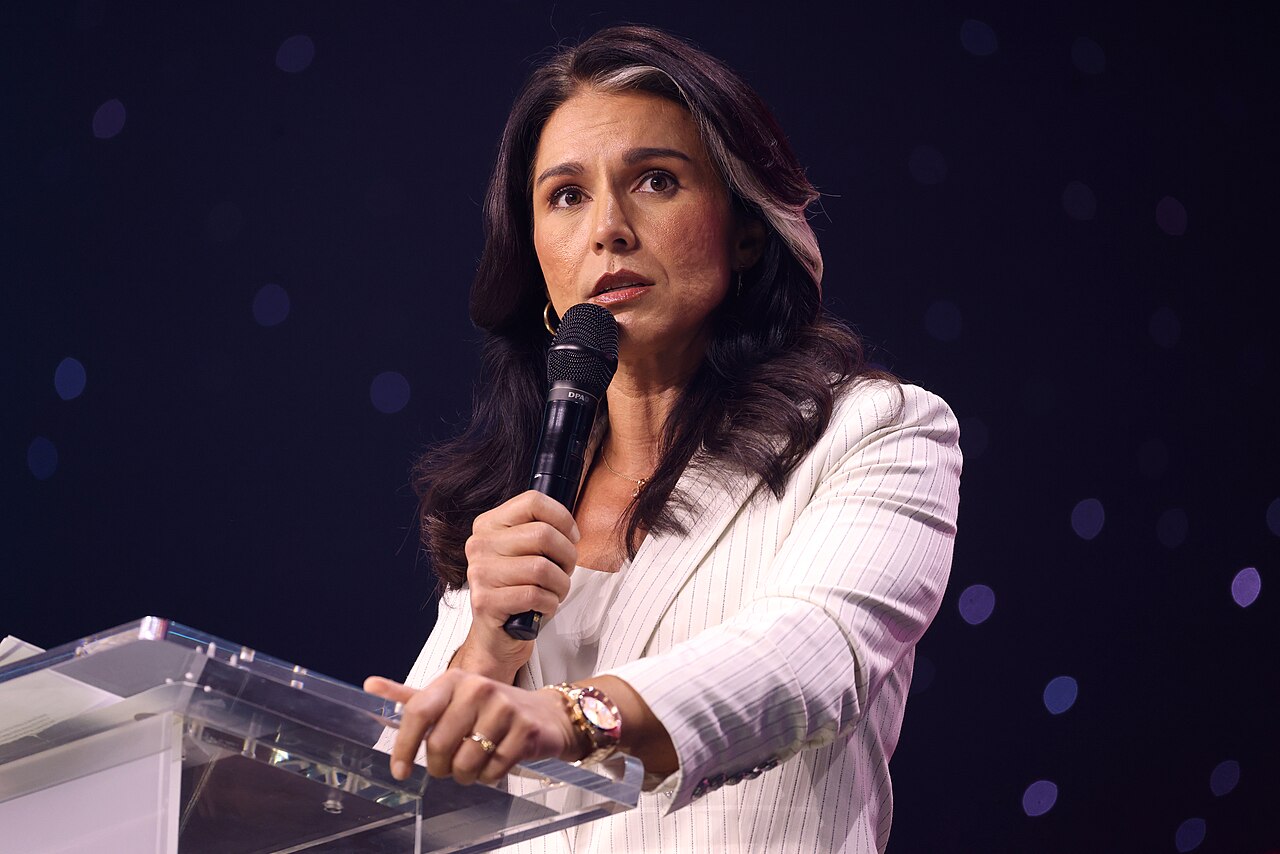
Tulsi Gabbard has resigned as Donald Trump's director of national intelligence in Washington, effective 30 June 2026, after revealing that her husband, Abraham, has been diagnosed with what she called 'an extremely rare form of bone cancer.'
The news came after several turbulent weeks in which Tulsi Gabbard, once a high-profile anti-war Democrat and now a key figure in Trump's Cabinet, had been under sustained scrutiny over her stance on the Iran war. Her departure lands at a politically awkward moment for the president, who has already lost or moved on several senior officials in quick succession, and faces fresh questions about the stability of his inner circle.
In a resignation letter reported byFox News, Gabbard said she was 'deeply grateful for the trust you placed in me and for the opportunity to lead the Office of the Director of National Intelligence for the last year and a half'. She then set out the personal crisis behind her exit, writing: 'Unfortunately, I must submit my resignation, effective June 30, 2026. My husband, Abraham, has recently been diagnosed with an extremely rare form of bone cancer.'
Gabbard told the president that Abraham 'faces major challenges in the coming weeks and months' and said she felt compelled to step away from public life. 'At this time, I must step away from public service to be by his side and fully support him through this battle,' she said, according to theMirror US.
She went on to describe the strain of trying to continue in one of the most demanding jobs in the US government while her husband begins treatment. 'Abraham has been my rock throughout our eleven years of marriage – standing steadfast through my deployment to East Africa on a Joint Special Operations mission, multiple political campaigns and now my service in this role. His strength and love have sustained me through every challenge. I cannot in good conscience ask him to face this fight alone while I continue in this demanding and time-consuming position.'
There has been no independent medical confirmation of Abraham's diagnosis beyond Tulsi Gabbard's letter, and details of his condition have not been released publicly, so some elements of the situation remain unverified and should be treated with caution.
For context, Tulsi Gabbard's resignation is the latest shift in a Cabinet that has seen unusually rapid turnover. It follows Trump's announcement thatAttorney General Pam Bondiwould be 'transitioning' into the private sector and comes about a month after he demoted Homeland Security Secretary Kristi Noem.
Only days before the resignation was made public, Gabbard had appeared firmly in Trump's camp. She was spotted in the audience for his prime-time address on the Iran war on Wednesday evening, cheering on a policy that has sat uneasily with her older record. As the first Samoan American and first Hindu elected to the US Congress, and a veteran of the Iraq War, she built her political identity on opposition to what she framed as unnecessary military entanglements.
Those anti-war credentials have come back to haunt her inside the Trump administration. Old social media posts from 2020 resurfaced in recent weeks, showing Tulsi Gabbard promoting 'NO WAR WITH IRAN' T-shirts and attacking talk of escalation. That messaging clashes sharply with Trump's more confrontational posture and has fuelled speculation in Washington that she was out of step with the president's hawkish advisers.
The tension was on display at a House Intelligence Committee hearing on 19 March, where Gabbard was grilled about the Iran war. Pressed on whether she agreed with former counterterrorism official Joe Kent's view that Iran did not pose an 'imminent threat' and that he had left the administration over differences with Trump, she sidestepped a direct endorsement.
Source: International Business Times UK
