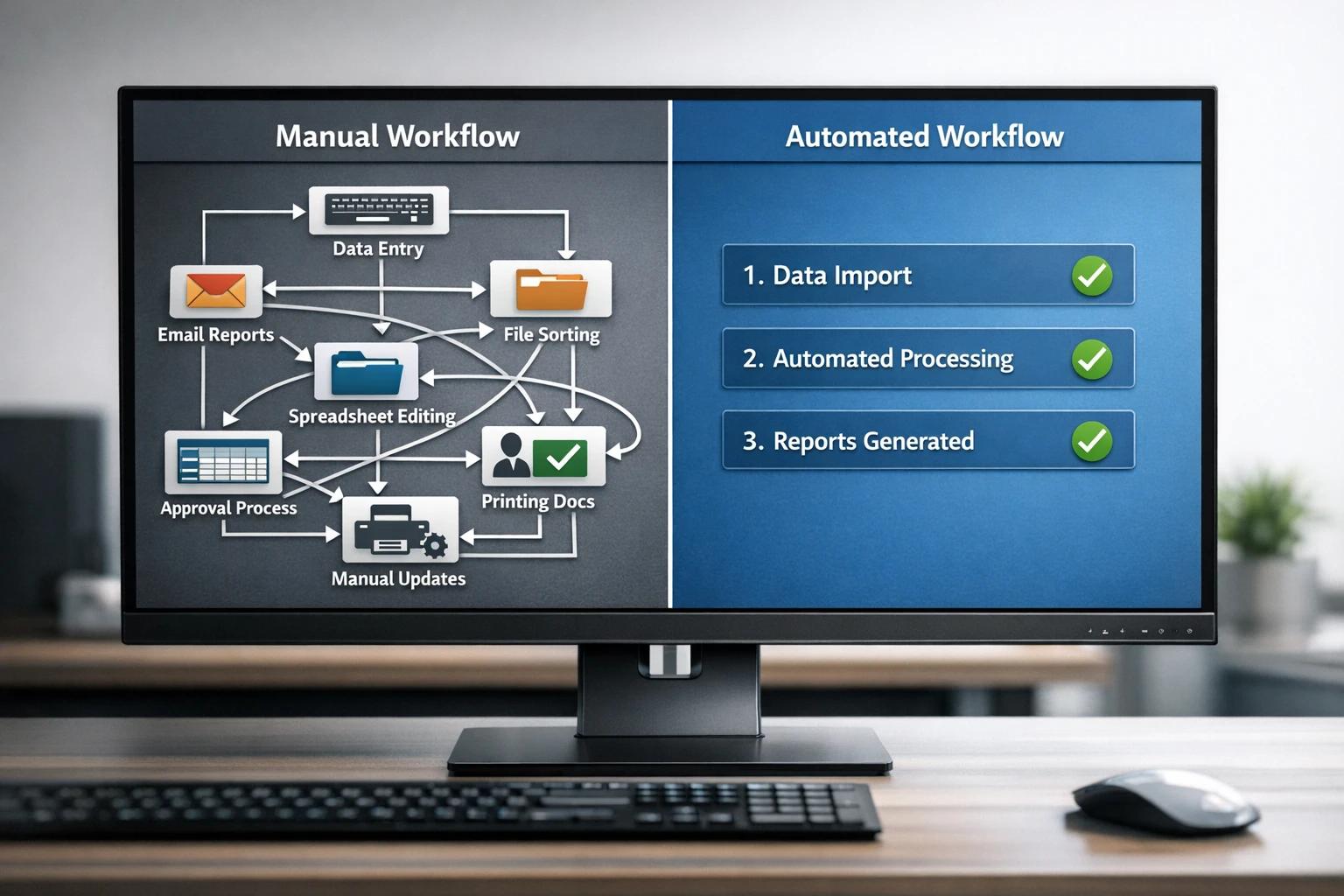
AI workflow automation does not remove the team. It changes where the team spends attention. A manager opens a spreadsheet and finds three columns called Status, Final Status, and Status_New. Nobody remembers which one drives the weekly report.
This is where the workflow breaks.
AI is useful here because much of office work is preparation for judgment: finding the right record, summarizing the last customer conversation, checking whether approval is missing, and nudging the next person.
Early workplace AI use often looked like individual assistance. Write an email. Summarize a document. Clean up meeting notes. Useful, but limited.
The larger change starts when AI becomes part of the process itself. A request arrives. The system reads it, extracts the important details, compares them with business rules, prepares a short brief, and sends the right person the next action. A human still decides when judgment matters.
Microsoft and LinkedIn's 2024 Work Trend Indexreported that 75% of global knowledge workerswere already using generative AI at work. The problem is turning scattered AI use into safer operating habits.
White-collar work contains many small decisions. Some are judgment-heavy. Some are rule-heavy. Some only look important because the process is messy.
A finance analyst may still own the forecast. AI can prepare variance notes before the review. A support lead may still handle the angry customer. AI can assemble the account history before the call.
McKinsey estimated thatabout 60–70% of the time people spend workinghas the theoretical potential to be transformed by generative AI combined with other technologies. That does not mean 70% of jobs vanish. It means many roles contain automatable activity mixed with human accountability.
A customer success team receives a renewal-risk request from a large account. The message is vague: "Need help before Friday." The account manager checks the CRM. Support has a recent ticket. Finance has an overdue invoice note.
Source: International Business Times UK
