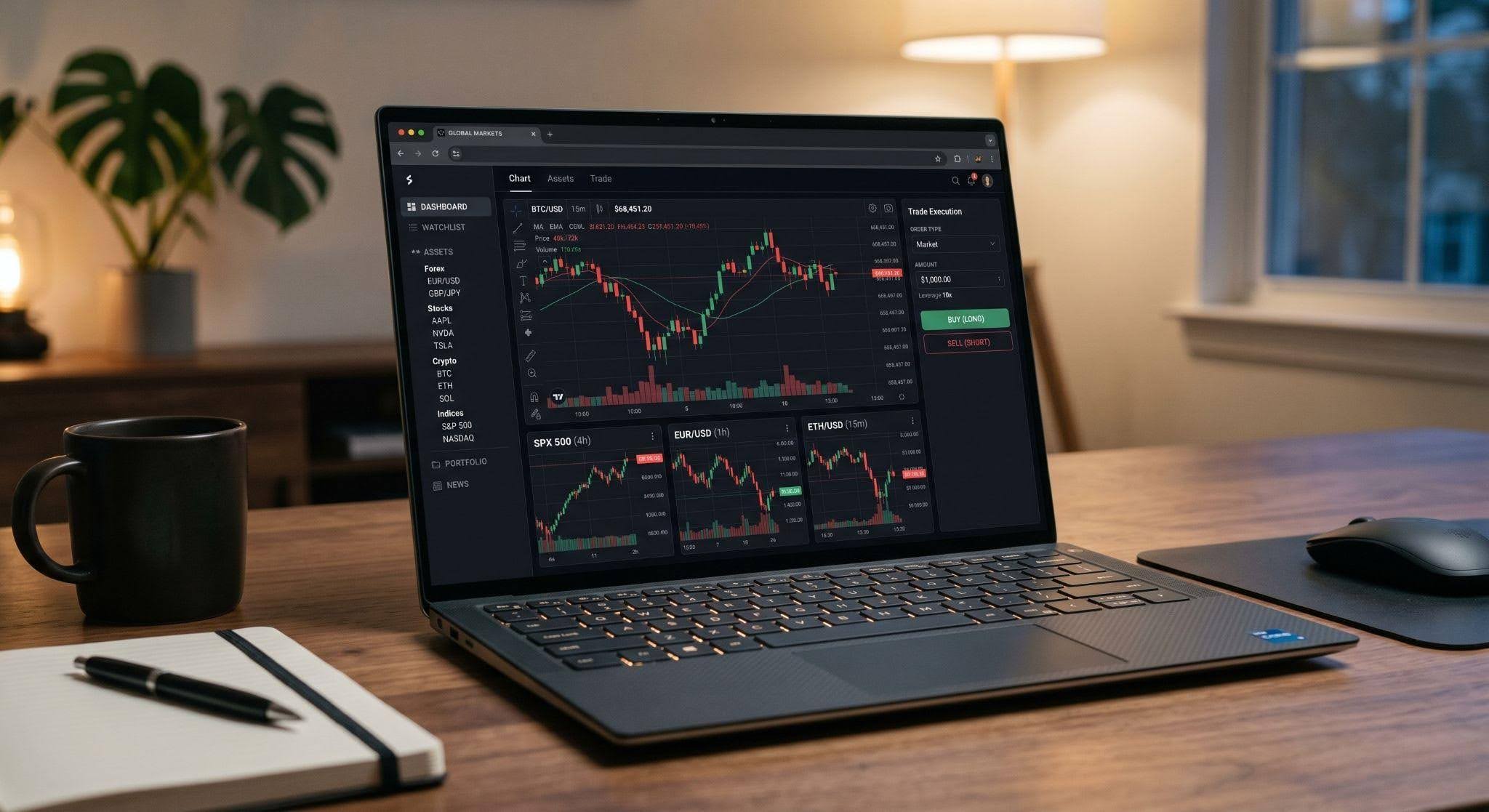
The shift toward web-based trading platforms has accelerated significantly in 2026, with more retail traders moving away from downloadable software in favor of browser-accessible environments that offer speed, flexibility, and multi-asset coverage from a single login. As this shift continues, the question of what actually separates a reliable platform from a mediocre one has become more important than ever. Analysts from Vantedge Group atvantedgegrp.comreview the key criteria that should guide any trader's evaluation of a web-based platform this year.
The foundational promise of a web-based trading platform is that it works wherever the trader is. No installation, no version conflicts, no dependency on a single machine. A trader should be able to open a chart, review a position, or execute an order from any browser without any loss of functionality compared to a desktop application.
According to Vantedge Group, this level of accessibility is now the baseline expectation, not a premium feature. What matters is whether that accessibility holds up under real trading conditions, meaning consistent load times, stable data feeds, and responsive order management during active market sessions. A platform that is easy to reach but unreliable when it matters most fails the trader at the most critical moment.
Traders in 2026 are increasingly unwilling to manage separate accounts or platforms for different asset classes. The professional standard is now a unified environment where forex, commodities, indices, equities, and cryptocurrencies are all accessible within the same interface, using the same tools, and managed under the same account structure.
Vantedge Group has built its platform around precisely this principle. Rather than treating each asset class as a separate product, the broker integratesstocks, digital assets, and other instruments into a single, coherent trading environment. This approach allows traders to move between markets without changing their workflow, which reduces friction and supports more consistent decision-making across different market conditions.
No feature set compensates for a platform that slows down when markets are moving fast. Execution quality during volatile sessions is one of the most practical tests of whether a web-based platform is genuinely built for trading or simply designed to look good in a product demo.
Vantedge Group places execution consistency at the center of its platform philosophy. The broker's web-based environment is engineered to maintain responsive order placement and real-time charting even during periods of heightened market activity. For traders who follow multiple instruments simultaneously, this stability is not a secondary concern. It is the operational foundation on which every other feature depends.
A professional web-based platform should eliminate the need for third-party tools by integrating charting, technical analysis, watchlists, and order management into one seamless environment. The measure of quality here is not the number of indicators available but how naturally those tools connect to the execution process.
Vantedge Group's platform reflects this standard. Charting and analytical tools are embedded directly within the trading interface, so traders can move from market analysis to order placement without switching screens or interrupting their workflow. This integration is particularly relevant for active traders who rely on technical setups and need their analytical environment to remain connected to execution at all times.
A well-designed web-based platform should accommodate traders at different levels of engagement without forcing them to migrate to a different system as their needs evolve. This means offering a structured account framework where each tier introduces meaningful additional features, conditions, and support rather than simply requiring a larger deposit.
Source: International Business Times UK
