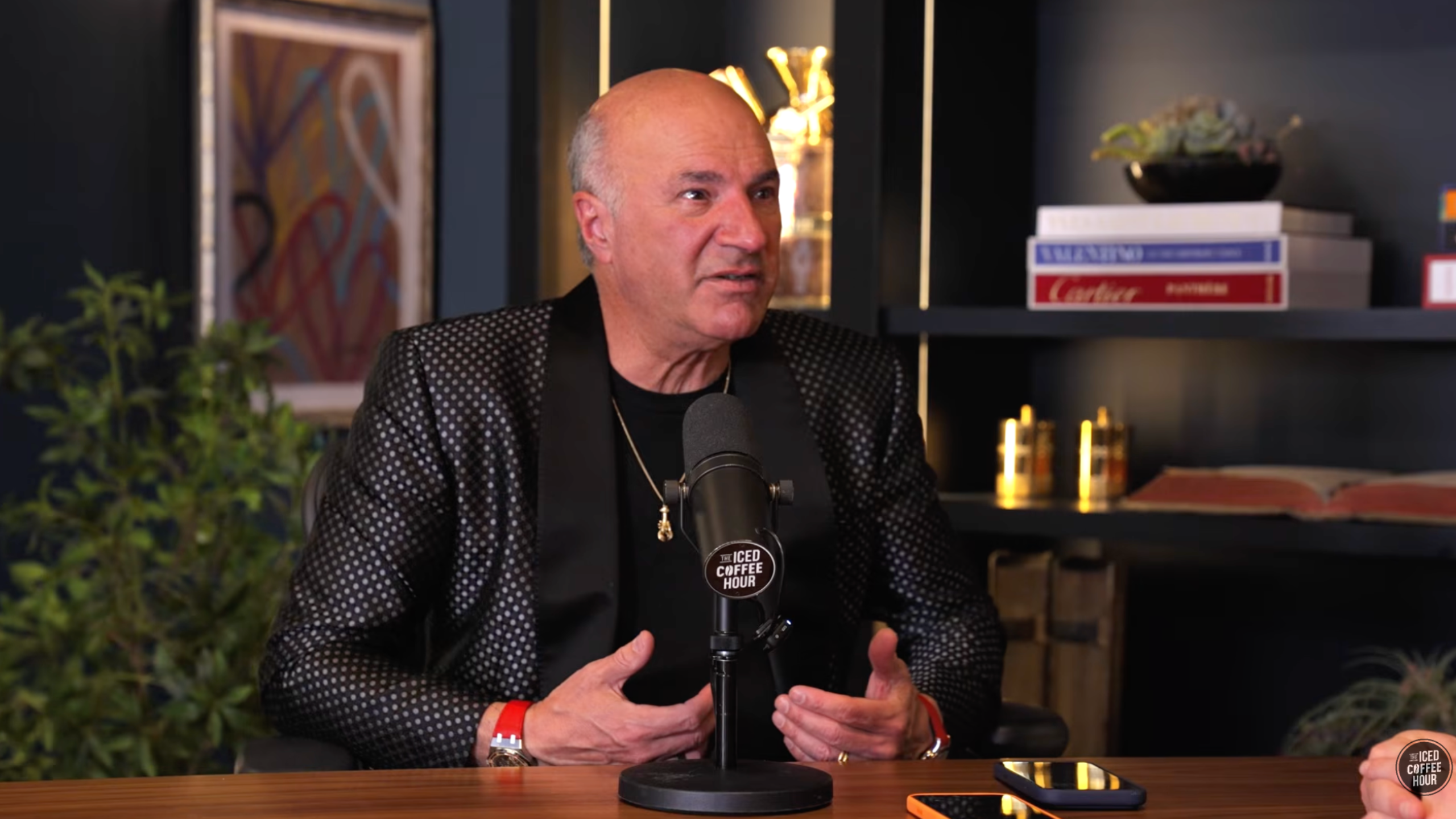
The workers Kevin O'Leary values most are no longer engineers. They are social media content creators who know how to turn 59-second clips into paying customers.
Speaking on The Iced Coffee Hour podcast on 29 March, the Shark Tank investor told hosts Graham Stephan and Jack Selby that content roles in his portfolio companies have undergone a drastic pay shift.
'I used to pay those guys 48 grand a year,' O'Leary said. 'Now they're 250,000 because you can measure their work based on customer acquisition every week.'
The best performers, working as contractors, pull in upwards of $500,000 (£373,000) annually. Their value, he explained, comes from tracking every conversion across TikTok, Instagram, LinkedIn and X. O'Leary's previous pay for the same roles sat at $48,000 (£35,800).
'Remember, everybody used to say you have to be an engineer,' O'Leary said. 'Now you want to be an artist again.'
O'Leary pointed to fintech company Block, the parent of Square, Cash App and Afterpay, as evidence thatAI is remaking headcounts across the industry. In late February, Block co-founder Jack Dorsey announced the company would cut over 4,000 employees, reducing its workforce from more than 10,000 to under 6,000.Fortune reported Dorsey tied the decision directly to advances in AI-powered tools, calling the business 'strong' even as he eliminated roughly 40 per cent of staff.
O'Leary referenced the Block cuts on the podcast. 'Look how much the stock has gone up as a result of cutting the workforce by 40 per cent,' he said. Block shares rose nearly 17 per cent following the announcement, according to Fortune.
When asked whether AI would destroy more jobs than it creates, O'Leary pushed back. 'No,' he said. 'We just don't know what the transition is going to look like. AI is going to be such a powerful tool. It'll create new industries we haven't even thought of.'
He did acknowledge that some companies are using AI as cover for cuts driven by overhiring or weak balance sheets. O'Leary citedOpenAI CEO Sam Altman's observation that much of the current wave amounts to 'AI washing'- firms dressing up routine restructuring as technological transformation.
Across his private holdings,O'Leary said cash flows have risen 20 per cent in the past two years, attributing the gains directly to AI adoption.
Source: International Business Times UK
