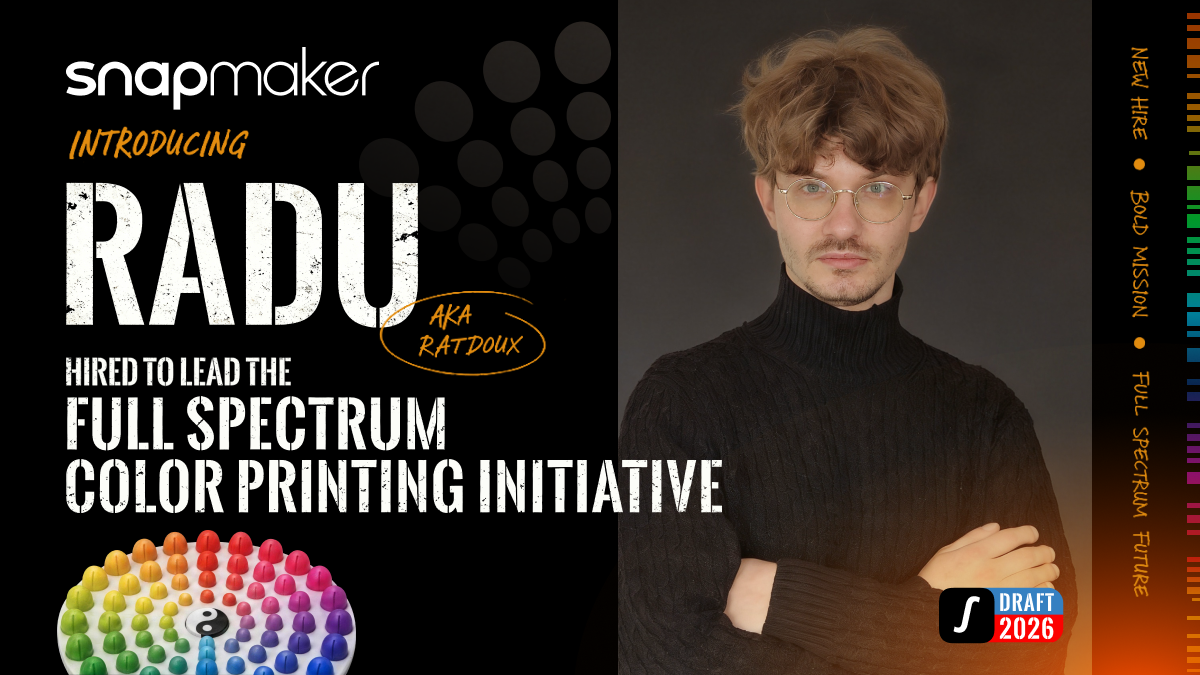
Home-Snapmaker brings Full Spectrum developer Ratdoux into multicolor 3D printing software push
Shenzhen-based desktop 3D printer manufacturerSnapmakerhas hired Radu “Ratdoux”, the original developer behind the experimental Full Spectrum color-mixing slicer, to help lead a new multicolor 3D printing initiative.
Announced in May 2026, the move will see Snapmaker begin work on officially integrating Full Spectrum’s virtual color-mixing technology into upcoming versions ofSnapmaker Orca, the company’s slicing software platform for theSnapmaker U1.
Full Spectrum was originally developed as a fork of Snapmaker’s open source SnapmakerOrca slicer. The software explores ways of generating intermediate colors through alternating filament layers and visual blending techniques, rather than relying only on direct, single-color filament swaps. According to Snapmaker, the approach is intended to create richer color transitions while reducing material waste.
The project has attracted attention in the maker community for its software-driven approach to color generation, particularly when paired with the Snapmaker U1’s independent multi-toolhead architecture.
“Full Spectrum started when I saw Aceman11100 on Reddit doing color mixing in Blender and thought, why not do this directly in the slicer?” said Ratdoux. “Snapmaker U1 was the only machine fast enough to make it work, and the community response was incredible. Joining Snapmaker means we can develop these ideas where they started, right alongside the hardware that made them possible.”
Software-led color mixing for desktop 3D printing
Snapmaker says Full Spectrum will continue to be developed openly through Snapmaker Orca under the AGPL-3.0 license. This keeps the project within an open source software environment while bringing its development closer to Snapmaker’s hardware and software teams.
The integration effort points to a practical software constraint in desktop multicolor 3D printing. Multicolor systems often depend on discrete material changes, which can add print time, complexity, and waste. Full Spectrum instead uses slicer-level control to approximate additional colors through the way layers and toolpaths are assigned.
That does not make the system equivalent to full-color 3D printing. The technology described by Snapmaker remains focused on visual color blending using available filaments and the U1’s toolhead architecture. Its value will likely depend on how reliably those visual effects translate across models, materials, layer heights, and viewing conditions.
Source: 3D Printing Industry
