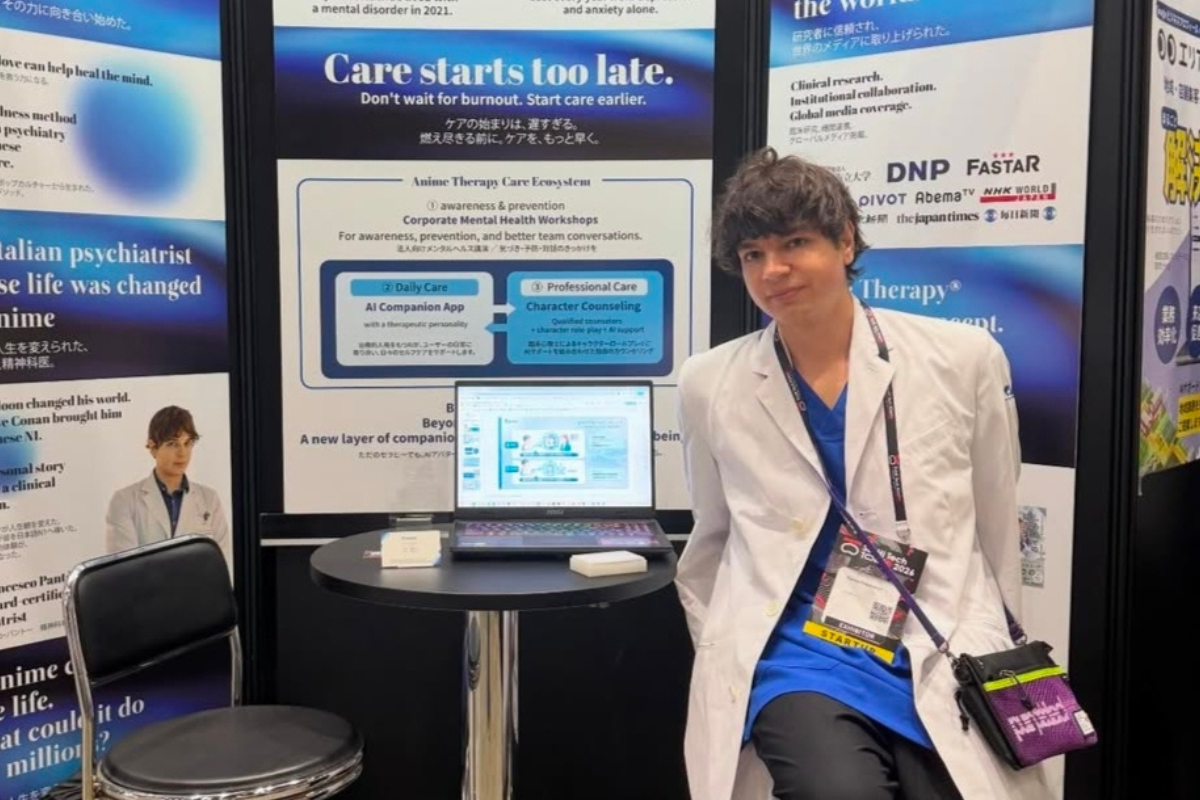
Francesco Panto is apsychiatristand researcher who has become one of the leading voices behind Japan's experimental 'anime therapy' movement. Originally from rural Sicily, Panto is now based in Japan.
His work is closely associated with a clinical trial led at Yokohama City University, where researchers are testing whether fictional characters can help young people with depression and anxiety engage more easily with psychological support.
Panto's professional focus is rooted in a personal history of isolation and emotional struggle. Growing up in rural Sicily, he has described experiencing bullying and difficulty adapting to social expectations. During this period, he turned to anime, manga, and video games as a form of emotional refuge - media that later became central to his thinking as a clinician.
'Being raised in Italy, in Sicily, there were very strong stereotypes around gender or self-expression', Panto told AFP.
'The use of manga and anime supported me so much... they were very important emotional support kind of tools', Panto told AFP.
Panto has often pointed to Japanese pop culture as a key influence in his adolescence. Works such as the video game 'Final Fantasy' helped him identify with characters who felt aspirational and emotionally expressive in ways he could relate to.
'When I was 12 or 13 years old I started to play this game called 'Final Fantasy'... and the male protagonists resonated with me. They were so masculine and cool, but in their own way', he stated.
He also cites anime like 'Sailor Moon' and 'Magic Knight Rayearth' as important sources of comfort during his teenage years. These series, alongside other fantasy narratives, gave him what he later described as emotional distance - space to reflect on identity and vulnerability without direct social pressure.
For Panto, this experience became foundational: fiction was not just entertainment, but a psychological tool for self-understanding.
Now working as a psychiatrist, Panto has developed the idea of 'character-based counselling', sometimes described in research settings as anime therapy. The approach uses fictional characters - designed with distinct personalities and emotional struggles - as a bridge between therapist and patient.
Source: International Business Times UK
