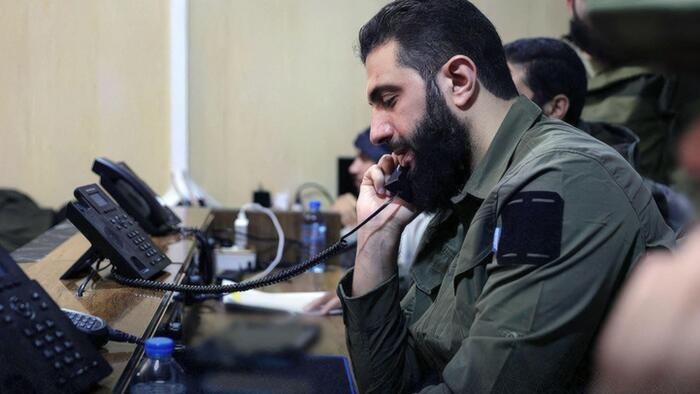
Syria continues stepping out of the geopolitical wilderness, now apparently onto the highest-stakes stage in international finance. Or rather, the reality is that Washington's post-AssadAl Qaeda in suitsmakeover of 'former' terror leader Ahmed al-Sharaa has reached its peak.
According to aReutersreport on Thursday, self-appointed Syrian President Ahmed al-Sharaa (Jolani) isset to lead a national delegation to the G7 summit in France next month.
The invitation marks the country's first-ever participation in the summit since the elite forum was founded back in 1975.
Citing three sources familiar with the matter, the agency confirmed that an invitation was officially hand-delivered to Syrian Finance Minister Mohammed Yisr Barnieh while he was attending the group's preparatory financial talks in Paris earlier this week. The main G7 summit is set to run mid-June, from the 15th through 17th in Évian-les-Bains, southeastern France.
A Syrian official speakingReutersdescribed that Damascusplans to heavily pitch its geography to the G7. This will likely center on leveraging the country's role as a"potential strategic hub for supply chains"amid the Iran war and Hormuz Strait crisis.
"After the closure of the Hormuz Strait, pretty much all the neighboring countries in the region knocked on our door to get access to our Syrian ports,"statedMazen Alloush, the director of local and international relations for Syria's borders and customs authority. "They are making Plan B's in case the crisis goes on longer."
The over decade-long proxy war to oust Assad, which heavily involved the CIA and Gulf states, as well as Israel, has long been discussed as part of the'pipeline wars' theme, and has for years been an open secret.
President Trump, who helped put Sharaa in power, and vouched for him when they first met in Saudi Arabia, is expected to attend the G7 summit.
But despite Damascus under Sharaa now being a willing puppet of Washington,economic relief for the war-ravaged Syrian population has remained illusory, as one Middle East outletunderscores:
Because Syria had beenunder crushing sanctions since the start of the 14-year warthat began in 2011, many expected the economic situation to improve after Sharaa toppled former Syrian president Bashar al-Assad's government and western nations began easing sanctions.
Source: ZeroHedge News
