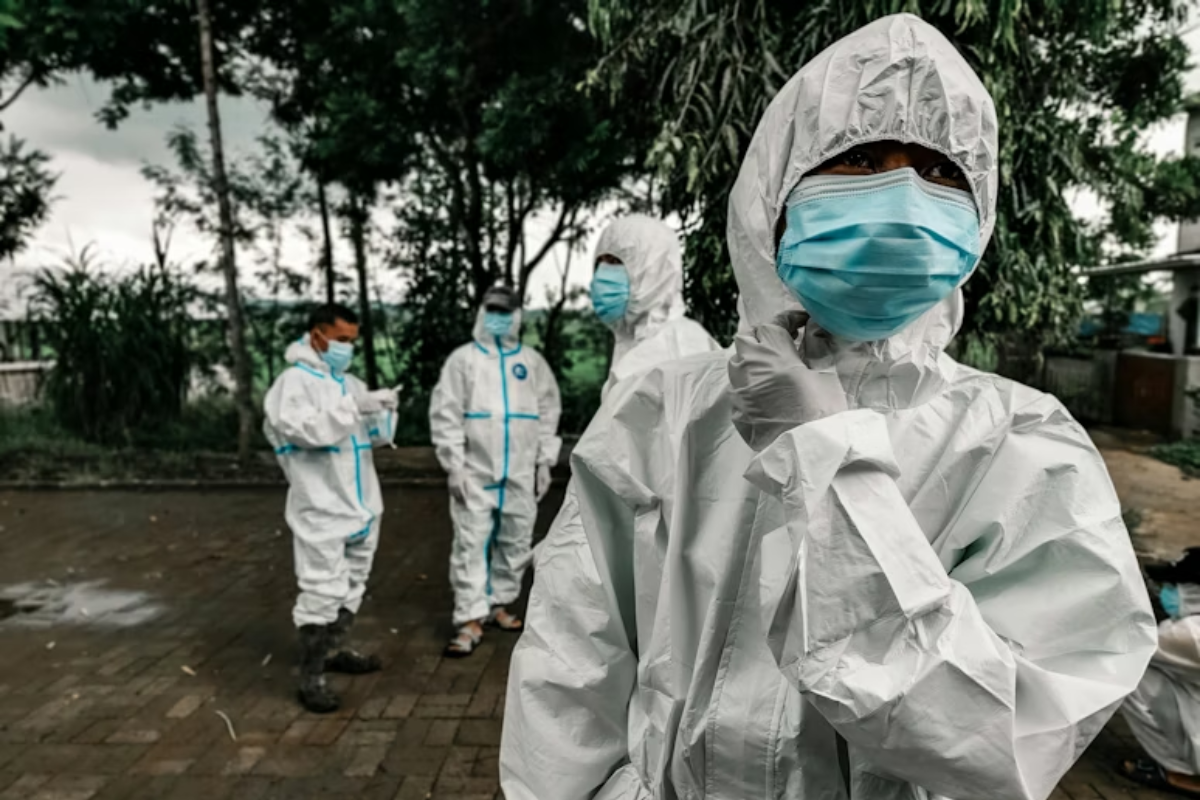
In the northeastern region of the Democratic Republic of the Congo, an Ebola outbreak spread quietly for weeks before authorities recognised its severity – allowing fear, misinformation, and misunderstanding to take root in already vulnerable communities.
Health officials and witnesses say early cases of the disease were reported in mid-April in Mongbwalu, where residents first thought at the time that they were battling a 'mystical illness' rather than a viral disease, said Congolese Health Minister Samuel Roger Kamba.
By the time medical teams identified the outbreak, infections had already spread across nearby mining and trading routes, accelerating transmission in one of the region's most unstable provinces,AFPreported.
Residents shared that during the first outbreaks they would repatriate the bodies and hold traditional ceremonies, while others burned coffins or sought spiritual explanations for the unexplained fatalities.
'After that, there were repeated deaths, sometimes between three and five people a day,' John Vatsosi, a resident of Mongbwalu, said.
'People then began to speculate, saying that the traditional leaders had cast a curse that was causing these deaths,' he added.
Another resident, Timothee Bedidjo, said that they even accused someone of being a sorcerer 'who caused people's deaths.' Even hospital staff could not identify the disease. 'Sometimes they spoke of a fever, sometimes of an as-yet unidentified outbreak.'
One hospital official in Rwampara said people thought the deaths were caused by witchcraft, leading to much chaos. 'They brought us patients and we handled them as ordinary hospital admissions. There were no concrete signs that would allow us to associate the illness with Ebola,' the hospital official added.
Desperate for a cure, some patients 'decided to seek treatment from traditional healers, while others turned to servants of God for prayers,' Vatsosi said.
The outbreak- later confirmed by theWorld Health Organizationas the 17th Ebola outbreak in the country - was slow to be detected due to weak surveillance systems and limited testing capacity.
Source: International Business Times UK
