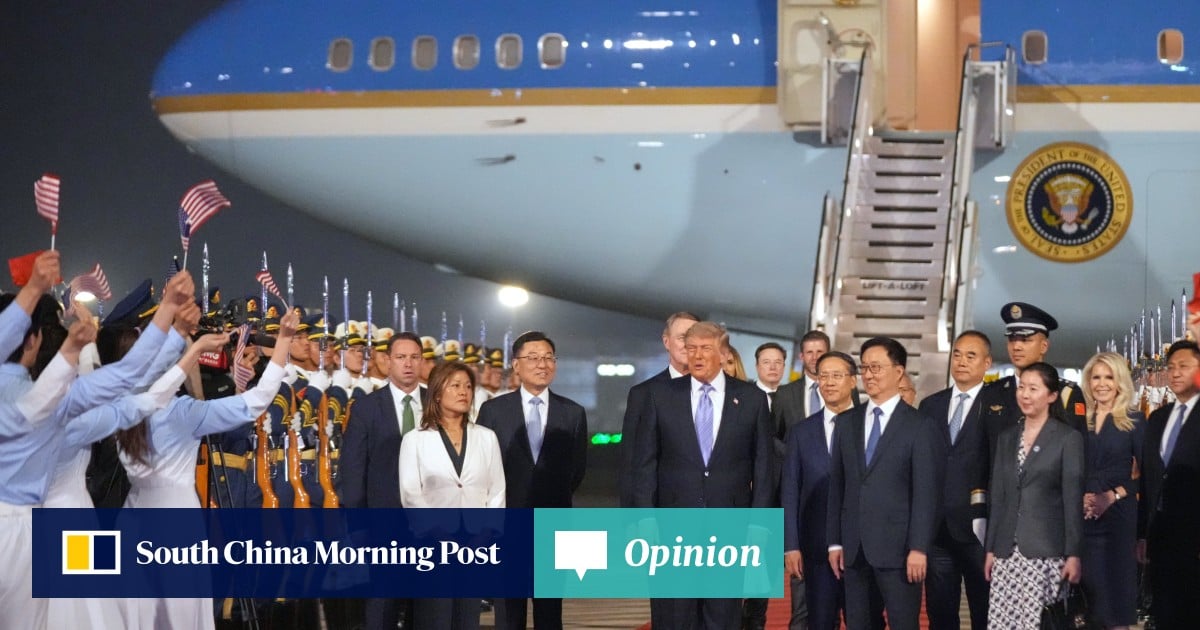
China’s demand for passenger jets is genuine – but so is its aim to build a commercially credible aviation industry
Beijing is aware of these constraints. Civil aviation cannot be subordinated to industrial ambition alone. Airlines require reliable aircraft to sustain tourism, logistics and domestic mobility. Boeing and Airbus remain operationally indispensable, whatever the longer-term trajectory.
Yet Chinese industrial policy has long accepted short-term dependence as the price of longer-term autonomy. Boeing orders stabilise fleet expansion while easing pressure on a more difficult question: whether China can build a commercially credible aviation industry before external conditions become more restrictive.
2026 xi-trump summitafricaair force oneairbusamericanasiaaviationbeijingboeingchinachina’s c919 passenger planecomacdiplomacyeuropeglobal southgulfjakartajohannesburgkuala lumpurunited states
PEOPLE ALSO ASK
Will China buy an Airbus instead of Boeing?
The aircraft cost roughly $9.53 billion at list prices, though Air China said Airbus granted "considerable price concessions." This marks Air China's first announcement of an Airbus purchase since July 2022. It has not disclosed any orders from Boeing since its last purchase in 2016.
The Trump Organization's Boeing 757, nicknamed Trump Force One after the U.S. presidential plane, Air Force One, is an aircraft owned and operated by Donald Trump. The nickname gained use during Trump's presidential campaign of 2016.
Over the last two complete years on record (2023-2024), India's two largest airlines, IndiGo and Air India, have bought by far the most aircraft in the civil aviation industry: 540 and 570 commercial jets, respectively, according to publicly released orders by Airbus and Boeing (compiled by various sources).