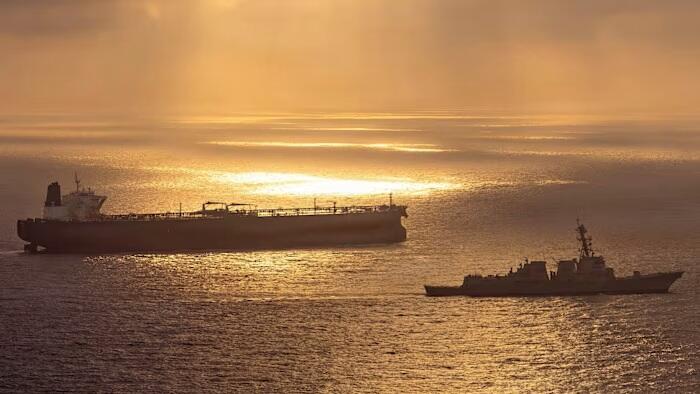
Is the Iranian regime the immediate barrier to oil tankers seeking to exit the Strait of Hormuz, or is it fear of liability that's keeping shipping companies at bay?
The damage actually done to Iran's military and weaponry by US strikes is a matter of hot debate, but one aspect of the strikes that is relatively easy to confirm is the destruction to Iran's navy. US Central Command indicates that around92% of Iran's naval capacityhas been sunk to the bottom of the ocean including at least 10 small submarines. So far, the regimes ability to actually hit and destroy US ships is next to nil.
The much vaunted "mosquito fleet" of small and fast attack boats has proven to be ineffective against US operations in the Strait, with some naval ships traveling directly through the Hormuz without much trouble. At bottom, Iran has no ability to enforce an effective "blockade" on the strait.
The regime's containment is mostly restricted to the use of drones, which can be countered with US technology (jamming and counter-drone operations). But Iran also understands that the volatility of the cargo and the insurance risk is the greater element working in their favor.
In other words, no matter how effective US forces have been in destroying Iran's assets in the strait, the financial risk to oil shippers remains. Insurance companies are the Trump Administration's biggest obstacle, not Iran's military. Tankers will not budge because there are too many coverage gaps, including the dreaded environmental coverage gap.
Pre-conflict, the insurance premium baseline for the Hormuz was extremely low (0.25% of a ships total value). Today, those premiums have spiked from 2% to 10%. Major insurers including P&I clubs like Gard, Skuld, NorthStandard and London P&I issued cancellation notices for war-risk coverage in the Persian Gulf area, effective in March. Reinsurers pulled back, forcing repricing. The costs are far too high and the risk outweighs the reward.
Traffic in the strait dropped by 80% almost immediately because of the loss of insurance. This created a self-reinforcing problem: Even with limited US naval guidance ("Project Freedom") or occasional Iranian-coordinated passages, commercial operators avoid the risk without affordable coverage.
Industry brokers and shipping executives assert that the costscannot be managed, and they have decided to adopt a "wait and see" approach on negotiations. Marcus Baker, Global Head of Marine, Cargo & Logistics at Marsh notes that tankers remain “insurable, if you’re prepared to take the risk...” but he emphasized themassive cost barrierfor most operators.
Interestingly, Iran's latest negotiation salvo on the strait focuses on their own crypto-based insurance scheme. It effectively amounts to a "protection racket", forcing companies to buy insurance from the regime in exchange for safe passage. However, there have been few takers; most shippers don't trust Iran to ensure the safety of their vessels.
The obvious first solution would be for the Trump Administration to offer US backed coverage for tankers traversing the Hormuz. This already happened in March.
Source: ZeroHedge News
