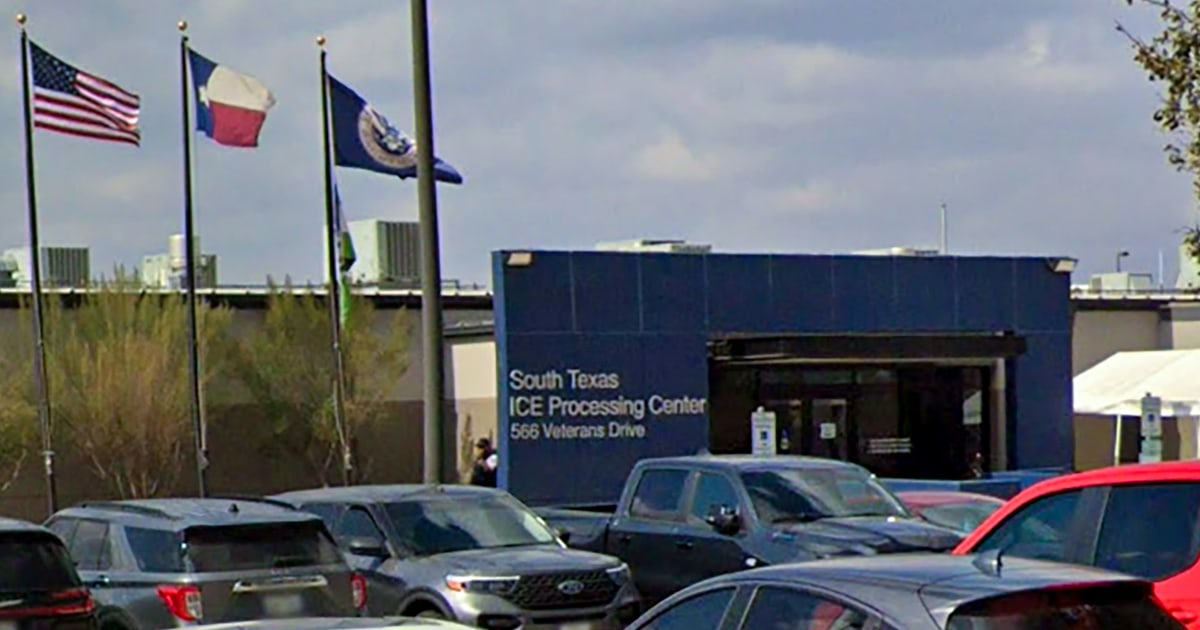
Four days before Christmas at an ICE detention center in Texas, a 33-year-old pregnant immigrant started banging her head against a wall.
Get unlimited access to ad-free articles and exclusive content.
Guards tried to get her into a vehicle to take her to the hospital, according to documents obtained by NBC News. She refused.
So they called 911. The call was one of more than 1,000 emergency requests over the last year made from six immigration detention centers around the country, and one of 28 involving serious incidents of self-harm, according to detailed logs obtained by NBC News. One man swallowed a razor blade, another drank cleaning chemicals, and at least three cut their own wrists.
Such cases are increasingly common as the Trump administration seeks to deport asmany immigrants as possible, according to Immigration and Customs Enforcement data. They’re also holding detainees longer, and without any possibility for release, a policy that has been challenged and is likely headed to the Supreme Court.
The instances of self-harm are a likely undercount; NBC News requested emergency call logs from regions where the 16 largest immigration detention centers are housed around the country. Six jurisdictions located in Washington, California, Georgia, Michigan and Texas responded with detailed call logs.
Five deaths by suicide have been reported in detention facilities so far this year, the highest in two decades, and the year isn’t half over yet. Over the four years of the previous administration, which held half as many people, there were two suicides. Overall,the total number of deaths in custody in 2025 tripledfrom the previous year, as the number of detainees has doubled under Trump, according to ICE data.
The pregnant woman made it to a local hospital, but it’s unclear what happened from there. Documents reveal little else about her, citing privacy laws. ICE declined to respond to questions about the case.
Self-harm is a sign that something is going very wrong, said Dr. Sanjay Basu, an epidemiologist and physician from the University of California, San Francisco, who has researched ICE deaths.
“If you see a spike, it indicates there is a much larger group of people suffering mental health challenges,” he said.
Source: Drudge Report
