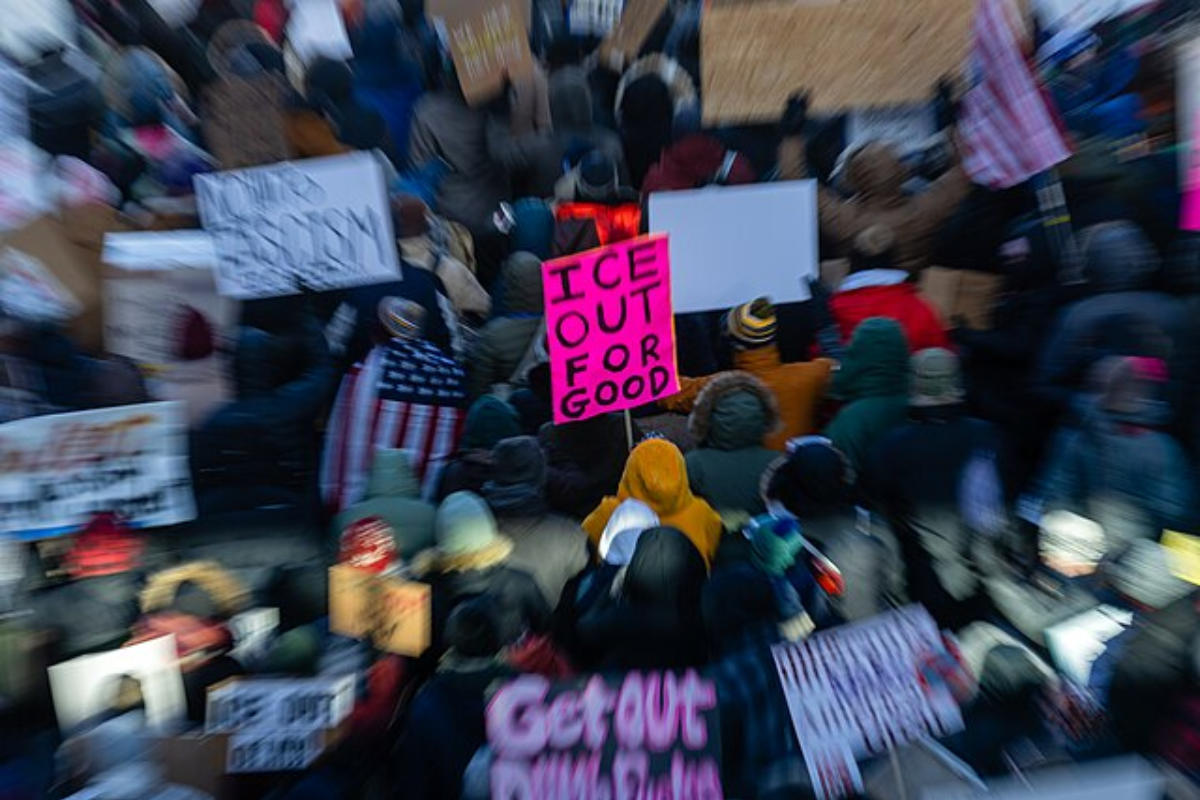
United States Immigration and Customs Enforcement officers are now authorised to create fake social media profiles and pose as ordinary users to spy on Americans, according to leaked government documents that have sparked alarm amongst civil liberties advocates. The Department of Homeland Security has quietly expanded its surveillance capabilities through a programme called 'masked engagement', allowing more than 6,500 federal agents and intelligence operatives to assume false identities online.
Ken Klippensteinobtained internal DHS documents revealing the new policy, which permits Homeland Security officers to friend social media users, join closed groups, and access what would otherwise be private posts, images, and friends lists. The programme marks a significant expansion from previous 'masked monitoring' protocols, which only allowed agents to observe public social media content without direct interaction.
The leaked documents show that US Border Patrol 'may use identities or credentials that, for operational security purposes, do not identify a DHS/CBP affiliation, or otherwise conceal a government affiliation, to engage with other users on a limited basis'. This includes logging into social media platforms and joining groups, or 'friending, liking, or following an individual in order to access information available to any other interested individual who opts to receive the information', according to theDHS policy documents.
The policy change comes as the Trump administration has made digital surveillance a central component of its immigration crackdown. The documents indicate that 'masked engagement covers the majority of USBP's operational use of social media', with Border Patrol noting that social media sites 'require some level of engagement to gain initial access and maintain that access'.
🚨 ICE is authorized to covertly infiltrate and interact with social media accounts under a new program called "masked engagement," per documents leaked to me:https://t.co/rETls8X5Uv
Rachel Levinson-Waldman, director of the Brennan Center's Liberty and National Security Program, described the masked engagement capability as a 'cause for real concern'. She explained that the new policy is being 'shoehorned in one step below undercover engagement', with CBP apparently believing that friending someone or joining a group is less invasive than directly engaging with individuals.
Levinson-Waldman characterised the policy as 'insidious', noting that DHS officers could use it to gather vast amounts of information about an individual's social network. 'Doing so through an alias account—an account that doesn't reveal the user's CBP affiliation, and pretends to be someone else—will weaken trust in government and weaken the trust that is critical to building community both online and off', she warned.
Political commentatorBrian Krassensteinhighlighted the programme's scope on social media, stating that the 'new masked engagement goes beyond simple monitoring' as 'agents can actually interact, infiltrate, and gather private info under fake identities'. He described it as 'yet another example of ICE & DHS expanding authoritarian, domestic spying tactics'.
The masked engagement programme represents just one element of a dramatically expanded surveillance apparatus under the current administration. Over the past year, Homeland Security and other federal agencies havesignificantly increasedtheir ability to collect, share, and analyse personal data, including immigration and travel records, facial images, and information drawn from vehicle databases.
Federal authorities can now monitor American cities at a scale that would have been difficult to imagine just a few years ago. Agents can identify people on the street throughfacial recognition, trace their movements through licence-plate readers, and in some cases use commercially available phone-location data to reconstruct daily routines.
Source: International Business Times UK
