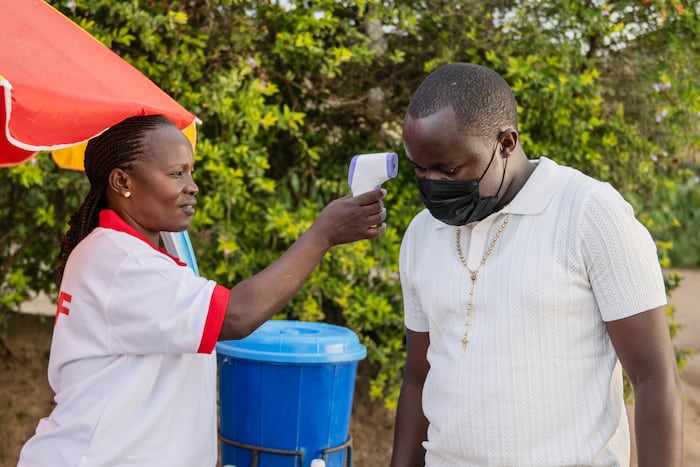
BUNIA, Congo (AP) — Anxious healthcare workers in eastern Congo said Wednesday they are underprotected and undertrained in the face of a rapidly spreading outbreak of a rare type of the Ebola virus in one of the world's most remote and vulnerable places.
“It’s truly sad and painful because we’ve already been through a security crisis, and now Ebola is here too,” said Justin Ndasi, a resident of Bunia, site of the first known death that was announced last week after what experts call a worrying delay in detecting the virus.
The Ebola response unfolds in a region long threatened by armed groups that have kept a large part of the population on the run, further complicating health workers' catch-up efforts to trace the outbreak. The World Health Organization, which on Wednesday said the outbreak posed a low risk globally, has said “patient zero” still has not been found.
In Bunia, where tons of health supplies have been airlifted, residents said masks have become harder to find and some disinfectants that previously sold for 2,500 Congolese francs (about $1) now cost up to 10,000 francs (over $4).
‘The scale of the epidemic is much larger’
WHO has declared the Ebola outbreak a public health emergency of international concern and openly worried over its “scale and speed."
The agency's head in Congo has said the outbreak would last at least two months.
The rare type of Ebola, known as the Bundibugyo virus, spread undetected for weeks following the first known death on April 24 while authorities tested for another, more common Ebola virus, which came up negative.
So far, 51 cases have been confirmed in Congo’s northern provinces of Ituri and North Kivu, as well as two cases in Uganda, WHO Director-General Tedros Adhanom Ghebreyesus said Wednesday. Beyond that, there are 139 suspected deaths and almost 600 suspected cases.
But "the scale of the epidemic is much larger,” he said. “We expect those numbers to keep increasing.”
Source: WPLG
