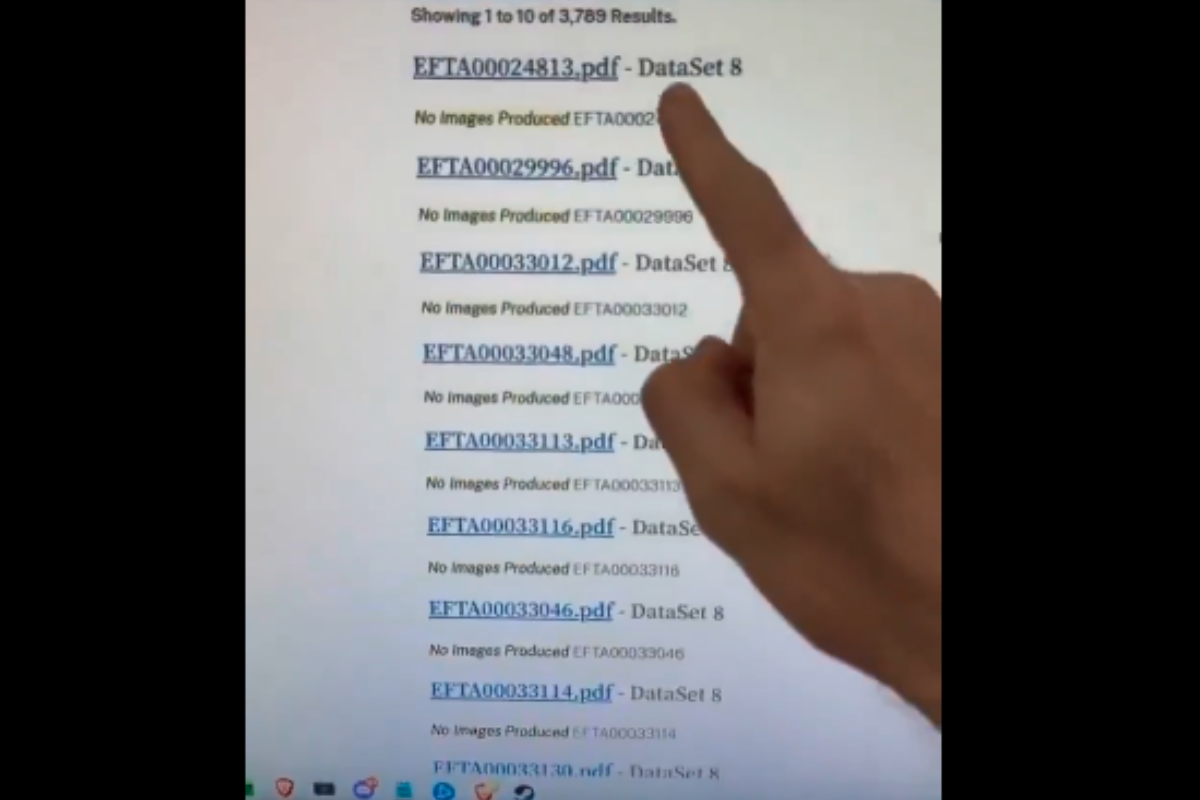
Thousands of video files related to the Jeffrey Epstein case have been uncovered on the US Department of Justice website after online investigators discovered a simple technical workaround that exposed mislabelled content. The footage, which includes hours of jail cell camera recordings, was hidden behind files marked as PDFs when they were actually video formats.
The discovery was shared widely on social media platform X by activist accountPamphletsY, which demonstrated how users could access the videos by manually changing file extensions in the website's URL. The revelation has raised questions about the DOJ's handling of the massive document release required under the Epstein Files Transparency Act.
The technical oversight became apparent when users searched theEpstein Libraryon the DOJ's official website for the term 'no images produced' and received thousands of PDF documents. Opening these files displayed only a blank page with the text 'No Images Produced'.
However, by accessing the URL and replacing the '.pdf' extension with '.mp4', users discovered the files were actually videos that had been incorrectly labelled. 'If you go to the URL up top and remove the PDF part and then type in MP4 and hit enter, you'll find videos that I guess were labelled with the wrong file extension', the activist explained in footage posted on X.
The workaround also proved effective with other video formats including .mov, .jpeg, .avi, and .heic extensions, according toindependent journalistreports examining the DOJ library. One of the discovered files contained an hour-long recording from a jail cell camera, though it remains unclear which specific facility or time period the footage represents.
The mislabelled videos are part of a larger release mandated by the Epstein Files Transparency Act, which President Donald Trump signed into law on 19 November 2025. The legislation required the DOJ to release all unclassified documents related to Jeffrey Epstein within 30 days.
On 30 January 2026, theDOJ publishedover three million additional pages responsive to the Act, including more than 2,000 videos and 180,000 images. Combined with prior releases, the total production reached nearly 3.5 million pages. Deputy Attorney GeneralTodd Blanchestated during a press conference that this constituted approximately half of the more than six million Epstein-related documents the department had collected.
The discovery of mislabelled video files represents just one of several technical problems that have plagued the DOJ's handling of the Epstein document release. The initial batch of heavily redacted files released on 19 December 2025 drewbipartisan criticismfor failing to meet the law's requirements, with over 500 pages entirely blacked out.
Within 24 hours of the December release, 16 files disappeared from the public webpage without explanation. Additionally, faulty redaction techniques in the digital files allowed members of the public to recover blacked-out content, revealing information officials had intended to withhold.
The DOJ's search functionality has also provenproblematic, with the website including text warning users that 'some of these documents may not be electronically searchable or may produce unreliable search results'.
Source: International Business Times UK
