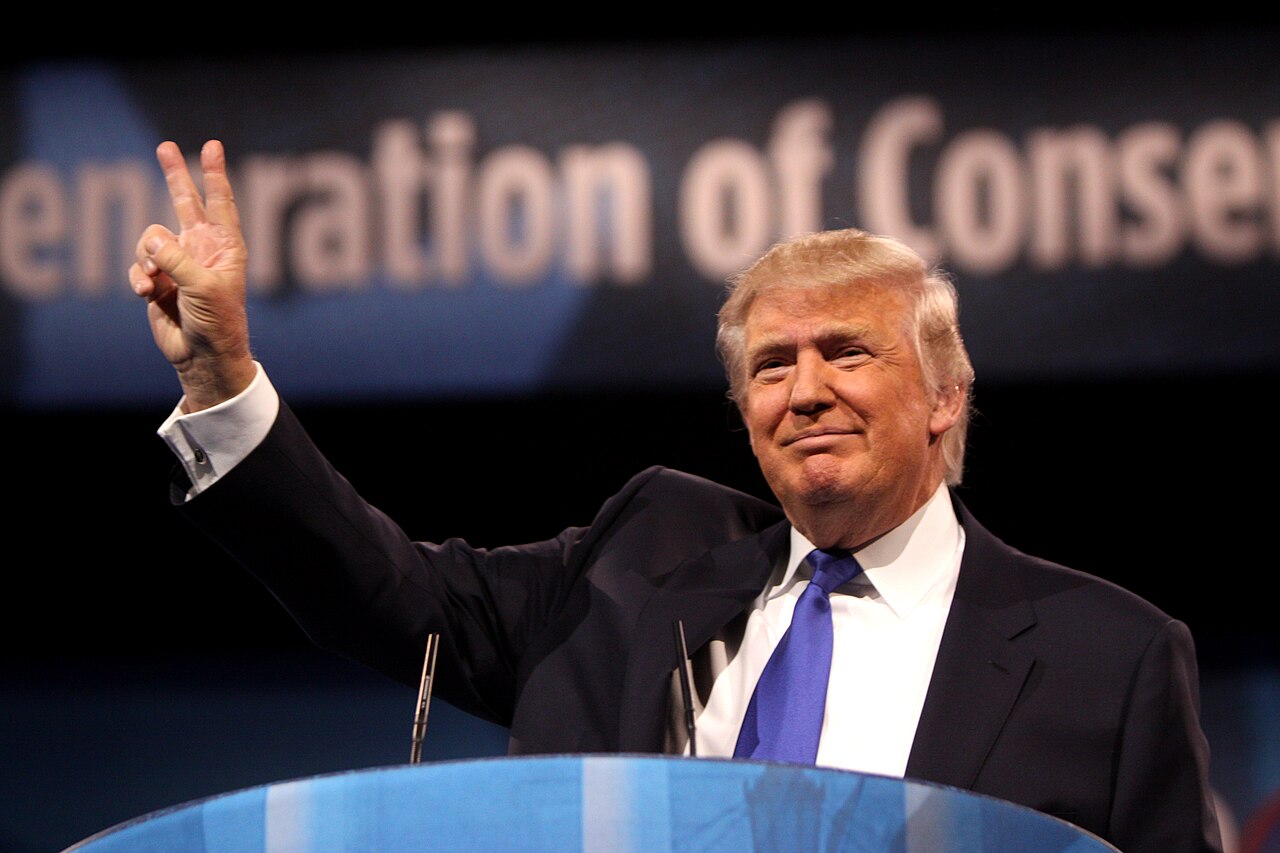
Donald Trump used a White House picnic on Tuesday to hail what he called a 'thriving' US economy, but then appeared to concede that many Americans are not feeling the benefits, telling guests: 'We have an economy, people aren't seeing it yet.'
The remarks came at the annual Congressional Picnic on the South Lawn, where the president sketched a rosy picture of record stock market highs, easing inflation, and what he described as historic job figures. He presented his administration as the engine of a powerful economic rebound, even as official data and market signals paint a more mixed, and more anxious, picture.
'America's thriving, America's winning,' Trump told lawmakers and their families. 'Today we're the hottest country anywhere in the world.' He claimed his team had tamed inflation and delivered cheaper prices: 'We inherited high prices and we got the prices down, and we got them down to numbers that in some cases people have not seen before.'
🇺🇸🇨🇳 "He made a statement. It might not have been from him. It was somebody. But they talked about the decline, but he said today the US was declining for the last four years. He said we have the hottest country anywhere in the world." - Trumppic.twitter.com/isceyEKEfG
Then came the line that cut across the self‑congratulation: 'We have an economy, people aren't seeing it yet,' he admitted. After several minutes insisting the economy had never been stronger, the president acknowledged what opinion polls, consumer data and conversations at petrol stations have been signalling for months: millions of households do not recognise the boom he keeps describing.
Trump tried to steer back to superlatives, boasting that 'two and a half months ago, we hit the best numbers that we've ever hit as a country,' citing jobs, the stock market and 'everything' as having reached some unspecified peak. But he then offered an explanation for why these 'best numbers ever' now come with an asterisk: the decision to escalate military action against Iran.
'I called my people in. I called them in and I said, 'Congratulations, everybody, but we're going to have to make a little journey down to a place called Iran,' Trump told the picnic crowd. He framed the conflict as a necessary intervention to stop Tehran acquiring nuclear weapons: 'We have to stop them. They have nuclear on their mind, and we're not going to let them have a nuclear weapon.'
"We're going to end that war very quickly. They want to make a deal so badly. They're tired of this"President Trump predicts a deal to end the war with Iran is going to happen "fast" — and that oil prices will plummet when the agreement is reached.pic.twitter.com/Q0t8Bp8RWx
As far back as March, Trump had insisted US forces could be out of Iran within 'two to three weeks.' Instead, the campaign has dragged into a third month, with repeated failures to secure a ceasefire even as the White House keeps insisting that an end is close. On Tuesday, Trump again said: 'I think we're going to be finished with that very quickly, and they won't have a nuclear weapon, and hopefully we're going to get it done in a very nice manner.'
The phrase 'very nice manner' jars against the reality of a drawn‑out Middle East conflict, and it sits uneasily beside the hardening economic data. Thirty‑year US Treasury yields have climbed to their highest level since 2007 as investors reassess the risks of higher oil prices and a prolonged crisis in the region. That matters for ordinary Americans because it feeds into borrowing costs, from mortgages to long-term business investment.
Source: International Business Times UK
