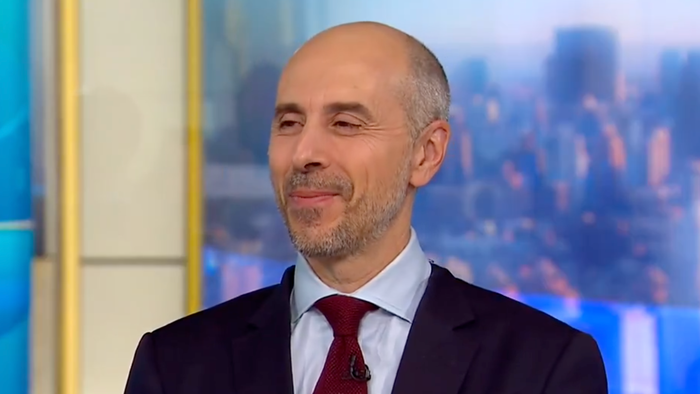
Add Bank of America's commodities and derivatives research chief to the growing list of Wall Street strategists who see Brent crude sticking around $90 a barrel this year, as any near-term resolution to the Hormuz chokepoint crisisappears increasingly distant. The call follows Goldman's move several weeks ago to raise its year-end oil outlook to around $90.
BofA analyst Francisco Blanch joined Bloomberg Television's Surveillance earlier and warned, "We have a pretty large deficit that is running 14 million to 15 million barrels a day short, or 14% to 15% short of what we need to see for prices to stabilize and go down to $60 or $70 a barrel."
Francisco Blanch, head of commodities and derivatives research at Bank of America Securities, discusses the deficit in the global oil market and says the US will see potential “availability issues” during the summer driving seasonhttps://t.co/RK9C9kKKrnpic.twitter.com/IRs1wP51Fj
As of late Monday afternoon, Brent crude futures were trading above $112 as the reality of the weeks-long stalemate returned, indicating that the Trump team is not open to any concessions to Tehran.
Blanch's new outlook hinges on continued Hormuz disruption into next month. He noted that restoring tanker flows through the critical waterway is the optimal outcome but warned that the double blockade would lead to a gradual grind higher in prices, to $120 or $130 a barrel by the end of June or early July.
In the final days of April, Goldman analystsraised their fourth-quarter oil priceoutlook to $90 for Brent and $83 for West Texas Intermediate.
The chart below summarizes why their crude outlook for the fourth quarter is nearly $30 higher than it was before the Hormuz shock:
Frederic Lasserre, head of research at Gunvor, one of the world's largest oil traders,warnedlast week that "the tipping point is clearly June. This is the point at which something has to give."
JPMorgan analysts recently warned that the world is spiraling toward a catastrophic cliff-edge shortage of crude oil if the maritime chokepoint remains blocked for another 4 weeks.
Furthermore, Maersk CEO Vincent Clerc warned that a prolonged Hormuz closure is a "new wake-up call" that could seriously dent global trade.
Source: ZeroHedge News
