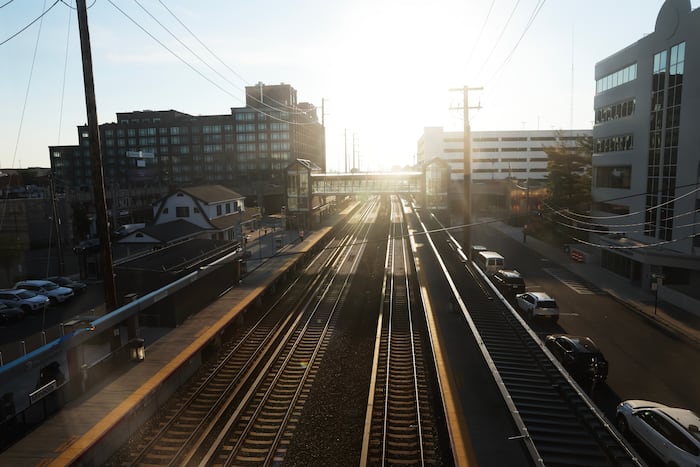
NEW YORK (AP) — Commuters in New York City’s suburbs navigated a gauntlet of car, bus and subway routes to get to work Monday as a strike on the Long Island Rail Road that shut down the nation’s busiest commuter rail system entered its third day.
Unions representing rail workers and the Metropolitan Transportation Agency, which runs the railroad, negotiated for much of Sunday, wrapping their talks around 1 a.m. Monday.
But they failed to reach an agreement despite pressure from the National Mediation Board and New York Gov. Kathy Hochul. The two sides returned to the bargaining table Monday.
Katie Dolgow, who teaches first graders in Manhattan, said it had already taken her an hour just to travel from Long Island to Queens as more commuters turned to the region's already notoriously gridlocked roads. But her big concern was going home.
“I have to get my son at daycare by 5:30. It's going to take me longer getting home. I'm a teacher, I'm going to have to leave work at 1:30,” she said.
Unionized workers were out early picketing in front of major LIRR hubs, chanting slogans and holding up signs that read: “No contract. No work,” and “Equal work. Equal pay.”
“We're just asking for a reasonable cost of living adjustment on our wages,” Byron Lee, a locomotive engineer, said outside Penn Station in midtown Manhattan. “People think that we don't deserve it.”
‘Just trying to keep their heads above water’
The LIRR serves hundreds of thousands of commuters who live along a 118-mile-long (190-kilometer-long) land mass that includes Brooklyn and Queens in New York City and the Hamptons, a summertime playground for the rich and famous. Most of its riders live outside New York City in two Long Island counties populated by nearly three million people.
The strike started at 12:01 a.m. Saturday after five unions representing about half the rail system's workforce walked off the job for the first time since a two-day strike in 1994.
Source: WPLG
