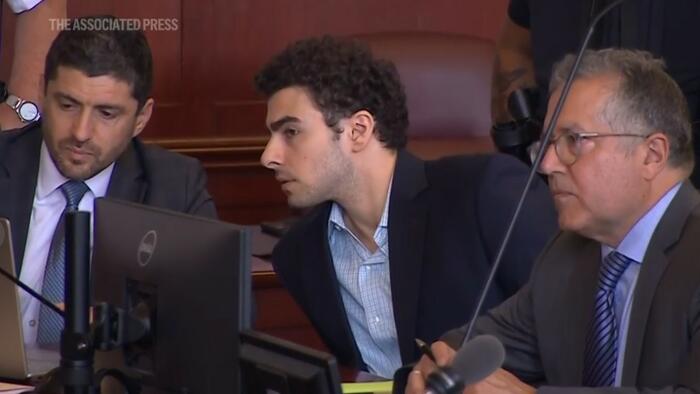
A judge just handed Luigi Mangione some big wins in his high-profile murder case. On Monday,New York Supreme Court Justice Gregory Carro issued a mixed ruling on evidence seized during the suspect’s dramatic arrest at a Pennsylvania McDonald’s. The decision represents a partial victory for the defense on constitutional grounds while delivering a significant boost to prosecutors by preserving the most damning pieces of physical evidence linking Mangione to the assassination of UnitedHealthcare CEO Brian Thompson.
Mangione, 28, appeared in court for the hearing, dressed sharply as he has throughout proceedings. He has pleaded not guilty to second-degree murder and other charges in the Dec. 4, 2024, killing that shocked the nation and ignited fierce public debate over corporate greed in the American healthcare system.
The ruling stems from Mangione’s arrest on Dec. 9, 2024, in Altoona, Pennsylvania - roughly 280 miles from the Manhattan crime scene. Police responded to a tip after Mangione was recognized while eating breakfast. Officers approached him, andwhat followed became thefocal pointof lengthy suppression hearings held late last year.
During the initial encounter at the McDonald’s,officers conducted a warrantless search of Mangione’s backpack in a public setting, visible to restaurant employees and patrons. They discovered a loaded gun magazine wrapped in underwear and other items. The search was paused, and Mangione was taken to the Altoona police station, where a more formal inventory search occurred.
Justice Carro ruled that theinitial McDonald’s search was improper- an unconstitutional warrantless intrusion because the backpack was not within Mangione’s immediate control or reach at the time.As a result, several items recovered during that phase are now suppressed and inadmissible in the state trial.
However, the judge found thesubsequent search at the police station valid, allowing prosecutors to use critical items recovered there.
This split decision mirrors similar outcomes in Mangione’s separate federal case and underscores the complexities of Fourth Amendment jurisprudence in high-stakes arrests.
To understand the ruling’s weight,one must revisit the events of December 2024. On the morning of Dec. 4, Brian Thompson, 50, a father of two and CEO of UnitedHealthcare, was gunned down in cold blood outside the New York Hilton Midtown. He was heading to an investors’ conference when a masked assailantapproached from behindand fired multiple shots. Thompson was struck in the back and leg; he died shortly after.
The killer fled on a bicycle, leaving behind shell casings engraved with the words “delay,” “deny,” and “depose”- phrases widely interpreted as a pointed critique of insurance industry practices that deny claims and delay care. Surveillance video, fingerprints, DNA, and other forensic links quickly pointed investigators towardMangione, a 26-year-old University of Pennsylvania graduate from a well-to-do Maryland familywith a background in engineering.
Mangione’s arrest five days later, with a fake ID and a backpack full of incriminating items, ended a intense manhunt.His Ivy League education, handsome appearance, and apparent grievances against corporate America turned him into an unlikely folk hero for some. Protests, “Free Luigi” chants, and online memes have accompanied the case from the start, reflecting broader societal anger over healthcare costs, claim denials, and corporate profiteering.
Source: ZeroHedge News
