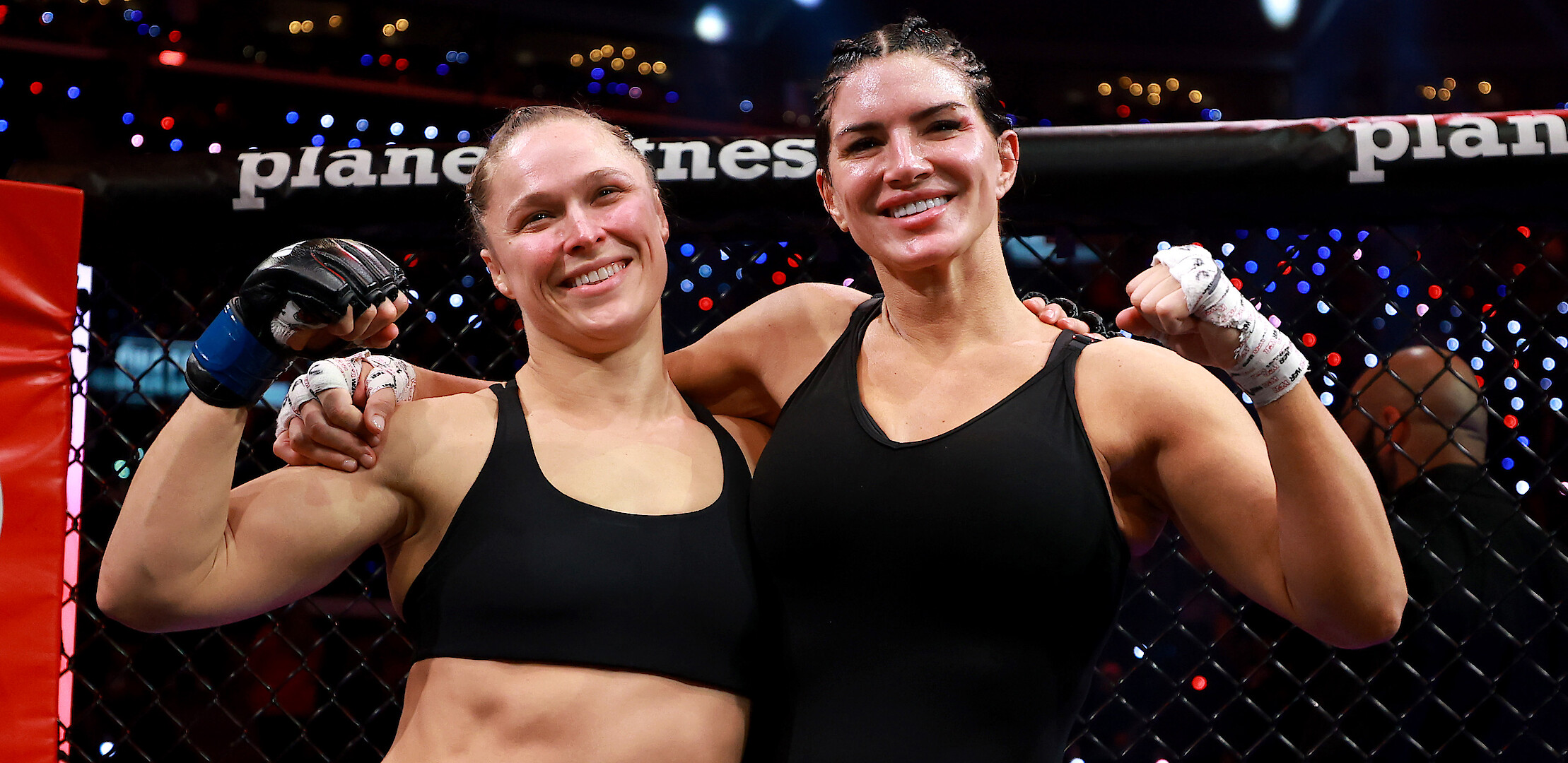
Ronda Rousey needed just 17 seconds to submit Gina Carano by armbar in their headline bout at the Intuit Dome in Inglewood, California, on Saturday, answering any doubt over who won the Ronda Rousey fight in a dominant return streamed live on Netflix.
For context, the bout topped the first mixed martial arts event promoted byJake Paul's Most Valuable Promotionsand was billed as the first live MMA card to air on the streaming platform. It also marked a comeback to professional fighting for both women, with Rousey competing for the first time since 2016 and Carano returning after almost 17 years away from the cage.
Nearly a decade on from her abrupt exit from the UFC, Rousey finally crafted the kind of ending she had long been denied. The UFC Hall of Famer and women's MMA trailblazer charged across the cage at the opening bell, took Carano down almost immediately, moved to mount and landed a short burst of ground and pound before isolating an arm. Officials recorded the result as a first‑round submission by armbar, just 17 seconds into the contest.
Rousey's finish was the 10th armbar submission of her professional career, all secured inside the first round. The former UFC women's bantamweight champion, now 39, improved her record to 13‑2 and briefly looked far closer to the figure who once ran through the division than to the fighter last seen being knocked out by Holly Holm and Amanda Nunes in back‑to‑back defeats.
Inside the cage in Inglewood, Rousey made clear this would be her final outing. 'There's no way I could've ended it better than this,' she told the crowd. 'I want to have some more babies and I've got to get cooking.' She did not set out a detailed plan for life beyond fighting but left little doubt that she views this as a second and definitive retirement.
Carano, 44, has spent most of the past decade and a half in film and television work, after helping build women's MMA in its earliest days. In 2007 she and Julie Kedzie took part in the first women's bout televised on Showtime, and in 2009 she and Cris Cyborg became the first women to headline a major MMA event when they fought for the Strikeforce featherweight title. She then moved into acting, leaving her fighting career on hold until this long‑trailed return, which followed screen roles includingDeadpoolandFast & Furious 6.
For Carano, simply making it back to the cage was an achievement in itself. She has spoken of losing around 100 pounds over a 20‑month period to reach fighting condition again. Yet the contest that had been 17 years in the making was over almost as soon as it began.
'I wanted that to last longer,' she admitted afterwards. 'I felt like I was so ready. I felt so good. I've never felt that good, but I haven't been here for 17 years. I wanted to hit her.'
'I'll probably feel [frustrated] later, but right now, getting in the cage was a victory. Getting here after 17 years was a victory. Fighting a legend was a victory. And I feel great — I just feel like I wanted to fight and I didn't get that.' Carano did not name any preferred future opponent or date for another bout, and there has been no official confirmation of a next fight, so any talk of her returning again remains speculative and should be taken with a grain of salt.
For Rousey, the night underlined just how much ground she had already covered before stepping away the first time. An Olympic bronze medallist in judo, she converted her grappling pedigree into a ruthless early MMA run, winning the Strikeforce women's bantamweight title in 2012 before becoming the UFC's inaugural women's bantamweight champion. Between 2013 and 2015 she defended that belt six times, helping force open the UFC to women and becoming one of the sport's first true crossover stars. Her profile expanded further with acting work, including a role inFurious 7, which introduced her to viewers well beyond the fight world. In a 2017 ESPN article, UFC executive Dana White was quoted as saying that Rousey 'changed the world' and 'put female fighting on the map'.
Source: International Business Times UK
