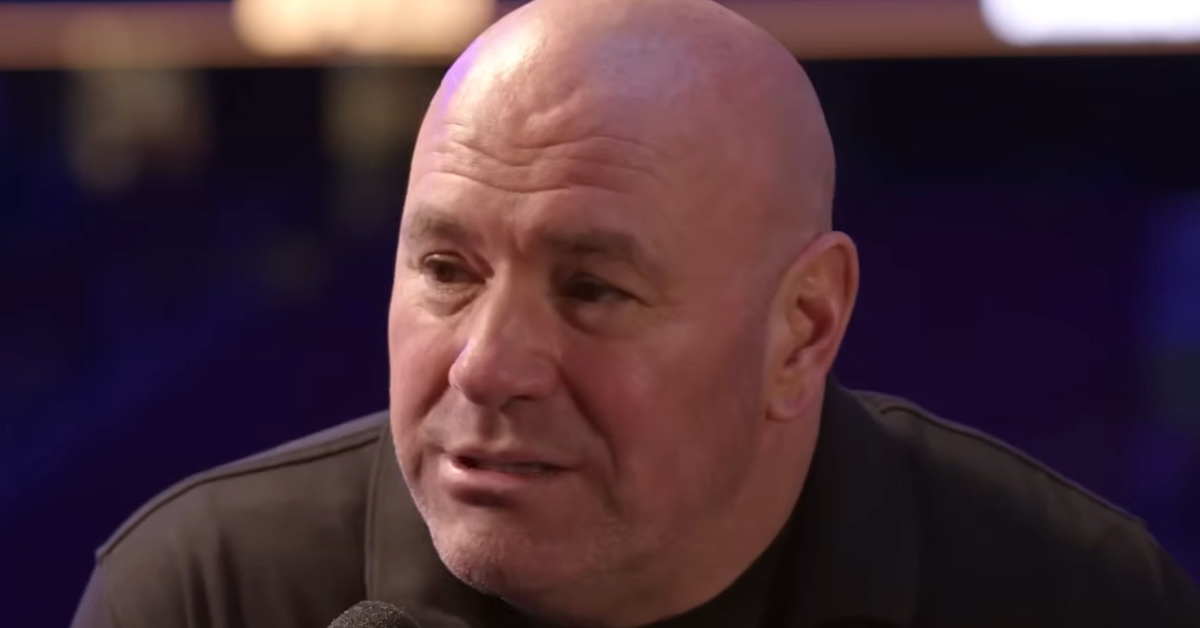
Dana White had a clear message when he sat down withNPR‘s Steve Inskeep at Newark’s Prudential Center on May 8: the UFC’s White House fight night on June 14 is not going to be America versus the world. The UFC president explained that the upcoming UFC Freedome 250 event:
“Everybody thought that I was going to build a card, America versus the world, where we did the exact opposite. America is a country of immigrants that all came from somewhere else and they’re all going to be represented.”
That was Dana White’s opening argument for how he put together UFC Freedom 250, a seven-fight card scheduled for the South Lawn of the White House to mark the 250th anniversary of the United States. The event also falls on June 14, President Donald Trump’s 80th birthday, a detail that has fueled debate about whether the night is about patriotism, sport, or politics.
White’s philosophy, as he laid it out in the NPR interview, is that the UFC is fundamentally a global organisation. The fight card reflects that. Headlining the event is UFC lightweight championIlia Topuria, whose family were refugees who fled the ethnic cleansing of Georgians in the Abkhazia region in the 1990s. Born in Germany, he moved to Georgia as a child and then to Alicante, Spain at age 15, and now represents both Georgia and Spain. He is the first Georgian and the first Spanish UFC champion in history.
His challenger,Justin Gaethje, represents the American side of that coin, an Arizona athlete whose family spent generations working the Morenci copper mine. Gaethje himself worked 12-hour shifts at the mine as an 18-year-old after high school.
In the co-main event, Alex Pereira, a Brazilian with roots in the indigenousPataxótribe of Bahia, makes his heavyweight debut against Frenchman Ciryl Gane, who has Caribbean heritage through his father’s family from Guadeloupe. Pereira grew up in the favelas of São Paulo and dropped out of school to work as a bricklayer before eventually finding his way to combat sports.
White said the backgrounds of the fighters are exactly the point and he also acknowledged he pushed to fill every corner of the globe on the card.
“People that are this tough come from tough backgrounds… I tried hard to have a Chinese fighter on the card too, but it didn’t work out.”
When Inskeep raised the old WWF playbook, where characters like the Iron Sheik were designed for fans to boo as the foreign villain, White was quick to separate himself from that model.
“That wasn’t my thought process. Everybody thought that it’s the Fourth of July, it’s the 250th birthday of America, an American versus a foreigner where hopefully all Americans win and America feels – no, we did the exact opposite. We are a global sport.”
Source: LowKickMMA.com
