Authored by Chris Morrison via DailySceptic.org,
The fallout from the recent Intergovernmental Panel on Climate Change (IPCC) ruling that computer model high emissions pathway RCP8.5 is “implausible” is only just beginning.Most mainstream media fearmongering stories over the last 15 years need to be moved into the junk file, as do the increasingly shrill sandwich-board pronouncements of King Charles and Sir David Attenborough.
But the rot goes much deeper than ill-informed public comment, although that alone has been enormously influential in promoting the Net Zero fantasy.Activist-ridden science bodies such as the UK Met Office have brazenly used RCP8.5 to flam up weather predictions which in turn has led to onerous requirements being placed on British industry and finance. Politicians have been convinced by patently ridiculous claims and Net Zero rules and regulations have cascaded through the economy and society.
All the politicised predictions need to be junked and all the resulting regulations reconsidered with a view to abolition.They are all based on assumptions that many at the time said were ridiculous and have now been officially marked as not wanted on voyage. Those inclined to be uncharitable might suggest it was all a hoax from start to finish.
In 2022, the Met Office published its latest ‘UK Climate Projections Report‘ (UKCP18) and claimed it provided users “with the most recent scientific evidence on projected climate change with which to plan”. Many words come to mind to describe the output of computer models, none of which include ‘evidence’. In fact, the Met Office made a feature of its deliberate use of RCP8.5, highlighting its findings in bold type and describing them as “plausible”. These plausible projections, a more accurate description might be laughable, suggested summers and winters in the UK by 2070 could be up to 5.1°C and 3.8°C warmer respectively. More bold claims suggested summer rainfall could decrease by up to 45%, with winter precipitation increasing by 39%. Severe droughts and floods would inevitably follow.
The Met Office concludes: “Governments will make use of UKCP18 to inform its adaption and mitigation planning and decision-making.” Unfortunately, they probably did.
The science writer Roger Pielke Jr. was the first to spot the IPCC’s rejection of RCP8.5, calling it “the most significant development in climate research in decades”.He said that the scenario described “impossible futures”, although the results have dominated climate research, headlines and policy for the best part of two decades. Helped also by the reporting in theDaily Scepticwhich wentviral across social media, the IPCC finding is firmly established in the public domain. But, notes Pielke, remarkably there hasnot been a peepfrom major US or international English language mainstream media outlets.
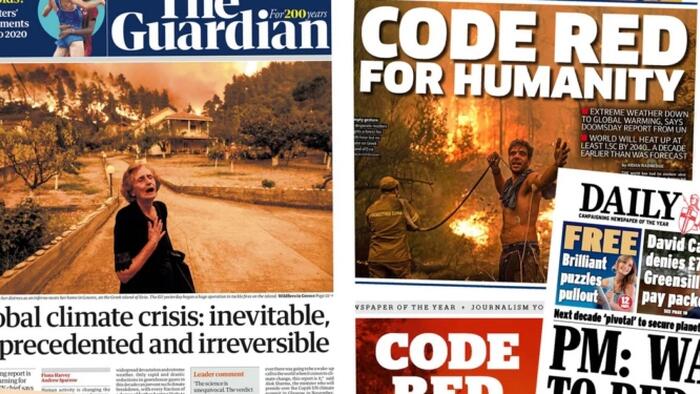
TheNew York Timesis said to be perhaps the most prominent home for promoting news stories based on studies that rely on RCP8.5. It has said nothing, likewise the BBC and theGuardian. Green Blob-fundedClimate Briefhas covered RCP8.5 more than perhaps any other English language publication, but again silence reigns. Pielke is led to observe: “The outlets most invested in their longstanding promotion of RCP8.5 have the most to lose from a clear-eyed accounting of what its retirement means for science, policy and their own coverage.”
Nevertheless, there have been some rare sightings of mainstream coverage.The Dutch newspaperDe Volkskrantpublished a front page story headed ‘UN Climate Panel Drops Doomsday Scenario’. The writer of the story Maarten Keulemans later posted on X:
Also in Europe, theBerliner Zeitungran an article suggesting that “extreme climate scenarios played too large a role in public debate for too long”. Another German publicationDie Weltalso picked up the story, observing: “A lobby made RCP8.5 famous: the most sensationalist of all climate scenarios has determined scientific studies, media and politics – yet it is unrealistic. Now it is actually being phased out”.
Source: ZeroHedge News
