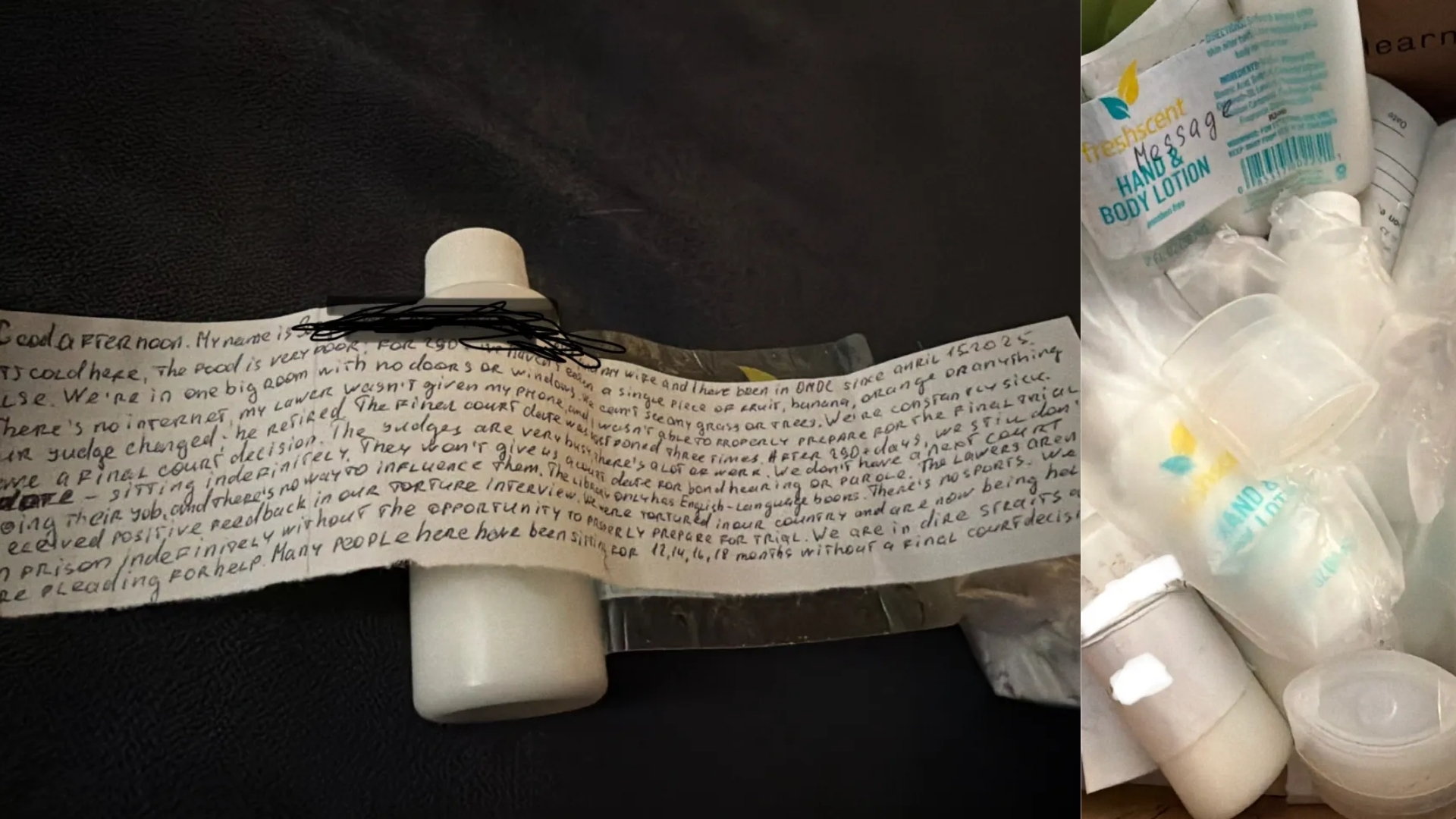
Something simple and strange started it all. A small plastic bottle, wrapped with a handwritten note, landed over the tall chain‑link fence at the Otay Mesa Detention Centre in San Diego. It looked bleak and odd — but it carried a message.
One detainee was trying to tell the world they were suffering.
The note, tied to a lotion bottle and flung over the fence, talked about months without fresh food, freezing temperatures, and never seeing daylight. Organisers who gather weekly outside the detention centre say this is far from an isolated plea. These bottles with notes have become a silent cry for help.
People detained at Otay Mesa, which is run by a private company but holds people for U.S. Immigration and Customs Enforcement (ICE), have apparently used everyday items to communicate with the outside world.
Volunteers have collected multiple notes. According toL.A. Taco, each one points to similar complaints: constant sickness, no fruit for months, and living in cells without doors or windows.
Supporters call these gestures acts of desperation. When phones, letters, and regular contact are limited, desperate people will find desperate ways to be heard.
San Diego County officials have now started the early steps of a public health inspection of the Otay Mesa centre.
Under California's Health and Safety Code, counties can inspect facilities within their borders, even ones run by private firms. The inspections are meant to look at basic living conditions in response to complaints from locals and letters from detainees themselves.
County supervisors have stressed that their authority covers places like Otay Mesa. And this is even though it technically holds individuals for the federal government. The move towards inspection shows that officials are taking the allegations seriously — at least on paper.
Federal oversight has also come into focus.
Source: International Business Times UK
