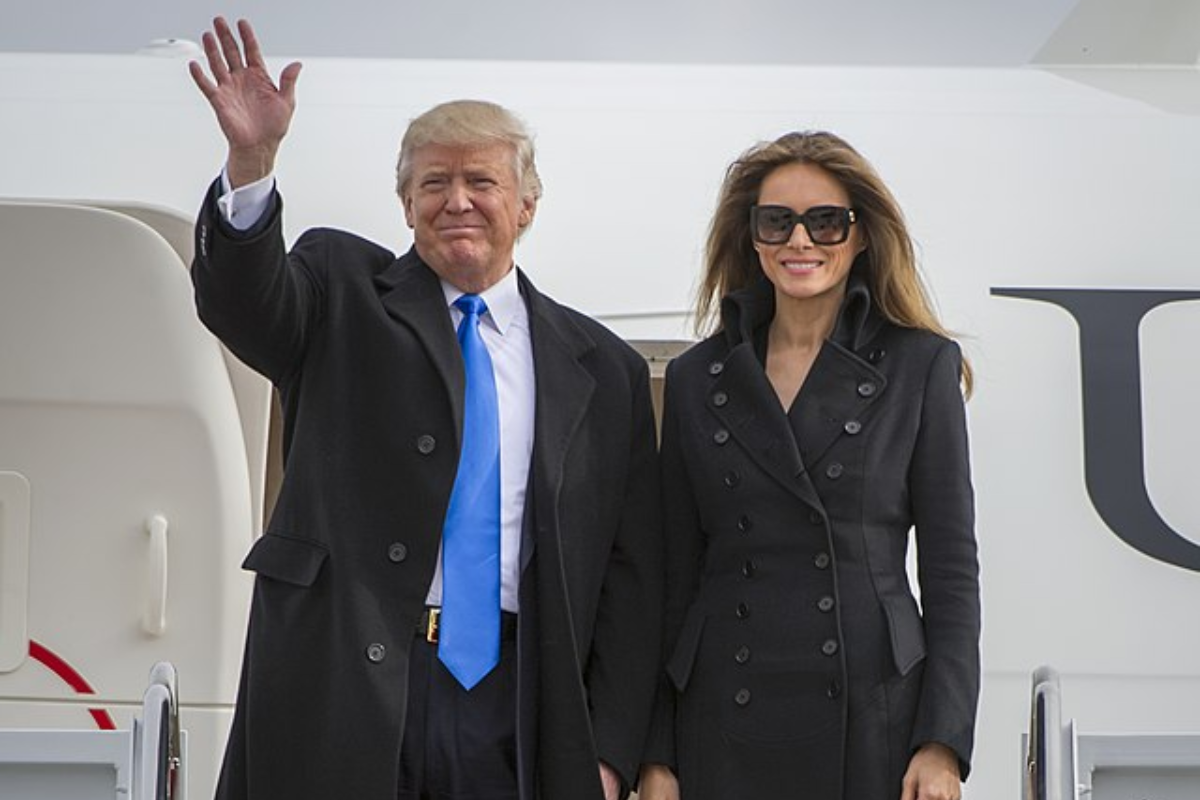
It started, as so many Trump family dramas do, mid-spectacle. The thrum of Marine One's blades cut through a grey Washington sky as Donald and Melania Trump stepped onto the White House lawn. Cameras caught what seemed to be a terse exchange—his finger darting in emphasis, her head turning away, expression unreadable. It lasted barely seconds, yet that was long enough. The internet did what it always does.
'The helicopter fight,' they called it. Within hours, the clip had gone viral, dissected from every angle by amateur lip readers and armchair psychologists. Was the First Lady done pretending? Was he berating her again in public? Every frame became forensic evidence in a relationship that has long existed half in reality, half in projection.
Then came the supposed clarification: experts claimed the pair weren't quarrelling at all but discussing a broken escalator at the United Nations. Trump himself entered the conversation, insisting that the incident was 'absolutely sabotage' and later posted online: 'It's amazing that Melania and I didn't fall forward onto the sharp edges of these steel steps.' He could make even near-injury sound like performance art.
Later that same day, the couple was photographed walking hand in hand across the South Lawn—a show of unity that felt designed for the lens. Still, the rumour had moved faster than any correction could catch, feeding the world's favourite political side-plot: the state of the Trumps' marriage.
If thatviral momentreignited public fascination, Eric Trump fanned it into a blaze. Appearing on Rob Schmitt'sNewsmaxshow, the former President's son veered from defiance to disbelief in record time. His defence of his father quickly dissolved into an almost operatic list of grievances—Russia investigations, media bias, financial targeting, and 'witch hunts'. None of it was new. But amid the fury came a claim that stopped even seasoned Trump-watchers in their tracks.
'They tried to get him divorced; they tried to separate our family,' Eric said, his voice trembling with anger. The assertion, directed at what he termed 'officials' aligned with Joe Biden's administration, was completely unsubstantiated—yet it has since ricocheted through the news cycle unchecked.
No documents, no names, no corroboration—just a statement hurled into the ether, as dramatic as it was unprovable. But this was Trump-world, where emotion often matters more than evidence. The suggestion that unseen powers had moved to dissolve his parents' marriage fit snugly within the family's oldest narrative: that they are perpetually under siege.
And yet, there was something revealing in Eric's outburst. For once, the grand talk of collusion and witch hunts blurred into something uncomfortably intimate. It wasn't just the FBI supposedly out to get them—it was an attempt, he implied, to tear apart his parents' bond. The theatre of grievance had finally reached the domestic stage.
If public suspicion about Donald and Melania's relationship feels unrelenting, it's partly because their dynamic became part of his brand. On stage, she is poised, silent, and slightly removed—the calm foil to his bluster. Off stage, she vanishes completely. When she swatted away his hand during that infamous moment on the tarmac in 2017, the gesture defined her more than years of prepared remarks ever did.
For many observers,Melania has evolved from First Lady to symbol—of complicity, of restraint, of quiet resistance, depending on the day. Her absences from campaign events and her cool detachment during scandal after scandal make her less a romantic partner and more an enigmatic presence in the Trump pantheon. Their marriage often feels like abusiness arrangementthat refuses to go bankrupt.
Source: International Business Times UK
