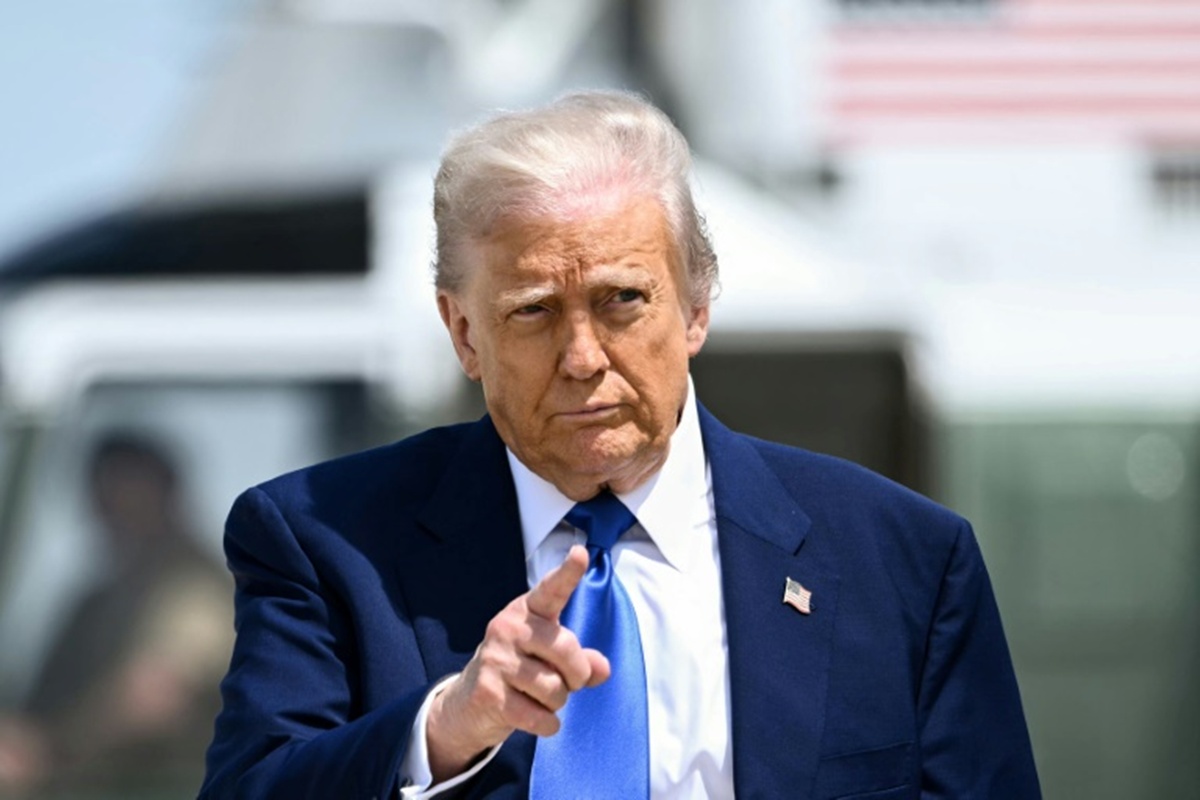
Donald Trump's repeated criticisms of long-standing allies is causing growing unease across Europe.Many people are beginning to question whether the security protection they have depended on for decades will remain as firm as before.
A recent survey found that 68% of Europeans now feel their country is under threat. Their worries go beyond defence. They include trade, political stability, and even the future of NATO. Some respondents said Trump's attacks and remarks aboutreducing US commitments and asking allies to carry more responsibilityhave added to their concern.
This uncertainty has also brought countries closer together, especially in Europe. Governments that once disagreed on key issues are now talking more seriously about working side by side. There is a growing sense that Europe may need to rely more on itself, especially as it prepares for possible changes in Washington's approach.
Public concern has increased sharply in several countries, including Germany and Denmark,BBC Newsnoted. Many people there are uneasy about the future of security arrangements that have helped maintain peace since the end of the Second World War.
European leaders are already taking steps.Politicoreported that talks at the Munich Security Conference focused on improving defence coordination and speeding up joint decisions. Some officials said smaller groups of countries are quietly preparing to act together if wider NATO agreements become harder to reach.
France has been especially vocal. Its officials have called for what they describe as 'strategic autonomy.' The idea is for Europe to become less dependent on major powers, including the United States and China. They say the goal is not to cut ties, but to make Europe stronger and more secure on its own.
Donald Trump's position was echoed by US Senator Marco Rubio during remarks in Munich, according toFox News. Speaking at the conference, Rubio said European allies need to increase defence spending and align more closely with US priorities. Otherwise, he warned, relations could change significantly.
His comments were taken seriously in European capitals. Some officials see them as a sign that the United States may be less willing to play its traditional global role. That possibility has only deepened public concern.
Back in the US, opinions remain divided. A recent polling showed byUSA TODAYdisplays Americans are torn apart over Trump's approach, with strong views on both sides as the midterm elections draw closer.
Critics argue that creating distance from close allies could weaken America's global influence. They warn that if Europe develops its own parallel systems, Washington may have less say in international affairs.
Source: International Business Times UK
