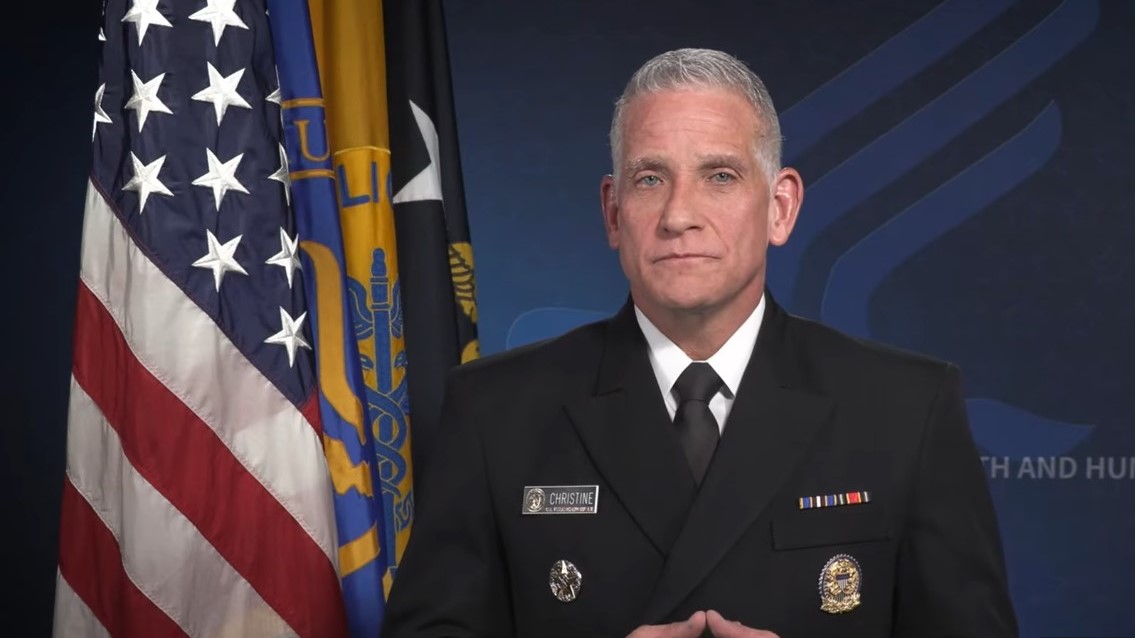
Controversy erupted after Dr Brian Christine, the Assistant Secretary for Health at the US Department of Health and Human Services (HHS), emerged as one of the leading federal voices addressing the growing hantavirus outbreak linked to the cruise ship MV Hondius. Critics quickly questioned why a specialist in men's sexual health — rather than an infectious disease or epidemiology expert — was fronting a major public health crisis.
The backlash intensified as details of Christine's professional background and previous public remarks resurfaced online. Public health experts, political commentators and medical observers argued that the administration's handling of the outbreak reflected broader concerns about expertise within Trump-era health leadership, particularly as federal agencies face renewed pressure to reassure the public after the trauma of the COVID-19 pandemic.
Dr Brian Christine built hismedical careerprimarily as an Alabama-based urologist specialising in penile implants and men's sexual health procedures before taking on his senior HHS role. Critics argued that his background did not reflect deep expertise in outbreak management, infectious disease response or epidemiology.
The criticism was not solely about his speciality. Questions also emerged regarding his previous public comments and online activity, which some observers described as politically charged and aligned with conservative talking points during earlier health debates.
During a recent hantavirus briefing in Nebraska, Christine attempted to reassure Americans by insisting the government's response was 'grounded in science' and 'grounded in transparency'.
The outbreak linked to the MV Hondius has drawn international attention after three deaths and 11 confirmed cases werereportedamong passengers across multiple countries. Health authorities confirmed that the Andes strain involved in the outbreak is one of the few hantavirus variants capable of limited person-to-person transmission.
Although officials repeatedly stressed that the risk to the general public remains low, memories of the early COVID-19 response have fuelled anxiety and online speculation. Public confidence has also been complicated by inconsistent messaging from different agencies and political figures.
The USCenters for Disease Control and Prevention(CDC) has faced criticism for what some experts described as a delayed and cautious communication strategy. Reporting on the early stages of the crisis suggested the World Health Organisation took a more visible role, prompting concerns about whether America's public health infrastructure has weakened following years of political conflict over pandemic policy.
Dr Ronald G. Nahass, president of the Infectious Diseases Society of America, said the virus 'principally resides in the blood vessels,' making transmission harder than airborne respiratory viruses. 'It's hard to transmit viruses that are in the blood as opposed to in the lung,'Nahass said.
Joseph Allen, professor of exposure assessment science at Harvard T.H. Chan School of Public Health, cautioned that officials should be'more honest and more humble about how this virus actually spreads,'warning against bold pronouncements that may prove misleading.
Source: International Business Times UK
